
Category: Business

  • Ex‑Google CMO quit a seven‑figure job at 28—says getting promoted was ‘easy’ once he broke the rules

    Ex‑Google CMO quit a seven‑figure job at 28—says getting promoted was ‘easy’ once he broke the rules


    Alon Chen joined Google in 2006 at 23, with no marketing experience and no connections at the company. By 28 years old, he was a CMO—overseeing marketing for Israel and Greece, building a $2 billion product line across 30 markets, pulling in a highly six-figure salary and a seven-figure equity package. 

    By most people’s standards, he had made it absurdly early—and he says getting there was “easy,” too. Not because of mentors, politics, or any formal promotion track. In an exclusive interview with Fortune, Chen says he just ignored every rule he was given.

    “Climbing up was fairly natural and easy,” he tells Fortune, “simply because I just disregarded all the status quo and the rules and realized what’s the right thing to do, and went all the way with it.”

    Chen’s not all talk either: When a senior team at HQ blocked his plans to launch Google Partners internationally, Chen launched it anyway—in foreign languages, in foreign markets, without telling anyone in North America. “Once we proved it was extremely successful, then they came and asked us, ‘Oh, can you also launch it in North America?’”

    Likewise, getting a promotion was simply a matter of demanding it ahead of schedule. 

    Google told him promotions take 2 years—he got his in less than 1

    At Google, the general rule of thumb was to wait at least two years before applying for a step up—he says most employees accepted that timeline without question. Chen ignored it entirely, went to his manager within a year, and made the case impossible to refuse.

    “I just told my manager, listen, I know this is a year thing. Look what I’ve been able to achieve. It’s way more than anyone else. We’re going to put me up for promotion now.” She did. 

    “We have all these rules, we have all these benchmarks, we have all these processes,” Chen says. “That’s what’s going to happen for most of you.”

    But for high-achievers, he adds, they’re almost just a formality. Especially when, like him, you’re pulling around 12-hour days and have the results to back up your demands for early progression. “You’re going to be like me, promoted more.” 

    “Corporate America can put you in these frames that discourage you,” he adds. But he says the one’s who will be most successful “actually just ignore these and say, “I’m going to do my own thing and take risks, internally.” 

    In the end, he took his own career advice literally, opting to become his own boss and do his own thing: With a seven-figure equity package on the table and a career most people would guard with their lives, he handed in his notice—and walked away with zero financial regrets.

    Before Google, he was running a thriving business at 15 while in high school

    Chen didn’t suddenly wake up one day as a rule‑breaking Google executive. Long before his C‑suite title, he’d already been forced to think like a founder. Growing up in a “low middle-class small town south of Tel Aviv,” his father had a motorbike accident, which left them financially struggling. 

    “I used to write code when I was 12, and every year I had to change my computer… the software I used to write was not able to run because it needed more memory,” he recalls. “But he couldn’t afford it.”

    So at 15, he went straight to the importers and negotiated for parts so he could upgrade his computer himself. 

    “It was my first entrepreneurial adventure,” he adds. “I started selling computers for thousands of different SMBs, throughout my time at high school…  this turned into a very big business.”

    His next venture took a different shape entirely. Chen became the digital officer for an LGBT activism nonprofit, building one of the most pioneering advocacy websites across Europe at the time. It was that experience—not a computer science degree, not a corporate internship—that he says caught Google’s eye and landed him his first role there in 2006. “Back then, that was very innovative,” he adds.

    Given that background, it’s perhaps less surprising that the golden-ticket job at Google eventually started to feel like a “golden cage.”

    When he handed in his notice, his family thought he was “crazy”. His Iraqi-Jewish mother, he recalls, was particularly alarmed—ironically, she inspired the idea for his next venture. 

    Financially, he’s worse off as a startup founder—but he has zero regrets

    The concept for Tastewise, the AI food and beverage intelligence platform he went on to build, came directly from the family WhatsApp group, where his mom would message every Thursday asking what dietary phase everyone was on before spending a day cooking traditional dishes. 

    She saw dinner logistics. He saw a lightbulb moment—and a gap in the market that the world’s biggest food companies hadn’t yet solved: predicting what people actually want to eat before they know it themselves. 

    Today, the startup’s technology is used by giants like PepsiCo, Nestlé, Mars, Kraft Heinz, Campbell’s, and Givaudan, and over half its clients are Fortune 100 firms. It has raised more than $71 million in funding.

    Financially, he freely admits he’s not ahead of his Google days. “Not yet,” he says. “I’m still building, and I’m all in in the business.”

    But given his equity stake, a future Tastewise transaction would likely cement him as a multimillionaire several times over. And he doesn’t waver when asked whether walking away was worth it. “It didn’t matter,” he says of the seven-figure equity he left behind. “It’s almost like it was not a consideration.”

    “I used to wake up in the morning, like ‘this is not enough’…. I loved my job. I loved my colleagues. I was extremely happy with my achievements. It was just not mine—not my idea, not my baby. There’s so much satisfaction in creating something out of nothing.”

    Read More

  • Access Error


    The page you are trying to access is unavailable because we detected potential misuse. Please wait a moment and try again.

    For help please visit help.ft.com. We
    apologise for any inconvenience.

    The following information can help our support team to resolve this issue.

    Reason
    Access Blocked
    Request ID
    9e45139deb323a5d
    Status Code
    403

    Read More

  • Choosing the Right Structure for Foreign Market Entry

    Choosing the Right Structure for Foreign Market Entry


    Foreign companies in Singapore can choose between a subsidiary, which is a separate legal entity, or a branch, legally part of the parent, affecting liability, governance, and operational independence.

    Entry Options for Foreign Companies in Singapore

    Foreign companies planning to operate in Singapore must decide between establishing a locally incorporated subsidiary or registering a branch office. A subsidiary functions as a separate legal entity under the Singapore Companies Act, owning its assets, signing contracts, and maintaining financial records independently. This structure provides greater autonomy while still being owned by the foreign parent company.

    Legal Differences Between a Subsidiary and a Branch

    A branch office is not a separate legal entity; it is an extension of the foreign parent company registered with Singapore’s authorities. Since it is legally part of the parent, liabilities incurred in Singapore can directly affect the parent company. This removes the legal separation that a subsidiary offers, which can impact risk exposure and liability management.

    Governance and Regulatory Requirements

    The choice of structure also influences governance obligations. A subsidiary must appoint at least one resident director, maintain a company secretary, and fulfill annual filing requirements with the Accounting and Corporate Regulatory Authority (ACRA). Conversely, a branch office faces different compliance obligations, reflecting its integrated status with the parent company.


    Read the original article : Singapore Subsidiary or Branch Office: How Foreign Companies Should Structure Market Entry

    Read More

  • Albanese Cuts Fuel Excise on Petrol, Diesel for Three Months

    Albanese Cuts Fuel Excise on Petrol, Diesel for Three Months


    Australian Prime Minister Anthony Albanese
    Wikimedia Commons

    Prime Minister Anthony Albanese has announced that fuel excise will be cut in half for petrol and diesel beginning April 1.

    This will be in effect for three months and will reduce cost of fuel by 26.3 cents a litre.

    Fuel Excise Halved for Three Months

    According to a report by ABC News, the announcement was made after a meeting of the national cabinet with state and territory leaders. During this meeting, a four-point action plan to deal with the fuel crisis was also discussed.

    Albanese also went on to claim that Australia is on “level two” of the fuel crisis. The goal, according to the prime minister, is to “keep Australia moving.”

    He likewise said that the country is still far from reaching the next level, which will require “taking targeted action.”

    There is still a level four, which will entail “protecting critical services.”

    Albanese has also called for citizens to only take the fuel they need as to not cause even bigger supply problems.

    NSW Premier Reacts to National Fuel Plan

    According to 9News, New South Wales Premier Chris Minns said that he welcomes the action plan. He likewise commented on how long he thinks the ongoing conflict in the Middle East will continue.

    “We are not necessarily sure what will happen in the Middle East in the next three or six months,” Minns said. “We are not making a decision today to tell people to cancel their trips around the state or cancel Easter holidays.

    “But as time goes on, we may tell people to use their common sense on this and reduce their usage,” he added.

    Read More

  • Gov’t eyes offshore issuance in Q2

    Gov’t eyes offshore issuance in Q2


    Gov’t eyes offshore issuance in Q2

    THE GOVERNMENT is looking at tapping the offshore bond market in the second quarter, the Bureau of the Treasury (BTr) said.

    “We still have $2.5 billion left in the borrowing program, so we are looking at whether we issue (in the) second quarter or third quarter,” National Treasurer Sharon P. Almanza told reporters on the sidelines of an event on Thursday.” There is a possibility for a second-quarter issuance.”

    In January, the government raised $2.75 billion from a triple-tranche dollar bond issuance. It generated $500 million from the 5.5-year bonds at a coupon rate of 4.25%; $1.5 billion from the 10-year paper at a coupon rate of 5%; and $750 million from the 25-year papers at a 5.75% coupon.

    Ms. Almanza said US Treasury yields have remained relatively stable compared with local rates, creating a less volatile environment.

    Meanwhile, the BTr is hoping the central bank’s off-cycle policy move on March 26 will help calm markets and drive demand for government securities in the coming quarter.

    This follows the drop in bids and spike in yields in March after the US-Israeli war on Iran began. 

    The Bangko Sentral ng Pilipinas (BSP) kept its policy rate unchanged at 4.25% during a surprise off-cycle meeting last week, amid growing concerns over the impact of the Middle East war on the economy.

    BSP Governor Eli M. Remolona, Jr. had said they decided to stand pat as their growth outlook remains clouded and as emerging inflationary risks prove supply-driven, “for which monetary policy has limited effectiveness.”

    The BSP now expects headline inflation to average 5.1% this year from 3.6% previously. If realized, the headline print would breach its 2%-4% target.

    Ms. Almanza said that a large maturity in April worth about P200 billion could add liquidity to the market and drive demand for government securities.

    “We have a maturity in April. So, hopefully, those funds will be reinvested,” she said.

    The government is looking to borrow up to P784 billion from the domestic debt market in the second quarter or up to P364 billion via Treasury bills and up to P420 billion through Treasury bonds.

    Ms. Almanza noted that the borrowing plan for the second quarter includes a mix of short-term and medium-term securities.

    “We’re combining the long with the short. And then we’re reducing the volume for the longer tenors,” she said.

    Ms. Almanza also said foreign participation in the government securities market could surge as soon as the country’s re-entry into JPMorgan Chase & Co.’s Government Bond Index-Emerging Markets (GBI-EM) is confirmed by the first week of April.

    “They said that the investors don’t wait for the actual inclusion. So, after the announcement, funds will [start coming in already],” she said.

    In September last year, Philippine peso-denominated government bonds (RPGB) were tagged as “Index Watch Positive,” which is the final review phase for the bonds’ potential inclusion in JPMorgan’s GBI-EM.

    JPMorgan’s GBI-EM tracks the performance of sovereign and quasi-sovereign bonds issued by emerging market countries. The country’s inclusion will need to be approved by a certain percentage of investors reviewing the index.

    The Philippines’ global peso notes were removed from the GBI-EM in January 2024 due to illiquidity. Potential inclusion in the index are RPGBs issued from 2023 with tenors up to 20 years. — A.M.C.Sy

    Read More

  • Japan’s FX Chief Warns of Bold Action, Helps Nudge Yen Stronger


    (Bloomberg) — Japan’s top currency official delivered his strongest warning yet to speculators after the yen crossed a key threshold, saying authorities may need to take bold action in the foreign exchange market if current conditions persist.  Read More

    Read More

  • MAIT Rejects Claims Of Mandatory Source Code Sharing, Backs MeitY’s Framework


    The association clarified that documents cited in recent media reports were meant only for member-level deliberations and should not be construed as advocacy for mandatory source code sharing.

    Read More

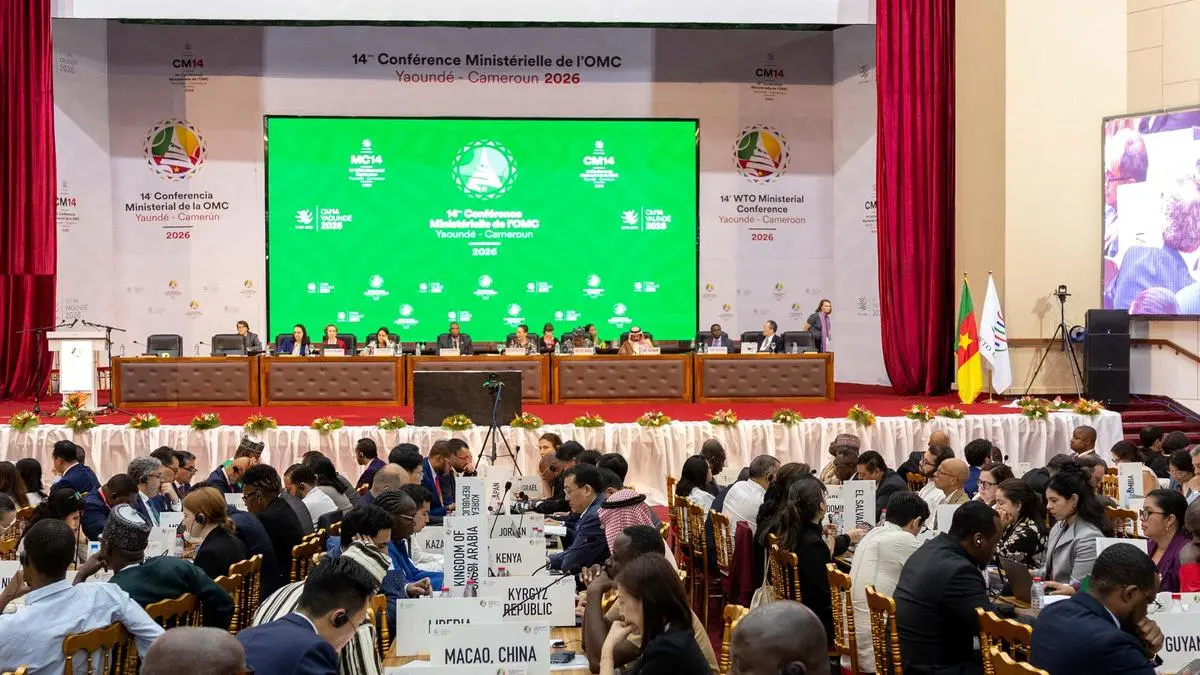
  • Voice of Global South: India bats strongly to shield WTO’s core mandates at MC14

    Voice of Global South: India bats strongly to shield WTO’s core mandates at MC14


    Delegates attend the World Trade Organisation (WTO) 14th ministerial meeting in Yaounde, Cameroon

    Delegates attend the World Trade Organisation (WTO) 14th ministerial meeting in Yaounde, Cameroon
    | Photo Credit:
    REUTERS

    India successfully stalled the China-led investment facilitation for development (IFD) agreement at the WTO’s 14th Ministerial Conference (MC14) at Yaoundé, Cameroon, but found itself on the defensive as negotiations over the e-commerce tax moratorium went down to the wire on Sunday, the last day of the prolonged meeting.

    New Delhi held its ground on the IFD pact, endorsed by 128 members, despite being isolated after fellow opponents South Africa and Türkiye withdrew their objections. Standing as the sole dissenter among 166 members, India argued that incorporating the plurilateral deal would bypass the “consensus” rule and set a dangerous precedent for non-mandated issues to eclipse core mandated priorities such as food security.

    However, in the negotiations on e-commerce moratorium, the US demand for a permanent moratorium weighed heavily on India, which had called for a “careful reconsideration” of the moratorium itself to preserve revenue and policy space. 

    Moratorium Pressure

    Sources said that there was great pressure on India to accept a four-five year moratorium this time, instead of the usual two-year one that has been the norm since 1998. Also important for India is the parallel extension of the moratorium on TRIPS Non-Violation Complaints (NVC), a mechanism that developing nations use to shield domestic policies from legal challenges.

    Amid talks at the WTO on the need for a new architecture for better results, India continued to stress on the need for consensus. In his talks with WTO Director General Ngozi Okonjo-Iweala on Sunday, Commerce & Industry Minister Piyush Goyal acknowledged her continued efforts in building consensus for a successful MC14. “Emphasised the importance of a balanced and responsive WTO that effectively addresses the needs and aspirations of all Members, particularly developing countries and LDCs,” Goyal said in a post on `X’.

    On Sunday, India, Oman, and South Africa submitted a draft declaration on WTO reforms, emphasising Special and Differential Treatment (S&DT) for developing countries and the need to uphold past mandates. This stands in direct contrast to the US agenda, which has increasingly questioned consensus-based decision-making in favour of plurilateral tracks and new issues. Washington has also intensified calls for objective criteria for “developing country” status, arguing that major emerging economies should no longer benefit from preferential treatment. 

    Food Security

    On agriculture, India stressed that permanent solution on public stockholding for food security purposes, special safeguard mechanism, and cotton are long-pending mandated issues, which need to be delivered on priority.

    India also underscored that the challenge of overcapacity and overfishing arises from heavily subsidised industrial fleets, and not from small-scale fishermen in India and other developing countries & LDCs. It made a strong case in the WTO forum for ensuring that emerging decisions remain fair and do not disproportionately impact vulnerable communities, per a government statement.

    Published on March 29, 2026

    Read More

  • ‘Get paid for 5 days’: Employee’s stand on weekend work triggers viral debate on India’s work culture

    ‘Get paid for 5 days’: Employee’s stand on weekend work triggers viral debate on India’s work culture


    A Reddit post by a young professional claiming he refused to work weekends at a Big Four firm has sparked a broader conversation about work culture, client pressure and employee boundaries in India’s corporate sector. 

    In the post shared on Saturday, the employee described how he had “recently joined big four and assigned to a project,” when his manager informed the team that weekend work would be required to meet client deadlines. 


    According to the post, the manager told employees that “client is important for us so you have to work on weekends to meet the deadlines,” and added that previous employees had done the same. The employee wrote that the manager “clearly ordered us to work on weekend and said tumse pehle wale b krte the (those who were here before you also used to do it).”

    The employee said he declined the request, responding: “With respect I can’t work on weekends cause I get paid for 5 days and also 2 days I need for myself.” 

    He added that the manager insisted that weekend work was a norm within the organisation, telling him that “everyone works on weekend here you will have to do it.” 

    Rather than agree, the employee said he offered to step away from the assignment. “You can roll me off from this project,” he wrote, adding that the manager “is very angry and have escalated this with senior management.” 

    Debate over “glorified” overwork 

    Beyond the individual dispute, the employee framed the issue as part of a broader workplace culture in India that often celebrates long hours and constant availability. 

    “Why have we Indians glorified this weekend working?” he asked in the post. 

    In a pointed remark about client-first expectations, he added: “Jo bhi ese managers hai why don’t you just put a picture of client at your home and make your wife and kids pray to them everyday.” 

    The comments triggered a lively debate online, with many users sharing their own experiences and views on workplace expectations. 

    “India is an employer’s market” 

    One Reddit user argued that structural conditions in India’s job market often encourage managers to demand longer hours. 

    “India is an employer’s market. There’s always someone willing to say yes,” the user wrote. “Managers push because they can, and it has worked for them before.” 

    The commenter suggested that employees who want change need to assert their limits. “The only thing that changes it is people drawing a line. If you trust your skills, stand firm. Worst case, you leave. Best case, they adjust. No one will protect your boundaries for you.” 

    Differences with global work cultures 

    Another user said extreme working hours appear to be more common in Indian offices compared with the same firms abroad. 

    “Very common in big 4,” the commenter wrote. “Funnily enough only in Indian branches is it this extreme.” 

    They added that stricter labour regulations in Western countries often limit such practices. “If you go and work in the same big4’s in Europe or even US, you will never see this nonsense because the government actually cracks down and punishes employers if they break labour laws.” 

    The user also pointed out that demanding schedules have long been part of certain professions. Many chartered accountant trainees working in audit, they said, regularly put in “14–16 hour days during peak season,” a workload often accepted as part of the job. 

    Work–life balance under scrutiny 

    Another commenter linked long working hours to broader cultural attitudes toward leisure and personal time. 

    “I keep thinking Indians and other third world countries overwork so that Europeans and other first world countries could enjoy their free time,” the user wrote, before adding that stronger labour protections and lifestyle priorities in Europe may be a bigger factor. 

    “Europeans especially have pro-employee policies and people prioritise free time and hobbies,” the commenter said. “Unlike most Indians who have no hobby, no respect for anyone’s free time.” 

    A recurring corporate conversation 

    The discussion reflects an ongoing debate within India’s corporate sector about long working hours, client-driven deadlines and the boundaries employees can realistically set in competitive workplaces. 

    Consulting, audit and professional services firms — often referred to collectively as the “Big Four” — are known globally for demanding schedules, particularly during peak periods. In India, where competition for jobs remains high, employees sometimes report even longer hours. 

    The viral Reddit exchange has once again brought attention to a central question facing many young professionals: whether pushing back against excessive work expectations can lead to healthier workplaces, or simply put individual careers at risk. 

    Read More

  • Ahead of market: 10 things that will decide stock market action on Monday

    Ahead of market: 10 things that will decide stock market action on Monday


    Indian frontline indices ended their two-session rally amid sharp cuts as a failure in the Iran-US negotiations dented the market mood. Elevated energy prices and a plunging rupee aggravated troubles for domestic investors. Amid high volatility, markets were mainly dragged by financials, auto and consumer stocks. Nifty settled at 22,819.60, falling by 486.85 points or 2.09%, while the BSE Sensex closed at 73,583.22, declining 1,690.23 points or 2.25%.

    Meanwhile, the volatility gauge India VIX ended at 26.80, up by 8.77% from the last closing.

    Here’s how analysts read the market pulse:

    Rupak De, Senior Technical Analyst at LKP Securities, said the index is trading below the 21-hour EMA, indicating sustained short-term bearish momentum. Additionally, the RSI has entered a bearish crossover, reinforcing the negative bias. “Given the prevailing market uncertainties, a sell-on-rise approach may remain suitable in the near term. Technically, any rebound towards 23,500 could face selling pressure, as this level is likely to act as an immediate resistance. On the downside, a break below 22,800 may lead to further weakness in the market,” De said.

    US markets

    US markets traded lower on Friday amid continued uncertainty over truce talks in the Iran-Israel conflict. The Dow Jones Industrial Average fell 792.67 points, or 1.72%, to 45,167.44. The S&P 500 declined 113.35 points, or 1.75%, to 6,363.75, while the tech-heavy Nasdaq Composite dropped 459.72 points, or 2.15%, to 20,948.36.

    European Markets

    Major European indices closed with significant declines. UK’s FTSE 100, Germany’s DAX, Stoxx 600, Spain’s IBEX 35 and France’s CAC 40 settled down between 0.05% and 1.38% around this time.

    Tech View

    Investor sentiment remains fragile due to a lack of clarity surrounding geopolitical tensions between the US and Iran, which once again pushed crude oil prices above the $100 mark, said Ajit Mishra, Senior Vice President, Research at Religare Broking.

    “On the technical front, the Nifty continues to hover near crucial support levels, indicating sustained pressure despite entering oversold territory. Immediate support is placed around 22,500, and a decisive break below this level could trigger further downside towards 22,000. On the upside, 23,000 is likely to act as an immediate hurdle, followed by stronger resistance near the 23,500 zone in case of any recovery,” Mishra said.He expects volatility to remain elevated on Monday and advised participants to maintain a cautious approach, avoid aggressive positioning, and focus on disciplined risk management while adopting a selective, stock-specific trading strategy.

    Most active stocks in terms of turnover

    Bharti Airtel (Rs 663 crore), Hindalco Industries (Rs 519 crore), HDFC Bank (Rs 468 crore), InterGlobe Aviation or commonly known as IndiGo (Rs 372 crore), Gujarat Alkalies and Chemicals (Rs 242 crore), Tata Motors (TMCV, Rs 213 crore) and RPSG Ventures (Rs 204 crore) were among the most active stocks on BSE in value terms. Higher activity in a counter in value terms can help identify the counters with the highest trading turnovers for the day.

    Most active stocks in volume terms

    Vodafone Idea (Traded shares: 3.43 crore), SpiceJet (Traded shares: 3.76 crore), YES Bank (Traded shares: 1.19 crore), Suzlon Energy (Traded shares: 1.03 crore), Reliance Power (Traded shares: 84.11 lakh), Ola Electric (Traded shares: 74.32 lakh) and JP Power (Traded shares: 71.48 lakh) and were among the most actively traded stocks in volume terms on BSE.

    Stocks showing buying interest

    HEG, Graphite India, ACME Solar, Hilton Metal Forging, RPSG Ventures, Supreme Petrochem and Likhitha Infrastructure were among the stocks that witnessed strong buying interest from market participants.

    52 Week high

    Today, 67 stocks hit their 52-week highs while 906 stocks slipped to their 52-week lows. Among the stocks that hit their 52-week highs were Apt Packaging, Aurobindo Pharma, Gautam Exim, HRS Aluglaze, Prime Focus, Surbhi Industries and Titan Biotech.

    Stocks seeing selling pressure

    Among the largecap names were Shriram Finance, Tata Motors Passenger Vehicles (Tata Motors Passenger Vehicles) and Reliance Industries (RIL). Other stocks which witnessed significant selling pressure were Punjab & Sind Bank (PSB), Naga Dhunseri Group, Shemaroo Entertainment, Deepak Builders & Engineers India, Uma Exports, Bombay Super Hybrid Seeds and Aye Finance.

    Sentiment meter favours bears

    Heavyweights like Reliance Industries (RIL), HDFC Bank and ICICI Bank dragged the markets the most, as the breadth stayed negative in the overall markets. Out of the 4,501 stocks that traded on the BSE on Monday, March 30, 761 stocks witnessed advances, 3,615 saw declines, while 125 stocks remained unchanged.

    (Disclaimer: Recommendations, suggestions, views and opinions given by the experts are their own. These do not represent the views of The Economic Times)

    Read More