
Factbox-The world’s worst air crashes in recent years
Read More
Category: Business
-
Factbox-The world’s worst air crashes in recent years
-

London ambulances set on fire in suspected antisemitic incident
Unlock the Editor’s Digest for free
Roula Khalaf, Editor of the FT, selects her favourite stories in this weekly newsletter.
London’s Metropolitan Police said an arson attack on four ambulances belonging to a Jewish community service was being treated as an antisemitic hate crime.
Police said the Jewish community ambulance vehicles were found on fire in the Golders Green area of north London in the early hours of Monday.
Nearby houses were evacuated as a precaution and road closures were put in place, with no injuries reported, the police said.
Reports of explosions were believed to be linked to gas canisters in the ambulances, they added, and footage from CCTV cameras was being examined.
“We believe we are looking for three suspects at this early stage,” the Met said.
“We know this incident will cause a great deal of community concern . . . we will be engaging with faith leaders and carrying out additional patrols,” a police superintendent said.
The ambulances belonged to Hatzola, which its website describes as a non-profit organisation that has provided emergency care in north London since it was set up in 1979.
-

Markets wait for Trump and Iran to follow through on Hormuz threats

Wall Street is bracing for a Monday deadline that President Donald Trump set for Iran to reopen the Strait of Hormuz while the global economy reels from an energy crisis that shows little signs of abating.
Futures tied to the Dow Jones industrial average fell 78 points, or 0.17%. S&P 500 futures were down 0.25%, and Nasdaq futures lost 0.32%.
U.S. oil futures dipped 0.12% to at $98.11 a barrel, and Brent crude eased 0.38% to $111.76. The national average gasoline price reached $3.94 a gallon on Sunday, up more than $1 over the past month, according to AAA.
The yield on the 10-year Treasury rose 1.7 basis point to 4.409%. The U.S. dollar was up 0.1% against the euro and flat against the yen.
On Saturday evening in the U.S., Trump gave Tehran 48 hours to comply with his demand or else face the destruction of power plants, potentially escalating his war to civilian infrastructure.
Iran responded to the ultimatum by warning that such an attack would result in its forces similarly targeting vital infrastructure, including desalination plants that provide much of the region’s fresh water.
Trump’s AI and crypto czar, David Sacks, raised alarms earlier this month about this exact path of escalation as he called on the president to declare victory and “get out” of Iran.
“If you see that type of destruction continue, you could literally render the Gulf almost uninhabitable,” he said in an episode of the All-In podcast on March 13. “I mean you’re not going to have enough water for 100 million people, and human beings just cannot survive very long without water. So that would be a truly catastrophic scenario, and we’re talking about destroying the Gulf states economically and then also from a humanitarian perspective.”
Both sides showed no signs of backing down and further upped the ante militarily. Trump is sending three more amphibious assault ships and 2,500 additional Marines to the Mideast, joining a separate Marine Expeditionary Unit already headed there. There are already more than 50,000 U.S. troops in the region.
Meanwhile, Iran launched ballistic missiles at a U.S.-U.K. base 2,500 miles away on the island of Diego Garcia in the Indian Ocean. The attack was unsuccessful, but it demonstrated that Iran’s missiles have much longer range than previously known and could theoretically reach most of Europe.
On Sunday, NATO Secretary General Mark Rutte backed the Iran war and predicted the alliance would eventually come around to support it too, after several members rebuffed Trump’s demand that they provide naval escorts.
“If Iran would have the nuclear capability, including, together with the missile capability, it will be a direct threat, a existential threat, to Israel, to the region, to Europe, to the stability in the world,” Rutte told CBS News. “So the president doing this is crucial, and I’ve seen the polling, but I really hope the American people will be with him, because he is doing this to make the whole world safer.”
In addition to NATO, Trump got more signs of support from the United Arab Emirates, which has suffered from a barrage of Iranian missiles and drones.
Anwar Gargash, a senior UAE diplomat, suggested an increasingly hardened stance toward Iran that aligns more closely with the U.S. and Israeli stance.
“Our thinking does not stop at a ceasefire, but rather turns toward solutions that ensure lasting security in the Arabian Gulf, curbing the nuclear threat, missiles, drones, and the bullying of the straits,” he wrote on X. “It is inconceivable that this aggression should turn into a permanent state of threat.”
With no evidence of any talks aimed at halting the conflict, the thousands of Marines headed to the Mideast could be involved in a climactic battle to reopen the Strait of Hormuz and crush Iran’s ability to weaponize it again.
Still, some have called for a less dangerous option, namely a naval blockade of Iran’s oil exports meant to pressure the regime to open the strait.
“The US can implode Iran’s economy by shutting down its oil exports,” Robin Brooks, senior fellow at the Brookings Institution, wrote in a Substack on March 13. “That might open up the Strait of Hormuz a lot faster than anything else. Time to implode Iran’s economy and give the Ayatollahs a taste of their own medicine.”
-
King Charles’s green Davos in a Tudor palace
Hampton Court CEO summit reflects the shifting shape of the corporate climate conversation
Read More -

BOT tightens cash rules, mandates ID checks, and flags transactions over Bt5m as high risk
The Bank of Thailand (BOT) is implementing stricter regulations for cash transactions effective April 1, 2026, to combat money laundering, fraud, and the concealment of illicit funds.
Under this new framework, all financial institutions must verify the identity of customers for every cash transaction, while dealings totaling 5 million baht or more in a single day will be classified as high-risk.
These measures aim to enhance the transparency of the banking system by requiring rigorous scrutiny of high-value or unusual transactions, with mandatory reporting of suspicious activities to the Anti-Money Laundering Office.
Key Points
- Mandatory ID Verification: Starting April 1, 2026, banks must verify the identity of all individuals and juristic persons for every cash transaction via physical branches or electronic channels (using PINs, OTPs, or biometrics).
- High-Risk Threshold: Daily cash transactions of 5 million baht or more are designated as high-risk, requiring banks to perform Enhanced Customer Due Diligence (EDD).
- Transaction Scrutiny: Banks are required to investigate the purpose of transactions and may request supporting documentation if a customer’s cash activity is inconsistent with their known profile or behavior.
- Initial Focus: The rules will first target cash withdrawals and cash-cheque transactions, as these are primary methods used to obscure financial trails.
- Right of Refusal: Financial institutions must reject transactions and report the matter to the Anti-Money Laundering Office (AMLO) if a customer cannot provide a reasonable justification for a high-value or suspicious deal.
- Record Keeping: Banks must maintain secure records of customer identification and transaction purposes for future inspections, investigations, and legal proceedings.
- Future Expansion: The BOT may expand these regulations to include cash deposits and banknote exchange services if financial risks continue to escalate.
- Regulatory Penalties: Banks that fail to comply with the new rules face potential service suspensions, corrective orders, or additional conditions imposed by the central bank.
The BOT stated that if a financial institution fails to adhere to regulations or engages in activities that jeopardize public safety or the stability of the financial system, the central bank reserves the right to enforce additional conditions, mandate corrective measures, or order delays or suspension of certain services. This updated framework, set to take effect on April 1, 2026, represents a significant step forward in bolstering the resilience of Thailand’s banking system amid the growing complexity of financial crimes.
Other People are Reading
-
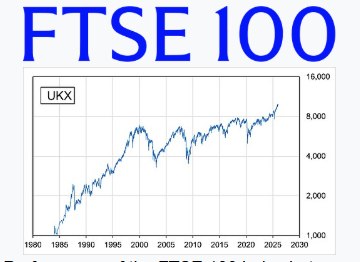
UK Blue-Chip Index Closes at 9,918.33 After 1.44% Slide as Investors Digest Geopolitical Risks
LONDON — The FTSE 100 ended lower on Friday, March 20, 2026, closing at 9,918.33, down 145.17 points or 1.44%, marking its largest single-day percentage decline in recent weeks amid profit-taking and broader market caution. The benchmark index opened at 10,063.25 but quickly retreated, trading in a range of 9,915.70 to 10,127.56 before settling near session lows on volume of approximately 2.61 billion shares.
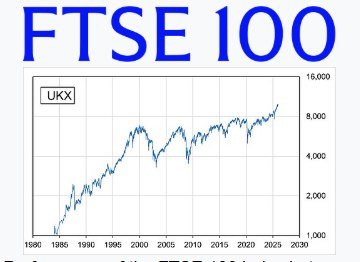
FTSE 100
The pullback came after the index briefly hovered near 10,300 earlier in the week, reflecting a retreat from February’s record high of 10,934.94. Year-to-date, the FTSE 100 remains positive, though recent sessions have seen volatility driven by global factors including persistent Middle East tensions, U.S. economic indicators and anticipation of Bank of England policy moves.
Leading the losses were heavyweight sectors sensitive to risk sentiment. Industrial and defense names like Smiths Group fell sharply by 10.85%, while Babcock International dropped 4.12%, contributing significantly to the downside. Miners and energy stocks, which had propelled earlier gains, also faced pressure amid fluctuating commodity prices and investor rotation out of cyclical plays.
The decline snapped a mixed but generally resilient period for UK equities. On March 17, the index rose 0.83% on strength in energy and financials ahead of BoE rate decision expectations, while mid-March sessions showed modest advances. However, the March 19 drop of 2.35% to close at 10,063.50 set the stage for Friday’s continuation lower.
Analysts attributed the sell-off to a combination of factors. Geopolitical uncertainties in the Middle East continued to weigh on sentiment, with oil price fluctuations impacting energy majors. Domestic data, including recent inflation figures that supported potential BoE rate cuts, provided some offset but failed to stem broader caution. J.P. Morgan forecasts suggested the central bank might pause rates through 2026, tempering expectations for aggressive easing.
The FTSE 100’s performance contrasts with its strong 2025 close and early 2026 momentum, when it broke the 10,000 barrier in January for the first time and hit multi-year highs. The index has gained about 14% over the past year despite recent setbacks, buoyed by strong dividend yields, exposure to global commodities and relative value compared to U.S. peers.
Key drivers of the index include multinational heavyweights in mining, oil and banking. Recent weeks saw miners benefit from commodity rallies, while banks gained from higher-for-longer interest rate narratives. However, Friday’s broad-based selling indicated a risk-off mood, with the FTSE 250 mid-cap index also under pressure in prior sessions before a brief snapback.
Broader European markets showed similar weakness, with Germany’s DAX down around 2% in correlated moves. Wall Street futures pointed to mixed opens, reflecting global interconnectedness.
Looking ahead, investors eye upcoming economic releases and corporate earnings for direction. The index’s 52-week range spans 7,544.83 to 10,934.94, underscoring resilience amid volatility. Technical analysts note support near 9,900, with resistance around the 10,300 level breached earlier in March.
The FTSE 100’s composition—dominated by stable, dividend-paying giants—continues to attract income-focused investors in an uncertain environment. Despite the Friday dip, the index trades well above early-2025 lows, supported by corporate restructuring and global diversification benefits.
As markets digest the latest close, attention turns to Monday’s open, with pre-market futures suggesting cautious trading. The recent correction may offer entry points for long-term holders, though near-term risks from geopolitics and macro data persist.
For UK investors in Seoul and globally, the FTSE 100 remains a barometer of international exposure, with its multinational tilt providing a hedge against domestic challenges.
-

BSP may pause in April — Moody’s
By Katherine K. Chan, Reporter
THE BANGKO SENTRAL ng Pilipinas (BSP) may pause at its next meeting rather than immediately reverse its easing cycle amid oil price spikes and the peso’s depreciation, Moody’s Analytics said.
“I think it is unlikely for the BSP to immediately shift back to a tightening cycle while it is still on an easing path, but the risk of a prudent and prolonged pause has clearly increased,” Moody’s Analytics Assistant Director and Economist Sarah Tan told BusinessWorld in an e-mail.
Ms. Tan noted that the central bank can tolerate temporary oil price spikes, but a sustained uptrend in oil prices potentially driving transport and electricity costs higher would raise the odds of monetary policy tightening.
“The key issue is whether the rise in oil prices proves temporary or sustained,” she said.
“A short-lived spike is something the BSP can usually look through, but persistently elevated oil prices that push the inflation outlook materially above the BSP’s 2%-4% target range would likely lead to a longer pause, and eventually raise the possibility of a hike if second-round effects begin to appear in transport fares, electricity rates, and inflation expectations.”
This month, the Manila Electric Co. (Meralco) hiked electricity rates by 64.27 centavos per kilowatt-hour (kWh) to P13.8161 per kWh from P13.1734 per kWh in February. This means households consuming an average of 200 kWh monthly will pay about P129 more in their electricity bill.
Meralco said electricity rates may surge further in April as soaring global fuel costs risk pushing coal and gas prices up, which the company uses for its power supply.
BSP Governor Eli M. Remolona, Jr. earlier said they could be forced to hike rates once oil price hits $100 per barrel as it could bring inflation past 4% or the upper end of their target range.
The Monetary Board may consider tightening as early as its April meeting if oil prices stay elevated for long, Finance Secretary Frederick D. Go also said last week.
If realized, the central bank would be raising its policy rate for the first time since October 2023.
The BSP has followed an easing path since August 2024, delivering a cumulative 225-basis-point cut which brought the key interest rate down to an over three-year low of 4.25%.
The threat of Iran’s attacks has kept most ships from getting through the Strait of Hormuz, a vital oil transit point.
On Friday, the price of international benchmark Brent crude climbed 3.26% or $3.54 to a near four-year high of $112.19 a barrel, Reuters reported.
In a separate report, Nomura Global Markets Research said the ongoing oil crisis could lead to a fuel shortage and eventually weigh on local consumer prices.
“Headline inflation could surge well above BSP’s 2-4% target and household purchasing power could be further eroded, hurting consumption spending,” Nomura analysts said.
“The country does not maintain strategic oil reserves, so a prolonged conflict could lead to energy supply shortages, which may also be exacerbated by export bans in other sources, particularly China, which accounts for 25% of the Philippines’ refined petroleum imports,” they added.
The Philippines imports over 90% of its oil supply from the Middle East, making it vulnerable to current energy price and supply shocks.
Nomura said the BSP will likely hike the policy rate aligned with its price stability mandate, but it may opt to hold if the oil-driven inflation uptick ends up short-lived.
“BSP remains orthodox in its inflation-targeting mandate and will hike the policy rate aggressively, adding to growth headwinds,” it said.
“In the positive scenario, we see only a temporary breach of the inflation target, which BSP will likely look through, especially when the output gap remains negative, allowing it to maintain policy settings,” it added.
In an e-mailed response to questions from BusinessWorld, an International Monetary Fund spokesperson said they are currently “assessing the potential impact on the global economy and the region, including the Philippines” of the ongoing oil crisis from the Middle East conflict.
PESO SLUMP
Meanwhile, the peso’s recent slump amid the US-Israeli war on Iran could also push the BSP to stand pat at its April 23 meeting, Moody’s Ms. Tan noted.“Aside from the inflation risks stemming from the Middle East conflict, which could justify a prudent pause, the peso’s depreciation and the Fed’s decision to stay on hold also support a cautious stance at the next BSP meeting,” she said.
Uncertainties surrounding the war in Iran ignited safe-haven demand for the US dollar, reversing the peso’s short-lived recovery in February as it sank to new record-lows this month.
On Thursday, the peso closed at a new all-time low of P60.10 against the greenback, falling by 58 centavos from its P59.52 finish on Wednesday, Bankers Association of the Philippines data showed.
The BSP has affirmed that it remains present in the foreign exchange (FX) market to prevent sharp movements that could impact inflation, a stance Nomura analysts said the central bank will likely maintain.
“On FX policy, we think BSP has relatively high reserve adequacy and will therefore likely maintain active interventions to stem FX volatility,” Nomura said.
NO STAGFLATION
Meanwhile, Ms. Tan ruled out potential stagflation as inflation is unlikely to remain high for long on expectations of a short-lived oil crisis.“As for stagflation, this is not our baseline,” she said. “We expect the impact of the Middle East conflict on oil prices to be temporary and do not see it causing a sustained rise in inflation.”
“However, a prolonged supply shock would raise production costs, weaken demand, and push inflation higher. For the Philippines, which imports more than half of its energy requirements, higher global commodity prices remain a significant risk to both growth and price stability,” Ms. Tan added.
Inflation averaged 2.2% as of February, with the monthly figure settling within the central bank’s target band for two straight months.
The Philippine Statistics Authority will release the March inflation report on April 7.
-
Gold Whipsaws After Worst Week in 40 Years as War Risks Mount
Bullion fluctuated either side of $4,500 an ounce, swinging as much as 1% in either direction, after tumbling nearly 11% in its worst week since 1983. Since the conflict began, surging oil prices have raised inflationary risks and reduced the likelihood of near-term interest-rate cuts by the US Federal Reserve and other central banks. This is a headwind for non-yielding gold, which has declined for eight consecutive sessions.
-
BCCL IPO To Boost Value Of India’s Coking Coal Assets, Parent Firm To Pocket OFS Proceeds
BCCL IPO: Management highlights strong cash flows, long reserve life and steady production growth as key strengths.
Read More -
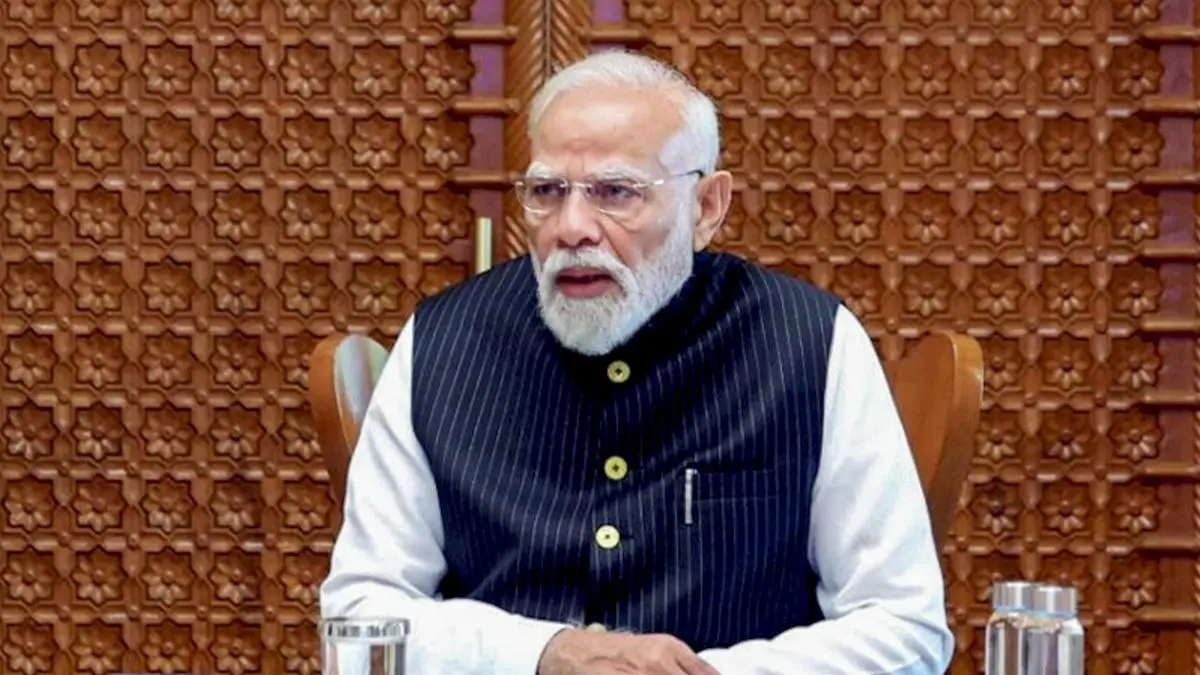
Group of Ministers, Secys to be formed to deal with critical needs of citizens

Prime Minister Narendra Modi chairs a high-level meeting to review the situation related to petroleum, crude, gas, power, and fertiliser sectors in view of the evolving West Asia situation.
| Photo Credit:
–Prime Minister Narendra Modi on Sunday directed the formation of a group of ministers and secretaries to work dedicatedly in a whole of government approach.
“The ongoing conflict in West Asia will have significant short, medium and long-term impact on the global economy and its effect on India were assessed and counter measures, both immediate and long-term, were discussed,” a statement issued by the government post the Cabinet Committee of Security meeting chaired by Modi. The meeting was attended by 13 ministers including Home, Defence and Finance.
The meeting made a detailed assessment of availability for critical needs of the common man, including food, energy and fuel security. Accordingly measures for short term, medium term and long term were discussed. “The impact on farmers and their requirement for fertilizer for the Kharif season was assessed. The measures taken in the last few years to maintain adequate stocks of fertilizers will ensure timely availability and food security. Alternate sources of fertilizers were also discussed to ensure continued availability in the future,” the statement said.
Import sources
The meeting deliberated upon diversifying sources of imports required by chemicals, pharmaceuticals, petrochemicals and other industrial sectors. “Similarly new export destinations to promote Indian goods will be developed in the near future,” the statement said.
In the meeting, PM instructed that all arms of government should work together to ensure least inconvenience to the citizens. “PM also asked for proper coordination with state governments to ensure no black-marketing and hoarding of important commodities,” the statement added.
Published on March 22, 2026