Category: Business

  • ‘Disregard the status quo’: Ex Google executive reveals how he climbed the ranks quickly

    ‘Disregard the status quo’: Ex Google executive reveals how he climbed the ranks quickly


    A former executive at Google says his rapid rise inside the tech giant did not come from following the usual corporate playbook — it came from breaking it.

    Alon Chen joined Google in 2006 at the age of 23 with no formal marketing background and no industry connections. Within five years, he had become a Chief Marketing Officer responsible for markets including Israel and Greece, helping build a $2-billion product line across more than 30 countries while earning a high six-figure salary and a seven-figure equity package.

    Looking back, Chen says the climb felt straightforward once he stopped treating company rules as fixed barriers.

    In an interview with Fortune, Chen said the key was questioning the status quo and acting on what he believed was the right course of action.

    “Climbing up was fairly natural and easy, simply because I just disregarded all the status quo and the rules and realized what’s the right thing to do, and went all the way with it,” he said.


    Asked for a promotion before the rules allowed it

    At Google, employees are typically expected to wait at least two years before seeking a promotion. Chen chose not to follow that timeline.

    Less than a year into his role, he approached his manager directly and made his case.

    “I just told my manager, listen, I know this is a year thing. Look what I’ve been able to achieve. It’s way more than anyone else. We’re going to put me up for promotion now,” he said.

    Chen believes many employees limit their growth by accepting company systems without questioning them.

    “We have all these rules, we have all these benchmarks, we have all these processes,” he said. “That’s what’s going to happen for most of you.”


    Launched a project even without approval

    Chen also recalled a moment when he moved ahead with a major initiative despite not receiving approval from senior leadership.

    While working on expanding the Google Partners programme internationally, his proposal was initially rejected by internal teams. Instead of shelving the idea, he decided to launch it in other markets anyway.


    The gamble worked.

    After the initiative proved successful internationally, senior teams approached him with a new request: expand the programme into North America as well.

    Chen says corporate environments can sometimes discourage initiative.

    “Corporate America can put you in these frames that discourage you,” he said, adding that the most successful people are often those willing to take calculated risks inside organisations.


    Entrepreneurship started in his teenage years

    Chen’s unconventional approach began long before his time at Google.

    Growing up near Tel Aviv, his family faced financial difficulties after his father was injured in a motorbike accident. That experience pushed him to start working early.

    At the age of 12, he began coding, although upgrading his computer became difficult because his family could not afford new hardware.

    By 15, he started negotiating with importers for computer parts and assembling machines himself. Soon he began selling computers to small businesses while still in high school.

    “It was my first entrepreneurial adventure,” he said, adding that the venture eventually grew into a sizable business serving thousands of small and medium-sized businesses.


    Leaving Google for his own startup

    Despite holding a senior role and earning a lucrative compensation package, Chen eventually decided to leave Google to build his own company.

    He went on to found Tastewise, an artificial intelligence platform that helps food companies analyse consumer trends and develop new products.

    The platform is now used by major food companies including PepsiCo, Nestlé, Mars, Incorporated, Kraft Heinz, Campbell Soup Company and Givaudan. The company has raised more than $71 million in funding.

    The idea for the business came from a surprisingly simple source — a family WhatsApp group where Chen’s mother would ask everyone what they wanted to eat before cooking.

    Although he says he now earns less as a startup founder compared to his corporate salary, Chen says he has no regrets about leaving.

    For him, the decision was about building something of his own rather than following a traditional career path.


    Read More

  • Rupee crashes past 95/$, logs worst annual fall in 14 years

    Rupee crashes past 95/$, logs worst annual fall in 14 years


    Mumbai: The rupee on Monday slumped to breach the psychologically crucial barrier of 95/$, upending market expectations of a stronger year-end showing, as it finished FY26 by retreating the most in 14 years – nearly 11%.

    The last month, coinciding with the Iran war, was particularly brutal and accounted for a 4% decline. The currency, which touched an all-time low of 95.21/$, had briefly advanced to 93.59/$ in the early hours, its strongest level on Monday. The trading amplitude for the unit was one of the widest Monday.

    Intervention from the Reserve Bank of India (RBI) in the last 15 minutes of trading lifted the local currency to close at 94.83/$ on the last trading day of the year. It closed at 94.81/$ on Friday.

    The rupee was widely expected to strengthen on Monday.

    Screenshot 2026-03-31 071933Agencies

    Rupee Seen Staying at 94-95 per Dollar

    This was following Friday’s central bank directives to curb lenders’ open positions in FX to $100 million. However, high dollar demand from oil companies, importers and hedge funds caused the rupee to retrace its steps and trade at record lows, traders said.

    “The curbs by RBI created an arbitrage between NDF and onshore rates. With simultaneous buying in the NDF market and selling in the domestic market, along with year-end dollar demand from oil companies and corporates, the rupee came under pressure,” said Anil Bhansali, head of treasury, Finrex Treasury Advisors.

    The rupee is expected to remain between 94/$ and 95/$ on April 2, when the market opens after a 2-day holiday.

    Currency markets are closed on March 31, April 1, and April 3, making this a short trading week.

    The currency opened at 93.59/$ on Monday and depreciated continuously till about 3:15 PM to a low of 95.22/$. At these levels, dollar sales by the RBI helped trim losses, allowing the rupee to close slightly stronger.

    “Push for dollars from oil companies, importers, hedge funds and corporates was very high due to sharp rupee appreciation in the morning,” said Kunal Sodhani, head of treasury at Shinhan Bank India.

    Read More

  • Suno launches v5.5 AI model with voice capture and personalization features

    Suno launches v5.5 AI model with voice capture and personalization features


    AI music generator Suno released version 5.5 of its platform on Friday (March 27), introducing a voice capture feature and two personalization tools that the company says are aimed at attracting first-time creators and working professionals.

    The voice capture feature, called ‘Voices’, lets users record or upload audio of themselves singing and incorporate that vocal identity into tracks generated by Suno.

    The feature is limited to Pro and Premier subscribers, and Suno has developed a verification layer that matches a voice to a random phrase that creators are prompted to speak.

    Voices are private by default, according to the announcement. Only the account holder can use a captured voice to generate songs. Suno says it plans to introduce voice sharing in future updates, but has not provided a timeline.

    Suno said: “The voice is the one instrument that every person carries with them, and yet most people never sing or share it with the world. With Suno, you can now capture your voice and create music with it.”

    “The voice is the one instrument that every person carries with them, and yet most people never sing or share it with the world. With Suno, you can now capture your voice and create music with it.”

    Suno

    Another new feature, ‘Custom Models’, lets subscribers upload tracks from their own catalog and tune v5.5 to reflect their personal styles.

    Suno said: “Now, when you upload tracks from your original catalog, you can build a personalized version of the model that knows your style — so the music it makes sounds more like you. Pro and Premier subscribers can create up to three.”

    The third feature, ‘My Taste’, is available across all subscription tiers. Suno says it learns what users are drawn to, such as their favorite genres and moods.

    On the latest features, Suno said: “From the beginning, we’ve built Suno around a simple belief: the best music starts with a human. Our tools exist to expand what people can create — to amplify the instinct, taste, and feeling that only a person brings to music.”

    “From the beginning, we’ve built Suno around a simple belief: the best music starts with a human. Our tools exist to expand what people can create — to amplify the instinct, taste, and feeling that only a person brings to music.”

    Suno

    The release comes as Suno continues to face criticism and lawsuits over its AI training model.

    The RIAA filed suit against both Suno and rival Udio in mid-2024, acting on behalf of all three majors, alleging “mass infringement” of copyright.

    Udio has since reached settlements with both Universal Music Group and Warner Music Group, signing licensing agreements with each for a new AI music platform expected to launch this year.

    Warner Music Group settled with Suno in November, but the AI company remains locked in legal battles with Universal Music Group and Sony Music Entertainment, as well as European music rights organizations, including Denmark’s Koda and Germany’s GEMA.

    Suno, which closed a $250 million Series C funding round in November 2025 at a $2.45 billion post-money valuation, reported in February that it has reached 2 million paid subscribers and $300 million in annual recurring revenue. The company says over 100 million people have used its platform.

    The launch arrives days after MBW founder Tim Ingham questioned where Suno’s WMG-licensed V6 model was, noting in his latest Tim’s Take column that it had been 114 days since the settlement was announced with no new licensed model in sight.

    Despite its legal challenges, Suno has been investing heavily in music industry relationships. The company has hired former Warner Music Group executive Paul Sinclair as Chief Music Officer, former Merlin CEO Jeremy Sirota as Chief Commercial Officer, and former Spotify executive Sam Berger as Senior Director of Artist Partnerships.

    Those hires have not shielded Suno from criticism. Last month, a coalition of artist representatives launched a ‘Say No to Suno’ campaign, describing the company as a “brazen smash and grab” platform.

    And a public PR battle had previously broken out between Suno and Universal Music Group over the question of “walled gardens” in AI music.Music Business Worldwide

    Read More

  • US trade chief sees only limited role for WTO after failed meeting in Cameroon

    US trade chief sees only limited role for WTO after failed meeting in Cameroon


    US trade chief sees only limited role for WTO after failed meeting in Cameroon
    US trade chief sees only limited role for WTO after failed meeting in Cameroon

    Read More

  • Access Error


    The page you are trying to access is unavailable because we detected potential misuse. Please wait a moment and try again.

    For help please visit help.ft.com. We
    apologise for any inconvenience.

    The following information can help our support team to resolve this issue.

    Reason
    Access Blocked
    Request ID
    9e4ae45ccb6a47da
    Status Code
    403

    Read More

  • Jerome Powell to Gen Z: don’t fear AI — master it

    Jerome Powell to Gen Z: don’t fear AI — master it


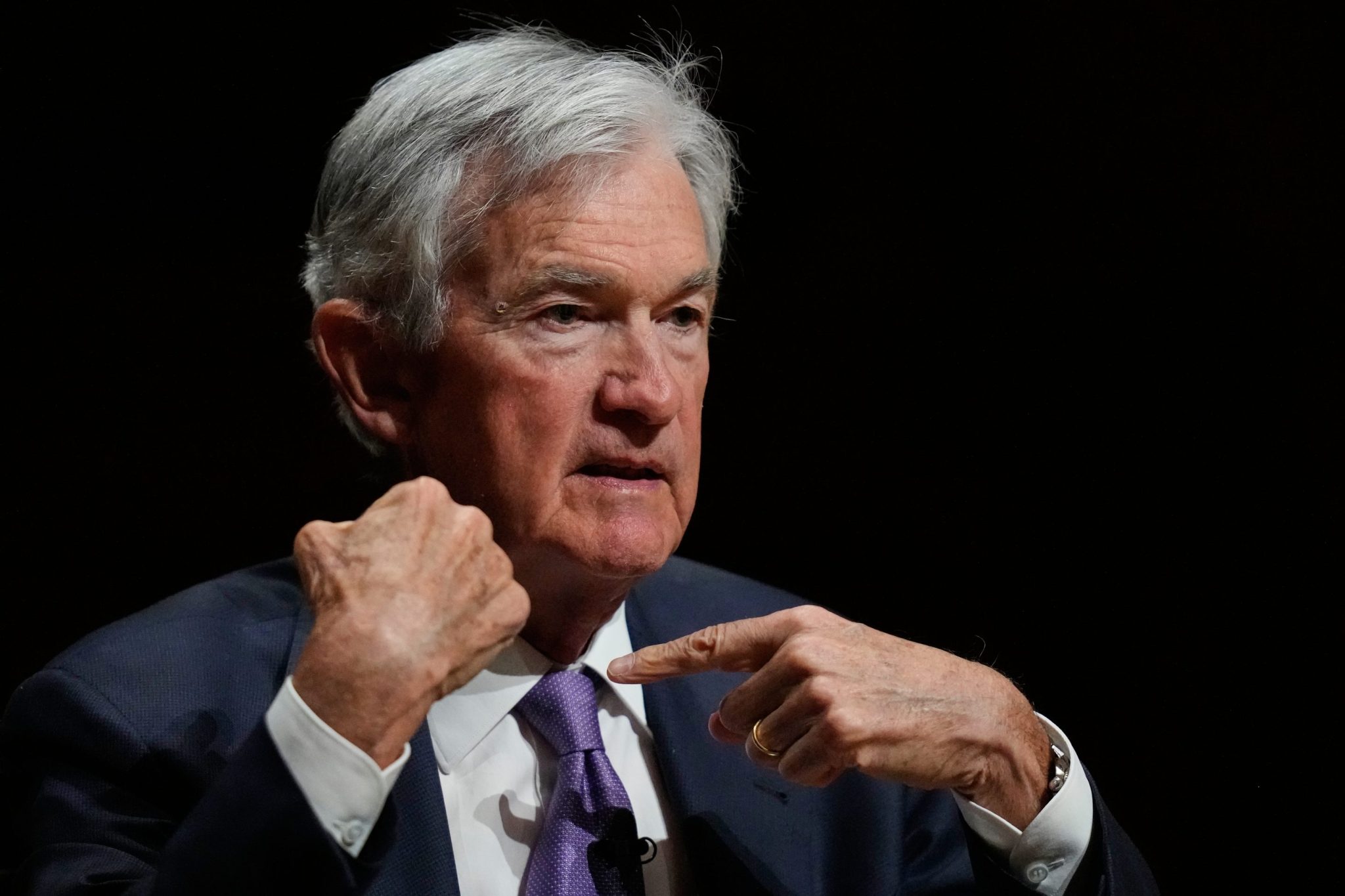
    Federal Reserve Chair Jerome Powell delivered a pointed message to the next generation of workers last week: Stop worrying about artificial intelligence and start learning how to use it.

    Speaking before nearly 400 students at a Harvard economics class in a wide-ranging conversation moderated by Professor David Moss, Powell acknowledged that Gen Z is entering one of the more challenging job markets in recent memory—and said AI is both part of the problem and the solution.

    Moss put Powell on the spot immediately, asking on behalf of the students in the room: “They’re entering into an uncertain time—an economy where new job formation is lower for many reasons. In particular, jobs that were plentiful a couple of years ago for students coming out of college are no longer so. And AI sits as this remarkable technological transformation that is both promising and existentially threatening.”

    Powell said he and his colleagues at the central bank were “well aware of the current situation for students coming out. It’s a time of very low job creation. And also you have AI going on.” Allowing that something “more longer-term, more secular” is probably happening around technology and AI, he was direct: “there’s no denying it’s a challenging time to enter the labor market.”

    Powell also cited low job creation, shifts in immigration policy, along with the disruptive force of new technology. But rather than counsel caution, he pointed students toward the tools disrupting their future careers. “I think you’re in a situation where you need to invest the time to really master the use of these new technologies, and that should stand you in good stead.”

    Powell spoke from personal experience. “My observation is that these large language models make people much more productive,” he said. “I feel like it’s making me more productive, because I can learn things really quickly.” He added that conversations with his son and others in the workforce had reinforced that view: for those who learn to use AI well, it is an amplifier, not a threat.

    The AI washing wave is already here

    The remarks come at a delicate moment. The U.S. unemployment rate remains low, but Powell was candid that the headline figure offers little comfort to recent graduates struggling to land their first jobs. New college hires that were plentiful just a few years ago have grown scarce, he noted, as companies assess what work can be automated.

    Powell all but confirmed that many large companies are eager to follow Block CEO Jack Dorsey’s lead and lay off thousands of workers, a practice that some, including OpenAI CEO Sam Altman, call “AI washing.” He said that “major U.S. companies—and we talked to a lot of those people who run those companies—they’re all looking at what they can do” in terms of staff reductions. “The truth is, they can take out a lot of jobs that can be automated by a very smart large language model. They just can, and they will, because their competitors are doing it and they can’t afford to have higher costs than their competitors.”

    Still, Powell pushed back against fatalism. He cited the historical pattern of technological disruption—stretching back to the invention of the loom—as evidence that new tools, however threatening in the short term, ultimately raise productivity and living standards.

    Jerome Powell on the Luddite era

    Powell put on his econ nerd hat for a second, citing all the similar technological advances throughout the history of modern capitalism. “If you look back through history—to generalize, this has been going on for a couple hundred years, since the loom was invented, right, to put all the people who were doing weaving out of business. But in all cases, it has wound up raising productivity and raising living standards—as long as the society keeps producing people who have the skills and aptitudes to benefit from that technology.”

    Powell predicted “that will be the case here,” when it comes to AI—just a new version of the loom. “It may take some patience and all that,” he said, “but in the longer term, this economy is going to give you great opportunities. And just be a little optimistic about that.”

    The crucial question, though, is just how much longer that longer term ends up being. When mechanical weaving displaced textile workers in 19th-century England, after all, the transition was brutal, sparking the Luddite movement of displaced workers destroying the machines that had taken their jobs and giving economic historians. What if the “long term” is the whole lifespan of the Gen Z generation?

    That was exactly Moss’ follow-up question: does longer term mean 10, 20, or even 40 years? “You know,” Powell responded, “it’s so hard to say.” All the AI adoption that he sees happening in the 2020s is focusing on existing middle management, back-office jobs, and Powell speculated that fluent AI users should be unaffected by this, while admitting that he didn’t know the answer. “There can be a period during which it’s challenging,” he acknowledged to the professor, “and this may be one of those. But nonetheless, I would just say it’s out there and it’s out there to be done. And I would be, medium and longer term, very optimistic about this economy compared to any other economy.”

    Read More

  • Access Error


    The page you are trying to access is unavailable because we detected potential misuse. Please wait a moment and try again.

    For help please visit help.ft.com. We
    apologise for any inconvenience.

    The following information can help our support team to resolve this issue.

    Reason
    Access Blocked
    Request ID
    9e4a1908382fff63
    Status Code
    403

    Read More

  • Global Markets Tumble as Middle East Conflict Escalates, Oil Surges

    Global Markets Tumble as Middle East Conflict Escalates, Oil Surges


    Stocks plunged and oil prices spiked as Iran-backed Houthi forces joined the conflict, prompting a US military buildup and raising fears of prolonged war and economic damage.

    Key Details:

    • Japan and South Korea markets fell over 4%, MSCI Asia Pacific down 2.4%; US and European futures also declined
    • Brent crude jumped 3.4% to $116/barrel, up 91% YTD; Macquarie warns oil could hit $200 if Strait of Hormuz remains closed through June
    • Aluminum rose 6% after Iran attacked regional production sites; gold dipped 0.8% to ~$4,450/oz
    • Trump signaled possible deal with Iran allowing 20 oil vessels through Hormuz, but Israel struck Tehran and Saudi Arabia intercepted drones
    • Recession risk rising — Goldman Sachs at 30%, Pimco >33%; bond managers preparing for economic slowdown and yield declines

    The 2026 Iran war has exposed a fundamental contradiction in the economic architecture of the conflict, with the US imposing enormous costs on many of the same economies it relies on as trading and strategic partners.

    The conflict has also highlighted the importance of resilience investments, with nearly three in four business leaders prioritizing resilience as a driver of growth rather than a cost. The global price tag of war in the Middle East is expected to be significant, with the IEA warning of a major energy crisis and the World Economic Forum’s Global Risks Report 2026 highlighting the economic implications of the conflict.

    Investors are increasingly pivoting toward capital preservation strategies as mounting concerns over prolonged geopolitical conflict, surging energy prices, and persistently elevated interest rates converge to fuel fears of a broad-based global economic slowdown. The shift in sentiment has been swift and decisive — risk assets have come under pressure as portfolio managers reduce exposure to equities and other volatile instruments in favor of safer havens such as short-duration bonds, gold, and cash equivalents. Markets are now pricing in a significantly higher probability of recession, with key indicators — including inverted yield curves, weakening manufacturing data, and tightening credit conditions — reinforcing the view that the global economy may be heading into a prolonged contractionary phase. Central banks, already under pressure to balance inflation control with growth support, face an increasingly narrow path forward, leaving investors with little confidence that a soft landing remains achievable.

    Read More

  • Alphabet Shares Hover Near Buy Territory As AI Momentum Offsets Macro Headwinds, Analysts Say

    Alphabet Shares Hover Near Buy Territory As AI Momentum Offsets Macro Headwinds, Analysts Say


    Alphabet Inc.’s Class C shares (GOOG) traded around $274.92 midday Tuesday in New York, up 0.42% on the session, as investors weighed the tech giant’s aggressive artificial intelligence investments against broader market volatility and looming regulatory risks.

    Having won a court ruling that Google had a monopoly in online ad technology, US attorneys could recommend that the tech titan be order to spin off its ad exchange operations
    AFP

    The Mountain View, California-based company, whose Google dominates online search and advertising, has seen its stock pull back from February highs near $349 amid concerns over heavy capital spending on AI infrastructure. Yet many Wall Street analysts maintain a “Strong Buy” consensus, with average price targets suggesting 20-30% upside over the next 12 months.

    Alphabet reported robust full-year 2025 results in early February, with consolidated revenue climbing 15% to a record $402.8 billion, surpassing $400 billion for the first time. Fourth-quarter revenue jumped 18% to $113.8 billion, beating estimates, while earnings per share rose 31% to $2.82. Google Cloud revenue surged 48% in the quarter to $17.7 billion, driven by demand for AI infrastructure and solutions, with operating margins expanding sharply.

    “Google Search & other” revenue grew 17% in the fourth quarter, while YouTube ads and subscriptions pushed annual YouTube revenue above $60 billion. Subscriptions across consumer services, including Google One and YouTube Premium, now exceed 325 million paid users.

    CEO Sundar Pichai highlighted momentum in AI during the earnings call. The Gemini app reached more than 750 million monthly active users, and the company’s first-party models process over 10 billion tokens per minute via API. Pichai pointed to AI-driven expansion in Search usage and accelerating growth across the business.

    Alphabet guided for 2026 capital expenditures between $175 billion and $185 billion, primarily for AI data centers and infrastructure. That hefty outlay has weighed on sentiment in recent weeks, contributing to a roughly 12% year-to-date decline through late March as part of a broader “Magnificent 7” tech selloff that erased hundreds of billions in market value.

    Yet analysts largely view the spending as a necessary moat. Google Cloud ended 2025 with an annual run rate above $70 billion. Recent updates to Gemini, including the 3.1 Pro model for complex reasoning and Nano Banana 2 for faster image generation, underscore Alphabet’s push to integrate AI across products.

    Waymo, Alphabet’s autonomous driving unit, continues expanding robotaxi operations in U.S. cities and introduced the Waymo World Model in February — a generative AI system for hyper-realistic simulation built on DeepMind’s Genie 3. The technology aims to accelerate safe scaling of self-driving fleets by simulating rare real-world scenarios.

    From an Australian perspective, Alphabet’s performance matters for local investors and businesses. Google commands a dominant share of search and digital advertising in Australia, where online ads fuel much of the company’s revenue. Australian companies increasingly adopt Google Cloud for AI workloads, while consumers rely on Gemini tools and YouTube, which has become a key platform for local creators and advertisers.

    Regulatory clouds persist. The U.S. Department of Justice continues pursuing antitrust cases against Google, including appeals in the search monopoly ruling and ad tech litigation. In March, a U.S. judge dismissed a lawsuit from news publishers accusing Google of exploiting content without compensation, though broader remedies could still reshape distribution deals or data sharing.

    Alphabet is appealing certain aspects while arguing that innovation, not illegal conduct, drives its success. Markets have so far shrugged off the legal risks; the stock rose sharply in 2025 despite court losses, reflecting confidence in underlying growth.

    Valuation remains reasonable relative to growth prospects. The trailing price-to-earnings ratio sits around 25.4, with a forward P/E near 23-24. Market capitalization hovers near $3.3 trillion to $3.6 trillion depending on daily moves. Free cash flow generation stays strong, supporting the dividend — yielding about 0.31% — and ongoing share buybacks.

    Analyst sentiment tilts bullish. Consensus ratings from dozens of firms cluster at “Buy” or “Strong Buy,” with 12-month price targets averaging roughly $345 to $385, implying significant upside from current levels. Some targets reach as high as $420, while a handful sit lower around $190-270 in more cautious scenarios. Recent upgrades from firms like Scotiabank (to $400) and Raymond James (Strong Buy at $400) cite AI leadership across large language models, cloud infrastructure via custom TPUs, consumer reach in Search, and enterprise adoption.

    Motley Fool contributors and Zacks analysts have debated near-term headwinds from macro factors and capex, rating the stock a Hold in some contexts but acknowledging long-term potential. One recent analysis noted the stock’s slight decline amid broader tech weakness but highlighted resilient fundamentals.

    Cloud growth and AI monetization could offset any near-term margin pressure from spending. Google Cloud’s backlog has expanded rapidly, and AI-related products are seeing uptake among enterprises.

    Risks include intensified competition in AI from OpenAI, Anthropic and others, potential slowdowns in ad spending if economic conditions weaken, and execution challenges on massive infrastructure builds. Currency fluctuations affect reported results, though constant-currency growth remains solid.

    For Australian investors, currency exposure adds another layer: the Australian dollar’s movements against the U.S. dollar influence returns on U.S.-listed shares. Many access GOOG or the voting Class A shares (GOOGL) via local brokers or exchange-traded funds tracking U.S. tech or Nasdaq.

    Pichai and the leadership team have emphasized disciplined AI investment while maintaining profitability. Operating margins held steady around 32% in the fourth quarter despite higher R&D and other costs, including a one-time employee compensation charge tied to Waymo.

    Looking ahead, the next earnings report in late April will provide fresh insight into Q1 performance and any updates on capex or AI traction. Analysts will scrutinize whether Cloud acceleration continues and how Gemini integrations drive Search and YouTube engagement.

    In the meantime, the stock’s recent pullback has some long-term investors viewing it as an entry point. With no sell ratings in many consensus tallies and broad recognition of Alphabet’s diversified moats — from advertising scale to cloud and emerging bets like Waymo — the prevailing view is that AI tailwinds will ultimately reward patience.

    Whether GOOG qualifies as a “buy now” depends on time horizon and risk tolerance. Short-term traders may hesitate amid volatility and macro uncertainty, including interest rate expectations and tech sector rotations. Longer-term investors focused on AI infrastructure and digital dominance see compelling value, especially if the stock remains depressed relative to optimistic targets.

    Alphabet has navigated regulatory scrutiny, competitive pressures and massive technological shifts before. Its latest chapter centers on turning heavy AI bets into sustained revenue and profit growth while defending core businesses.

    From Sydney trading desks to Melbourne superannuation funds, the question echoes: Can Google’s AI leadership convert into shareholder returns that outpace the broader market? Early signals from earnings, product updates and analyst targets suggest many believe the answer is yes — provided execution matches ambition in the year ahead.

    Read More

  • PHL tops ranking of outsourcing destinations

    PHL tops ranking of outsourcing destinations


    PHL tops ranking of outsourcing destinations

    By Beatriz Marie D. Cruz, Reporter

    THE PHILIPPINES has topped a global ranking for outsourced talent, winning points for strong English proficiency and competitive labor costs, according to Ataraxis, a US hiring platform.

    The company’s Global Outsourcing Talent Index, which  evaluated 193 countries, classified the Philippines as an “elite sourcing hub” and described the country as the “most attractive destination for companies hiring global remote talent.”

    Rounding out the rest of the top 10 were Malaysia, India, Chile, South Africa, Nigeria, Peru, Indonesia, Argentina, and Romania. 

    The index evaluates countries across five key factors that influence global hiring: labor cost (52.5%), English proficiency (20%), talent availability (17.5%), digital infrastructure (5%), and business, legal, and political stability (5%).

    According to the report, the Philippines scored 96 on labor cost; 90 on English proficiency; 90 on talent depth; and 70 on digital infrastructure. Its lowest rating (60) was for business stability, where it was classified as “moderate risk.”

    Jack Madrid, president and chief executive officer at the IT & Business Process Association of the Philippines, said the ranking represents the industry’s value proposition to global firms. 

    “A talent base of 1.9 million digital Filipino workers, validated on a global scale, signals that the country can support both scale and more complex work, making it an attractive destination for companies looking to expand or diversify their operations,” he said in an e-mail.

    To retain its position, the industry must focus on upskilling talent to climb the information technology-business process management value chain.

    “This requires sustained investment and strong coordination between government and industry to keep policies, education, and training aligned with global demand,” Mr. Madrid said.

    Meanwhile, the Philippines’ low stability score reflects concerns about policy consistency and exposure to external shocks, according to Philippine Institute for Development Studies Senior Research Fellow John Paolo R. Rivera.

    “The government needs to strengthen policy predictability and regulatory clarity as investors value stable rules, faster approvals, and less bureaucratic friction,” he said via Viber.

    Mr. Rivera also cited the need to improve the reliability of power, internet, transport, and cybersecurity infrastructure.

    Managing inflation, a stable currency, and credible fiscal policy would also help reduce perceived risks, he said.

    “Strengthening governance and ease of doing business, including contract enforcement and institutional coordination, can significantly improve investor confidence and lift the country’s business stability score,” Mr. Rivera said.

    Read More