Co-CEO of Swiss financial group says country should preserve its competitiveness in the wake of Credit Suisse’s collapse
Read More
Category: Business
-
Private bank boss warns Switzerland must avoid ‘over-regulation’
-

Geopolitical tensions trigger market sell-off, dragging SET below 1,400
The Stock Exchange of Thailand (SET) index fell below the critical 1,400-point threshold on March 23, 2026, closing at 1,398.82 due to heightened geopolitical tensions in the Middle East and a global “risk-off” sentiment.
While the 2.38% decline reflects significant investor anxiety and a capital flight toward safe-haven assets like gold and bonds, market analysts maintain that the sell-off is primarily driven by external macro pressures rather than a deterioration in domestic company fundamentals. The conclusion among experts is that while high volatility is likely to persist in the near term, the current correction represents a short-term shock that may eventually offer selective investment opportunities if geopolitical conditions stabilize.
Key Points
- The SET index dropped 34.17 points (2.38%) to finish at 1,398.82, with total trading value reaching 57.29 billion baht.
- This marks the first time the benchmark index has slipped below the 1,400 level since early March 2026, erasing a brief mid-month recovery.
- The sell-off was characterized as “panic selling,” with energy stocks leading the decline amidst heightened global uncertainty.
- Market experts emphasize that the downturn is fueled by external factors—such as Middle East conflicts, global inflation, and economic slowdown concerns—rather than internal earnings issues within Thai listed companies.
- Investors are increasingly moving capital away from equities and into safe-haven assets, including gold and bonds, to mitigate risk.
- Strategists warn that the Thai market remains highly sensitive to global sentiment and currency movements, suggesting that volatility will remain high as long as geopolitical risks intensify.
On March 23, 2026, the SET index experienced a significant decline of 2.38%, led primarily by the energy sector. Analysts attributed the sharp sell-off to “panic selling” as investors reacted to escalating geopolitical tensions in the Middle East.
The Stock Exchange of Thailand closed at 1,398.82 points, falling below the 1,400-point threshold for the first time since early March. Among the major individual decliners were Delta Electronics, which saw its shares drop by 3.35%, and Advanced Info Service, which fell by 2.89%. Other notable losers during the session included Gulf Energy Development, Airports of Thailand, and CP All.
Market strategists said that the downturn was driven by external global risk-off sentiment rather than domestic fundamentals. Investors shifted capital toward safe-haven assets like gold and bonds as the U.S.-Iran war threatened global energy infrastructure and supply chains. Despite the sharp correction, some analysts believe the breach of 1,400 may create selective opportunities in sectors with strong pricing power and solid fundamentals once the market stabilizes.
How are regional Asian markets performing compared to the SET?
On March 23, 2026, regional Asian markets faced a broad-based decline alongside the Stock Exchange of Thailand (SET), with several major bourses recording even sharper percentage drops than Thailand’s 2.38% loss. While the SET index fell below the 1,400-point threshold, South Korea’s market shed 5.2% and Japan’s Nikkei fell 3.8% on the same day.
The MSCI Asia-Pacific index, excluding Japan, lost 2.5% as investors reacted to escalating threats between the United States and Iran. Malaysia has emerged as a relative outlier in the region, with its benchmark index losing only 1.2% this month due to its status as a net energy exporter. Analysts say the Middle East war is driving a “risk-off” sentiment, causing global funds to exit emerging markets in favor of safe-haven assets.
Other People are Reading
-
OnlyFans Owner Leonid Radvinsky with Net Worth of $4.7 Billion Dies at 43 After Long Battle with Cancer
Leonid Radvinsky, the reclusive Ukrainian-American billionaire who transformed the adult content platform OnlyFans into a global powerhouse generating billions in revenue, died March 23, 2026, at age 43 after a prolonged private struggle with cancer, the company confirmed in a statement.
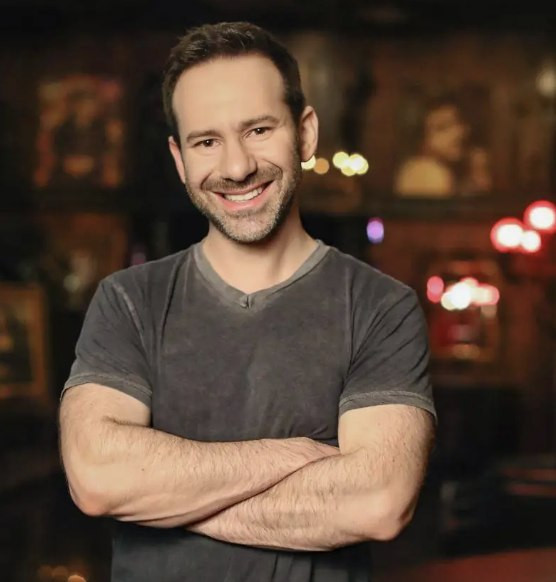
Leonid Radvinsky
“We are deeply saddened to announce the death of Leo Radvinsky,” an OnlyFans spokesperson said. “Leo passed away peacefully after a long battle with cancer. His family have requested privacy at this difficult time.”
The announcement, released Monday morning, shocked the tech and entertainment industries, where Radvinsky—often called Leo—maintained an extraordinarily low profile despite owning one of the most controversial and profitable digital platforms of the past decade. No further details on the type of cancer or exact circumstances of his death were provided, aligning with the family’s wish for privacy.
Radvinsky acquired Fenix International Limited, the parent company of OnlyFans, in 2018 through a series of transactions that positioned him as the majority shareholder and director. Under his leadership, the subscription-based site exploded in popularity during the COVID-19 pandemic, allowing creators—primarily in adult entertainment but also musicians, fitness instructors and others—to monetize direct fan support. By 2024, Forbes estimated Radvinsky earned approximately $1.9 million per day from the platform, contributing to his billionaire status and making him one of the wealthiest figures in online content.
OnlyFans reported paying out more than $5 billion to creators in recent years, with the company taking a 20% cut on transactions. The platform’s model revolutionized the adult industry by shifting power from traditional studios to individual performers, though it faced repeated scrutiny over content moderation, underage access concerns and payment processor pressures. In 2021, OnlyFans briefly announced plans to ban sexually explicit material before reversing course amid creator backlash, a decision attributed to Radvinsky’s influence.
Born in Odesa, Ukraine, around 1982, Radvinsky moved to the United States as a child and later attended Northwestern University. He began his entrepreneurial career in the late 1990s and early 2000s, profiting from early internet ventures including spam email operations and adult websites. By his teens and early 20s, he had built significant wealth in digital advertising and pornographic content distribution, experiences that informed his later investment in subscription platforms.
Radvinsky remained intensely private, rarely giving interviews or appearing publicly. His personal life stayed largely out of the spotlight, with limited information available about family or relationships. Reports described him as based in the United Kingdom, where OnlyFans is headquartered in London.
The death leaves uncertainty about OnlyFans’ future ownership and direction. As majority shareholder, Radvinsky’s estate now controls the company, though no succession plan has been publicly disclosed. The platform, which boasts millions of creators and subscribers worldwide, has continued operations without interruption, but industry observers speculate potential changes in leadership or strategy could emerge.
Radvinsky’s passing adds to a string of notable losses in 2026, though his low visibility meant the news caught many by surprise. Tributes from within the adult industry and tech circles began circulating on social media shortly after the announcement, with creators crediting OnlyFans for financial independence and others acknowledging its role in reshaping content monetization.
OnlyFans has not commented further beyond the initial statement, and efforts to reach representatives for additional details were unsuccessful. The company’s focus remains on supporting its community during this period, the spokesperson emphasized.
Radvinsky’s legacy is complex: a pioneer who democratized earnings for sex workers and influencers while drawing criticism for profiting from an industry often linked to exploitation and regulatory challenges. His quiet stewardship turned OnlyFans from a niche site into a cultural and economic force, influencing how digital creators sustain careers in the streaming era.
As details remain scarce, the announcement underscores the private toll of his illness. Friends, colleagues and the broader OnlyFans ecosystem now mourn a figure who shaped modern online entrepreneurship from behind the scenes.
-

On Filipinos’ changing attitudes about retirement
By Bjorn Biel M. Beltran, Special Features and Content Assistant Editor, BusinessWorld
For many Filipinos, retirement planning is shaped less by financial products and more by social expectations. The country’s strong family culture has traditionally meant that aging parents could rely on their children or extended relatives for support in later life.
Formal retirement planning often takes a secondary role, with many workers depending primarily on state pensions such as those provided by the Social Security System (SSS) and the Government Service Insurance System (GSIS), supplemented by whatever personal savings they could set aside during their working years.
“Traditionally, many Filipinos expect their children or extended family to support them in old age, reflecting strong family-oriented culture,” said Trust Officers Association of the Philippines (TOAP) Investor Relations & Education Director Patricia Lei S. Alvarillo, who is also First Vice-President and Head of the Retail Accounts Department at BDO Unibank’s Trust and Investments Group.
But that model is gradually shifting. Rising living costs, longer life expectancies, and economic shocks in recent years have pushed more Filipinos to reconsider how they prepare for retirement. Increasingly, workers—particularly among the middle class and younger generations—are seeking their own paths toward financial independence.
“More Filipinos now want financial independence in retirement to avoid becoming a burden to their children. This represents a cultural shift toward individual financial responsibility, especially among middle-class and younger workers,” Ms. Alvarillo noted.
Indeed, a growing number of Filipinos today are showing growing confidence in saving and making early financial decisions, in part due to the rise in accessibility of digital banks in the country.
According to a survey by the Digital Bank Association of the Philippines (DiBA PH), the country rose to 62 this year from 56 in 2024 on the Financial Health Index, which measures the four key areas of financial wellness—that is, financial proficiency, behavior, security, and freedom. This has moved the country into the “good” range of the index, from a previous “low”.
Pressfoto | FREEPIK Financial confidence among Filipinos has risen along with it, as more Filipinos now report having emergency savings, with 73% saying they have money set aside. Most respondents, however, said their savings would last only up to one month.
Sun Life Asia’s latest Financial Resilience Index echoed similar results, showing increased short-term confidence among Filipinos, despite persistent challenges in long-term planning and resilience. The study found that 66% of Filipinos feel financially secure at present, jumping from the previously recorded 45%. Furthermore, confidence in managing monthly finances also rose from 57% to 69%, suggesting improved short-term financial resilience.
Looking long-term, however, confidence dipped, with only 64% feeling capable of meeting future goals, down from 72%. According to the survey, one in three Filipinos say that, in case of income loss or illness, they would not be able to sustain themselves for more than three months without external support. This vulnerability is more pronounced in younger respondents based in rural areas, as the demographic has limited emergency savings and lower access to financial tools.
Security seems to be the main issue on Filipinos’ minds. A separate survey conducted by Metropolitan Bank & Trust Co. found that 21% of 1,200 respondents save mainly to build an emergency fund or prepare for future needs. In Metro Manila, 23% of Filipinos say financial stability is their top concern.
Ms. Alvarillo attributed this behavioral shift to significant shocks like the pandemic, which reshaped how many Filipinos thought about money, savings, and retirement.
“It acted as a financial ‘wake-up call’ changing behavior in both short-term survival decisions and long-term financial planning. Some Filipinos realized that they need to keep some liquid assets for emergency purposes,” she said.
Filipino Gen Z in particular are approaching money differently from their elders, with habits reshaped by technology, rising living costs, and exposure to global financial trends.
Organizations such as TOAP are playing an increasingly visible role in strengthening retirement planning in the country. Trust officers and fiduciaries serve as professional stewards of client assets, managing pension funds, investment portfolios, and retirement accounts in accordance with strict fiduciary standards.
Their work often involves designing diversified portfolios that combine traditional bank deposits with investment instruments such as bonds, equities, and managed funds, calibrated to a client’s time horizon and risk tolerance.
These services are especially important in a context where many workers are recognizing that state pension systems like the SSS and the GSIS may not be sufficient on their own to sustain retirement needs, as Ms. Alvarillo points out.
“Many Filipinos still hold misconceptions about retirement planning, which often leads to insufficient preparation for old age. These misconceptions are usually shaped by culture, optimism about future income, or lack of financial planning,” she said.
Trust entities work closely with the Bangko Sentral ng Pilipinas (BSP) and the Securities and Exchange Commission to strengthen governance frameworks while modernizing financial services. These efforts include improving digital onboarding and administration for retirement products such as the Personal Equity and Retirement Account (PERA), which allows Filipinos to build tax-advantaged retirement savings through professionally managed investment options.
“The financial literacy provided by various trust entities and the BSP is actually helpful in addressing these gaps,” Ms. Alvarillo noted.
As Filipinos increasingly seek financial independence in later life, the trust industry’s role as both asset manager and financial educator is becoming central to building a more resilient retirement landscape.
This article appears on the latest BusinessWorld In-Depth’s special edition with the Trust Officers Association of the Philippines for Trust Consciousness Week. To get your free copy, go to https://bworld-x.com/product/free-beyond-today-a-modern-strategy-for-retirement-planning/.
Spotlight is BusinessWorld’s sponsored section that allows advertisers to amplify their brand and connect with BusinessWorld’s audience by publishing their stories on the BusinessWorld Web site. For more information, send an email to online@bworldonline.com.
Join us on Viber at https://bit.ly/3hv6bLA to get more updates and subscribe to BusinessWorld’s titles and get exclusive content through www.bworld-x.com.
-
Q3 Results On Jan 15: L&T Tech And HDFC Life — Check Estimates
L&T Technology Services’ net profit may increase 3.3% to Rs 340 crore from Rs 329 crore in the previous quarter.
Read More -
Kerala’s familiar LDF–UDF script faces disruption

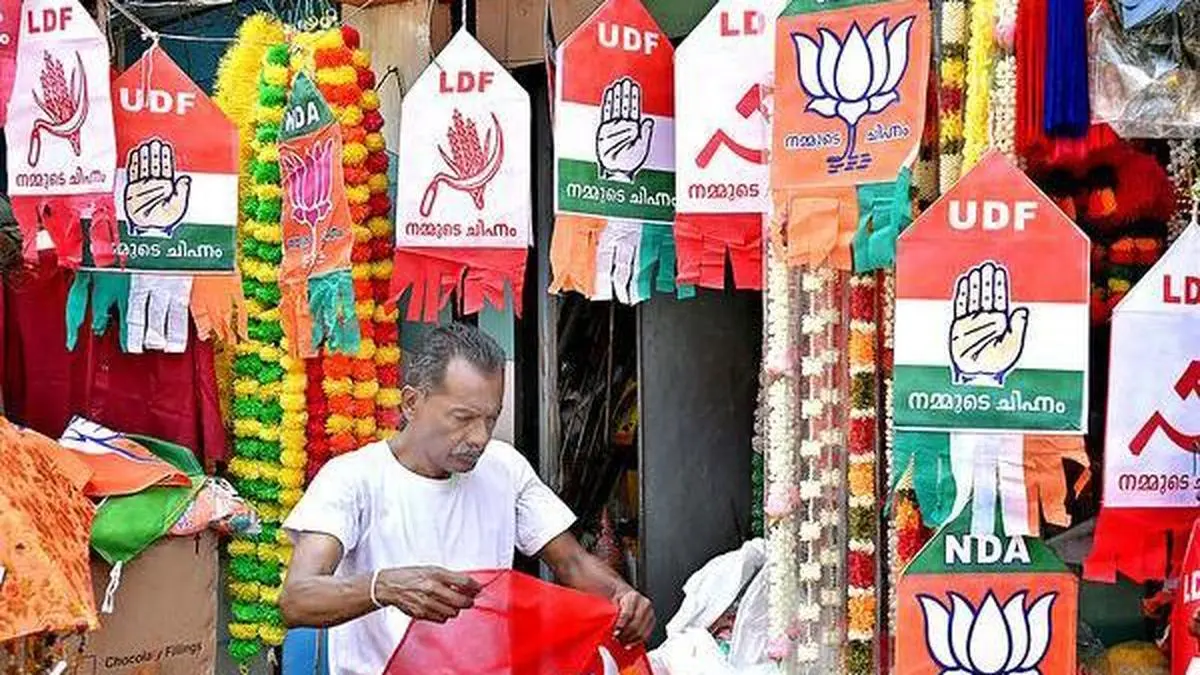
A worker arranging election materials of different political parties at a publicity materials store in Chalai market, Thiruvananthapuram
The Bharatiya Janata Party-led National Democratic Alliance has muscled its way to disrupt the near ritualistic two-front rivalry between the Left Democratic Front (LDF) and the United Democratic Front (UDF) in Kerala. This time, that familiar script faces disruption, with NDA pressing hard to transform the Assembly Elections into a three-cornered contest in the southern State.
Hardly have elections in Kerala promised a contest as competitive as the one now unfolding, with all three fronts striking aggressive postures early in the campaign. The incumbent LDF aims for a historic third consecutive term in what remains its last major bastion, while the Opposition UDF faces a fight to reclaim ground it considers familiar turf. The BJP, meanwhile, hopes to expand its footprint sufficiently to turn the contest triangular, and potentially force a hung Assembly that could allow it to play kingmaker.
The CPM-led LDF has set an ambitious target of winning 110 seats in the 140-member Assembly (it holds 99 in the outgoing House), while the Congress-led UDF is eyeing a tally of over 100 seats (from 41 at present). The BJP-led NDA, whose best showing so far has been one seat each in the Assembly and Lok Sabha, is seeking to push its tally into double digits, a threshold that could significantly alter post-election arithmetic.
The BJP’s attempt to break the LDF-UDF duopoly received a morale boost in the recent municipal polls, where the NDA scored a symbolic breakthrough by capturing the prestigious Thiruvananthapuram Corporation. The victory was significant enough for Prime Minister Narendra Modi to travel to the State to celebrate the win and address a rally, a move widely interpreted as signalling the party’s determination to expand its organisational base in Kerala.
Whether the electorate is ready for such a transition remains uncertain. The unusually short campaign window, among the briefest in the State’s history until polling day on April 9, leaves little time for course correction. Compounding this are logistical setbacks, including the fallout from SIR, which affected several BJP strongholds, including parts of Thiruvananthapuram.
Early campaign turbulence has also taken a toll on the UDF, where prolonged wrangling over candidate selection stretched across four days, costing valuable campaign time. Its rivals watched closely as the Opposition struggled to close ranks. Adding to the campaign uncertainty, a cooking gas shortage across parts of the State has threatened disruption to restaurants and street food vendors, an issue with the potential to influence voter sentiment at the grassroots level.
Signs of strain have surfaced within the ruling LDF as well. Internal dissensions, particularly in traditional strongholds such as Kannur, have dented the image of unity long associated with the Communist Party of India (Marxist). At least 10 senior LDF leaders, including former MLAs and a minister, have switched sides to contest under rival banners, hinting at fractures within the cadre base.
cadre fatigue
Analysts point to growing signs of political wear and possible cadre fatigue as the LDF attempts to secure a third straight term, a feat never before achieved in Kerala’s electoral history. The Congress-led UDF, for its part, continues to grapple with factionalism and leadership tussles that have periodically undermined its campaign momentum.
This evolving churn has created space for the NDA to position itself as a viable third alternative. Local body polls held in December, often viewed as a semi-final ahead of Assembly elections, provided a template for campaign strategies. While the UDF registered strong overall gains, the NDA’s capture of the Thiruvananthapuram Corporation stood out as a politically significant breakthrough, even though its vote share gains remained modest. The LDF, which performed below expectations in these polls, sought to stabilise its position by granting Assembly tickets to as many as 56 sitting MLAs, signalling continuity as a campaign theme.
anti-incumbency pressures
With anti-incumbency pressures, Opposition factionalism and an emboldened BJP seeking to expand its base, Kerala’s electoral landscape appears to be moving beyond its traditional binary. Whether that shift translates into a durable three-front contest, or merely reshapes margins within the existing order, will determine if this election marks a structural turning point in the State’s politics
Published on March 23, 2026
-

Why the rupee is falling faster now: MoS Finance flags crude surge, trade deficit as key drivers
It took 2,149 working days for the rupee to depreciate from a level of 45 against the US dollar on 31 July 2000 to 50 against the US dollar on November 20, 2008. In contrast, the depreciation of the Indian currency to 92 against the US greenback on March 4, 2026, from 90 on December 3, 2025, took 60 working days.
The information was shared by Minister of State for Finance Pankaj Chaudhary in Lok Sabha on Monday in response to a question on the decline in the value of the rupee. On March 23, the rupee touched a new all-time low of 93.92 against the US dollar.
The minister said that during the current financial year 2025-26, the depreciation of the INR has been influenced by the increase in trade deficit, amid relatively weak support from the capital account.
Also read: Dollar index nears 100 mark as West Asia war stokes inflationary fears
“Additionally, increasing crude oil prices amid the ongoing conflict in the Middle East have added further pressure on the INR,” he said.
“The Indian rupee (INR) first breached ₹91 per US Dollar (USD) on December 16, 2025. It closed at ₹92.43 per USD on March 16, 2026,” the minister said in response to the question on the rupee breaching the level of 91 per US dollar.
“The value of the INR is market-determined, with no target or specific level or band,” the minister said, adding that the Reserve Bank of India (RBI) regularly monitors the foreign exchange market and intervenes in situations of excess volatility.
Various domestic and global factors influence the exchange rate of the INR, such as the movement of the Dollar Index, trend in capital flows, level of interest rates, movement in crude prices, and current account deficit, he further said.
In calendar year 2025, the RBI net sold $51,714 million as part of its exchange market interventions, which was nearly four times the $12,350 million it sold in 2024. In 2023, the RBI net sold $18,135 million, the minister said.
He further informed the House that the depreciation of currency is likely to enhance export competitiveness, which in turn impacts the economy positively. “On the other hand, depreciation may raise the prices of imported goods,” he said, adding that the overall impact of exchange rate depreciation depends on the extent of the pass-through of international commodity prices to the domestic market.
-
Vedanta declares Rs 11/share interim dividend; total payout at Rs 4,300 crore. Check record date
Metal major Vedanta Limited on Monday declared a third interim dividend of Rs 11 per share for the financial year 2026. The company will incur a payout of Rs 4,300 crore.The company has fixed Saturday, March 28, as the record date for determining shareholders’ eligibility to receive the dividend payout.
The decision was taken in a board meeting held on Monday, and the company informed the exchanges during the market hours.
Vedanta shares today fell 6% to hit the day’ low of Rs 634.25 on the NSE amid a bloodbath on the D-Street. The heartbeat Nifty index fell 640 points or 2.8% intraday to hit the day’s low of 22,471.25.
Vedanta dividend history
The Anil Agarwal-promoted company has declared 49 dividends since July 23, 2001, according to Trendlyne data. In the past 12 months, Vedanta has declared an equity dividend amounting to Rs 23 per share. At the current share price, Vedanta’s dividend yield is 3.59%.
Vedanta shares have delivered nearly 40% returns over a one-year period, outperforming the benchmarks Nifty and the BSE Sensex, whose returns are nearly -3% and -5%, respectively, in the same period.However, the shares have seen a 5% over the past month, largely on the back of the ongoing Iran-Israel war, which is now in its fourth week. Apart from unfavourable market sentiments, Monday’s weakness can also be attributed to the order of the Supreme Court last week, which upheld the Bombay High Court’s ruling that the conglomerate is not entitled to procure high-speed diesel (HSD) at concessional rates against Form C.
The high court had found that Vedanta used HSD for purposes other than mining, including resale to transporters and private parties. It noted that the company’s tax registration certificate restricted the use of fuel to running and maintenance of machinery for mining and processing iron ore for sale.
Vedanta had obtained tax registration under the Goa Value Added Tax Act and the Central Sales Tax Act, which was renewed periodically. However, after the introduction of the compiled GST regime in 2017, the company migrated to the new system but continued to pay central sales tax on HSD purchases and retained its VAT registration.
Also read: Down 18% since Iran war! Why gold is not acting as safe haven this time
Tax authorities denied Form C to Vedanta, stating that the company had ceased to be a dealer under the Central Sales Tax Act and that its registration had become infructuous. Vedanta was trying to use Form C in order to avoid local value-added tax of 19% on diesel purchased from Karnataka by availing a concessional rate of 2%, the tax department argued.
The court held that the registration certificate allowed concessional diesel only for running mining machinery, not for resale or supply to third-party transporters. The shares of the company plunged 5% to trade at Rs 637, the lowest level seen by the stock since February 1 this year.
(Disclaimer: The recommendations, suggestions, views, and opinions given by the experts are their own. These do not represent the views of The Economic Times.)
-
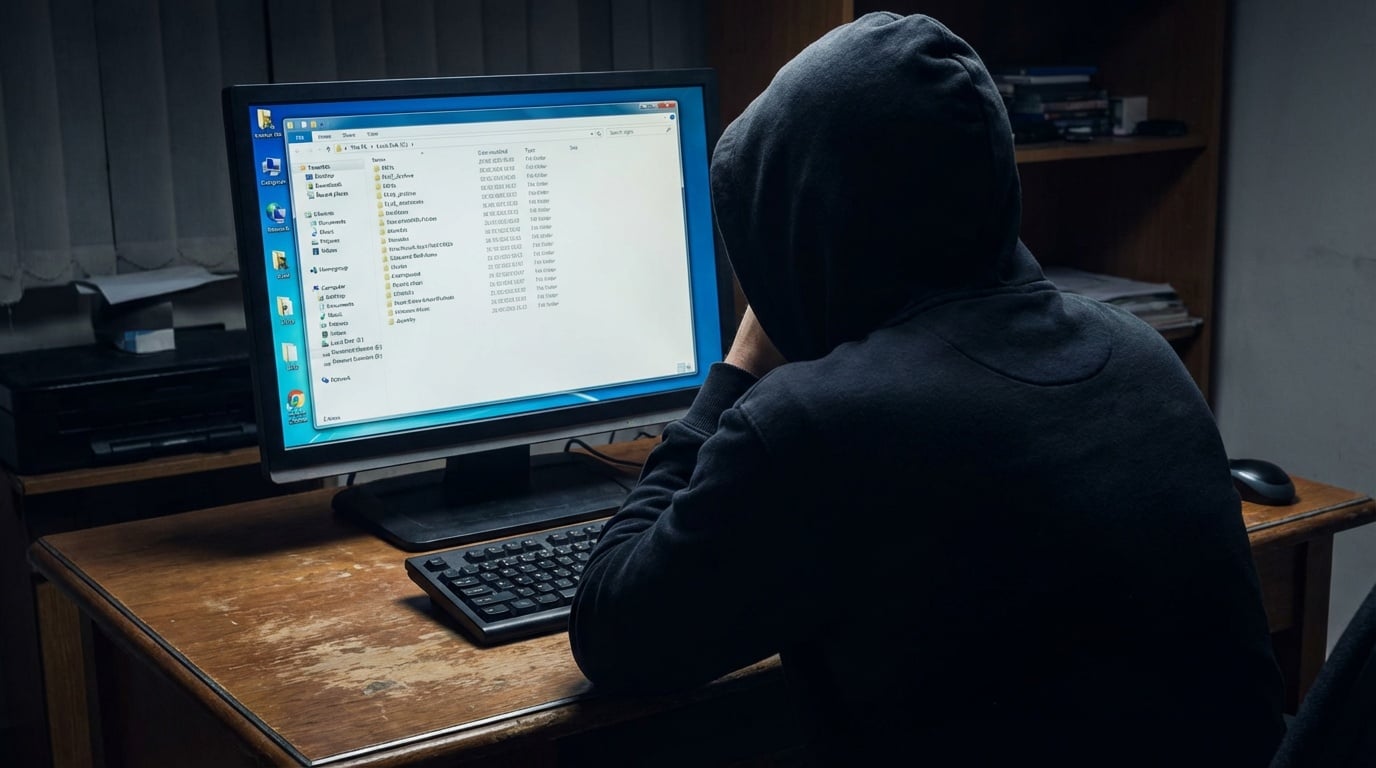
Streaming fraud man who pocketed $8m using hundreds of thousands of AI songs streamed billions of times by bots pleads guilty
The man at the center of what’s been described as the first-ever criminal prosecution for AI-assisted streaming fraud in the United States has pleaded guilty.
Michael Smith, of Cornelius, North Carolina, pleaded guilty today (March 19) to one count of conspiracy to commit wire fraud before U.S. District Judge John G. Koeltl in the Southern District of New York.
The charge carries a maximum sentence of five years in prison. Smith has also agreed to pay over $8 million in forfeiture.
Smith is scheduled to be sentenced by Judge Koeltl on July 29.
US Attorney Jay Clayton said: “Michael Smith generated thousands of fake songs using artificial intelligence and then streamed those fake songs billions of times.
“Although the songs and listeners were fake, the millions of dollars Smith stole was real. Millions of dollars in royalties that Smith diverted from real, deserving artists and rights holders.”
“Although the songs and listeners were fake, the millions of dollars Smith stole was real. Millions of dollars in royalties that Smith diverted from real, deserving artists and rights holders.”
US Attorney Jay Clayton
Smith was first indicted and arrested in September 2024 in what was the first criminal case of its kind in the US.
At that time, he was charged with three felony counts: wire fraud, wire fraud conspiracy, and money laundering conspiracy, each carrying a maximum sentence of 20 years in prison.
As MBW reported, Smith initially pleaded not guilty in front of Judge Koeltl in September 2024, and was released on $500,000 bail.
You can see the indictment here.
Today’s guilty plea to a single conspiracy count, carrying a maximum of five years rather than the combined 60 years he previously faced, represents a significant reduction in Smith’s legal exposure.
According to the charging documents and statements made in court, Smith created thousands of bot accounts on streaming platforms including Amazon Music, Apple Music, Spotify, and YouTube Music, and used software to cause those accounts to continuously stream songs that he owned.
Smith spread his automated streams across thousands of songs to avoid triggering the platforms’ anti-fraud detection systems.
To obtain the volume of tracks needed for the scheme to work, Smith turned to AI, using it to generate hundreds of thousands of songs. Those songs were streamed by his bot accounts billions of times, allowing him to fraudulently collect more than $8 million in royalties.
At the peak of his operation, according to the DOJ, Smith estimated that his bots could generate approximately 661,440 streams per day, yielding annual royalties of over $1.2 million.
The Mechanical Licensing Collective (The MLC), which distributes mechanical royalties from streaming in the US, played a key role in identifying the fraud scheme.
In a statement following today’s guilty plea, The MLC said: “Today’s news highlights the serious threat that streaming fraud poses to the music industry and the important role The MLC plays in confronting it.
“We appreciate the Department of Justice’s swift action, recognizing that The MLC identified the fraud early, challenged Smith and his representatives, and prevented the diversion of mechanical royalties away from rightful songwriters.
“The MLC will continue to invest in anomaly detection and fraud prevention to protect our Members, and we will continue to collaborate with other industry organizations and law enforcement to protect all songwriter royalties.”
“Today’s news highlights the serious threat that streaming fraud poses to the music industry and the important role The MLC plays in confronting it.”
The MLC
The MLC had previously raised concerns about Smith’s catalog, questioning how he could produce such a high volume of music so quickly. Smith and his representatives denied at the time that the works were AI-generated.
The case was prosecuted by the Complex Frauds and Cybercrime Unit of the U.S. Attorney’s Office for the Southern District of New York. Assistant U.S. Attorneys Nicholas W. Chiuchiolo and Kevin Mead led the prosecution.
The original indictment named unnamed co-conspirators — including the CEO of an AI music company and a music promoter — who helped Smith produce the AI-generated tracks. Their legal status has not been publicly disclosed.
Smith’s case is the highest-profile criminal prosecution for streaming fraud globally, but it is not the only one.
In Denmark, a man was sentenced to 18 months in prison in March 2024 after being found guilty of data fraud and copyright infringement for using bots to inflate the stream count on 689 tracks uploaded to platforms including Apple Music, Spotify, and YouSee Musik. That sentence was subsequently increased to 24 months by the Western High Court of Denmark in February 2025, after judges found evidence of more extensive fraud than initially proven.
Music Business Worldwide
