Category: Business

  • Access Error


    The page you are trying to access is unavailable because we detected potential misuse. Please wait a moment and try again.

    For help please visit help.ft.com. We
    apologise for any inconvenience.

    The following information can help our support team to resolve this issue.

    Reason
    Access Blocked
    Request ID
    9e5045091edbff99
    Status Code
    403

    Read More

  • Iran attacks Gulf, Israeli infrastructure and Trump considers a big strike to wipe out drinking water supplies

    Iran attacks Gulf, Israeli infrastructure and Trump considers a big strike to wipe out drinking water supplies


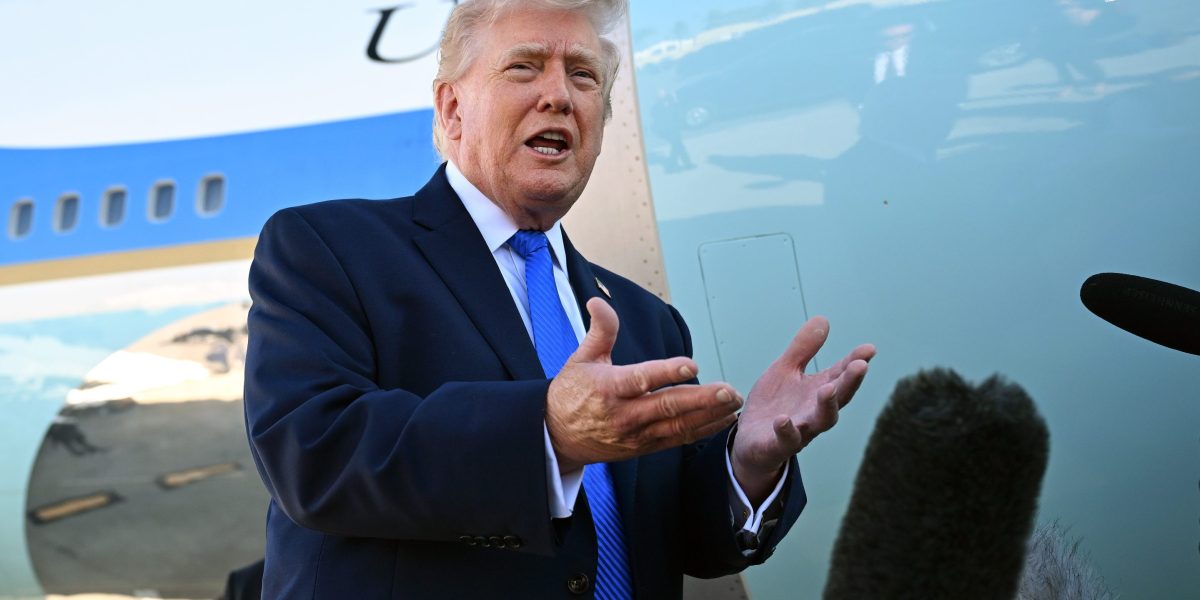
    U.S. President Donald Trump on Monday threatened widespread destruction of Iran’s energy resources and other vital infrastructure, potentially including desalination plants that supply drinking water, if a deal to end the war is not reached “shortly.”

    Iran, meanwhile, struck a key water and electrical plant in Kuwait, and an oil refinery in Israel came under attack. A drone hit a Kuwaiti oil tanker in Dubai waters, causing a fire that authorities were working to control early Tuesday, the Dubai Media Office said.

    Israel and the U.S. launched a new wave of strikes on Iran, as the war raged with no end in sight.

    Trump’s new threat came in a social media post. Earlier comments to the Financial Times suggested American troops could seize Iran’s Kharg Island oil export hub. Trump has repeatedly claimed to be making diplomatic progress — though Tehran denies negotiating directly — while ramping up his threats and sending thousands more U.S. troops to the Middle East.

    Trump told the New York Post that the U.S. is negotiating with Iran’s parliament speaker, Mohammad Bagher Qalibaf. The former Revolutionary Guard commander, who has taunted the U.S. on social media, dismissed the talks facilitated by Pakistan as a cover for the latest American troop deployments.

    Trump says diplomacy is going well but threatens major escalation

    In a social media post, Trump said “great progress is being made” in talks with Iran to end military operations. But he said if a deal is not reached “shortly,” and if the Strait of Hormuz is not immediately reopened, the U.S. would broaden its offensive by “completely obliterating” power plants, oil wells, Kharg Island and possibly even desalination plants.

    The strait is a crucial waterway through which a fifth of the world’s oil is shipped in peacetime.

    The laws of armed conflict allow attacks on civilian infrastructure such as energy plants only if the military advantage outweighs the civilian harm, legal scholars say. It’s considered a high bar to clear, and causing excessive suffering to civilians can constitute a war crime.

    A 22-year-old resident of Karaj, near Tehran, said his area lost power for several hours overnight following nearby strikes.

    “I was really scared. I thought that they’d hit the power plants and that we are not going to have power anymore,” he said, speaking on condition of anonymity out of security fears.

    Iran says US demands are ‘excessive, unrealistic and irrational’

    The U.S. already has targeted military positions on Kharg. Iran has threatened to launch its own ground invasion of Gulf Arab countries and to mine the Persian Gulf if U.S. troops set foot on its territory.

    Iranian Foreign Ministry spokesman Esmail Baghaei said Tehran had received a 15-point proposal from the Trump administration containing “excessive, unrealistic and irrational” demands, while denying there had been any direct talks.

    Qalibaf, the parliament speaker Trump says he is negotiating with, said Iranian forces were “waiting for the arrival of American troops on the ground to set them on fire and punish their regional partners forever,” according to state media.

    Twice during Trump’s second term, the U.S. has attacked Iran during high-level diplomatic talks, including with the Feb. 28 strikes that started the current war.

    Iran attacks Israel and Gulf infrastructure

    Sirens sounded at dawn near Israel’s main nuclear research center, a part of the country that has been targeted repeatedly in recent days. Israel’s military also said it had taken out two drones launched from Yemen, where the Iran-backed Houthi rebels entered the war on Saturday with their first missile attack.

    Iran kept up the pressure on its Gulf Arab neighbors: Saudi Arabia intercepted five missiles targeting its oil-rich Eastern province; a fireball erupted over Dubai, United Arab Emirates, as a missile was intercepted; and in Kuwait, an Iranian attack hit a power and desalination plant, killing one worker and wounding 10 soldiers, the state-run KUNA news agency reported.

    An Emirati official signaled that the UAE wants more than just a ceasefire.

    “An Iranian regime that launches ballistic missiles at homes, weaponizes global trade and supports proxies is no longer an acceptable feature of the regional landscape,” Noura Al Kaabi, a minister of state at the UAE’s Foreign Ministry, wrote in a column published by the state-linked, English-language newspaper The National.

    She added: “We want a guarantee that this will never happen again.”

    NATO air defenses intercepted a ballistic missile over Turkey that was fired from Iran, Turkey’s Defense Ministry said, in the fourth such incident since the start of the war. Iran has denied firing the previous missiles. Turkey is taking part in mediation efforts.

    Israel launched a new wave of attacks on Iran, saying it was striking “military infrastructure” across Tehran. Explosions were heard in the Iranian capital, and Iranian state media reported that a petrochemicals plant in Tabriz, in the north, sustained damage in an airstrike.

    Peacekeepers killed in Lebanon, where Israel is battling Hezbollah

    The U.N. Security Council planned to convene an emergency session Tuesday after officials said three peacekeepers in southern Lebanon had been killed in less than 24 hours. The meeting was scheduled after a request from France.

    The U.N. peacekeeping mission in the region where Israel is battling the Iran-backed Hezbollah did not say who was responsible for the deaths overnight and into Monday.

    Two of the peacekeepers were killed when an explosion of “unknown origin” destroyed their vehicle, and a third was killed earlier when a base for the peacekeeping mission, known as UNIFIL, was hit by a projectile. All three peacekeepers were from the Indonesian army, U.N. officials said.

    The Israeli army said it was reviewing the deaths to determine if they resulted from Hezbollah activity or Israeli fire, noting that they “occurred in an active combat area.”

    An Israeli airstrike on a Beirut suburb killed one person and wounded 17, including four children, according to Lebanon’s Health Ministry.

    Over the weekend, Israeli Prime Minister Benjamin Netanyahu said the military would widen its invasion, expanding the “existing security strip” in southern Lebanon.

    In Iran, authorities say more than 1,900 people have been killed, while 19 have been reported dead in Israel.

    Two dozen people have been killed in Gulf states and the occupied West Bank. In Lebanon, officials said more than 1,200 people have been killed, and more than 1 million have been displaced.

    Ten Israeli soldiers have died in Lebanon, while 13 U.S. service members have been killed in the war.

    Oil prices rise again as concerns of global energy crisis grow

    Iran’s attacks on the energy infrastructure of the region and its stranglehold on the Strait of Hormuz have threatened global supplies of oil, natural gas and fertilizer. They have sent fuel prices skyrocketing and given rise to growing concerns about an energy crisis.

    Trump has said that Iran agreed to allow 20 oil tankers through the Strait of Hormuz starting Monday as “a sign of respect.” There was no information on whether those ships were actually moving.

    Brent crude oil, the international standard, was trading around $115 Monday, up nearly 60% from when the war started.

    ___

    Boak reported from Washington and Corder from The Hague, Netherlands. Associated Press writers David Rising in Bangkok, Collin Binkley in Washington, Amir-Hussein Radjy in Cairo, Melanie Lidman in Tel Aviv, Israel, and Sally Abou AlJoud in Beirut contributed to this report.

    Read More

  • Access Error


    The page you are trying to access is unavailable because we detected potential misuse. Please wait a moment and try again.

    For help please visit help.ft.com. We
    apologise for any inconvenience.

    The following information can help our support team to resolve this issue.

    Reason
    Access Blocked
    Request ID
    9e4f6c23ee5c80b6
    Status Code
    403

    Read More

  • Soaring Fuel Prices Threaten Livelihoods of Thailand’s Rice Farmers

    Soaring Fuel Prices Threaten Livelihoods of Thailand’s Rice Farmers


    Thanadet Traiyot, a rice farmer in Ayutthaya, Thailand, struggles with diesel shortages that threaten his crops due to rising prices fueled by the US-Israel war, impacting farmers’ operations significantly.


    Key Points

    • Thanadet Traiyot, a rice farmer in Ayutthaya, Thailand, faces severe diesel shortages after waiting hours at gas stations. Fuel scarcity, heightened by the US-Israel war on Iran, threatens his farming operations and the livelihoods of many farmers, as diesel prices surged significantly.
    • The energy crisis is disrupting essential services, including transportation and agricultural production. Farmers struggle to source diesel for machinery, while the fishing industry warns of impending shutdowns without government intervention. Fertilizer costs are also expected to rise as the conflict persists.
    • Regional governments are implementing measures to conserve fuel, but farmers fear for their futures. Many may have to abandon crops or limit production. Amidst rising costs and ongoing uncertainty, farmers remain hopeful for an end to the conflict, reflecting on the war’s widespread negative impacts.

    Fuel Scarcity Impacting Farmers

    Thanadet Traiyot, a rice farmer from Ayutthaya, Thailand, has faced significant challenges due to severe diesel shortages affecting his operations. After waiting in line for hours, he learned that the local gas station had run out of diesel, a vital resource for maintaining his rice paddies. The scarcity necessitates careful management of limited water resources, as Thanadet balances the need to operate his pumps and tend to his crops. Coupled with this scarcity, fuel prices have escalated, partly due to geopolitical tensions, making it increasingly difficult for farmers to secure affordable diesel for their agricultural needs.

    Wider Economic Disruption

    The ongoing energy crisis prompted by the conflict in the Middle East has led to widespread disruptions across Thailand and neighboring countries, heavily reliant on imported energy. Many gas stations report shortages, resulting in reduced services for public transport and halting other critical operations, like cremations in temples. Farmers and fishers are particularly hard-hit, with warnings that the fishing industry could be completely stalled without government intervention to address rising fuel costs. The increase in diesel prices, rising from 29.94 to 38.94 baht per liter, has raised serious concerns about future harvests as more fuel will be needed during the upcoming season.

    Concerns for Future Food Security

    Experts like Pramote Charoensilp emphasize the potential long-term ramifications of these issues if the conflict continues, particularly regarding the sourcing of fertilizers which are also imported from the Middle East. There are fears that food production costs in regions like Myanmar could double, leading to acute hunger for a significant portion of the population. The UN warns that without intervention, millions globally could face severe food insecurity by 2026. While Thailand’s government is initiating measures to support farmers, including marketing rice above current rates and subsidizing fertilizer costs, many farmers worry about their ability to sustain production. As Thanadet reflects on the situation, he hopes for a swift resolution, acknowledging, “No one benefits from war.”

    Source : In Thailand’s rice paddies, rising petrol prices spell chaos for farmers | Thailand

    Read More

  • 10 Essential Things to Know About the Former NBA Star’s Tumultuous Journey and Struggles

    10 Essential Things to Know About the Former NBA Star’s Tumultuous Journey and Struggles


    LOS ANGELES — As Netflix prepares to release “Untold: The Death and Life of Lamar Odom” on March 31, 2026, the former NBA champion remains a compelling figure whose life has blended basketball glory, reality television fame, devastating personal losses and a long battle with addiction.

    LAMAR ODOM

    At 46, Lamar Joseph Odom continues to navigate recovery while reflecting publicly on his highs and lows. Here are 10 key things to know about the versatile forward who once helped the Los Angeles Lakers win back-to-back championships.

    1. Elite NBA Career and Championship Pedigree

    Odom was selected fourth overall by the Los Angeles Clippers in the 1999 NBA Draft after a standout year at the University of Rhode Island. The 6-foot-10 forward known for his versatility played 14 seasons in the league, suiting up for the Clippers, Miami Heat, Lakers and Dallas Mavericks.

    His prime came with the Lakers, where he won NBA titles in 2009 and 2010 alongside Kobe Bryant. In 2011, he earned NBA Sixth Man of the Year honors — the first Laker to win the award — averaging strong numbers off the bench while providing elite rebounding, passing and scoring. Odom also represented the United States internationally, winning Olympic bronze in 2004 and gold at the 2010 FIBA World Championship.

    2. Tragic Family Losses Shaped His Early Life

    Born November 6, 1979, in Queens, New York, Odom endured profound childhood trauma. His father struggled with heroin addiction, and his mother died of colon cancer when he was 12. He has spoken openly about how these events contributed to his later substance issues, with drugs becoming an early escape mechanism.

    Odom also faced heartbreaking loss as an adult. He and former partner Liza Morales had three children together: daughter Destiny, son Lamar Jr. and youngest son Jayden, who died of sudden infant death syndrome at six months old in 2006. Odom has described the grief as a trigger that deepened his struggles with cocaine and other substances.

    3. High-Profile Marriage to Khloé Kardashian

    Odom met Khloé Kardashian in 2009 and married her after a whirlwind 21-day courtship. Their relationship played out on the reality show “Keeping Up with the Kardashians” and its spin-offs, bringing Odom into mainstream pop culture.

    The marriage faced severe strain from Odom’s infidelity and addiction. Kardashian filed for divorce in 2013, paused proceedings after his 2015 overdose, and finalized the split in 2016. In March 2026, Odom told Page Six that a recent reunion filming for his Netflix documentary felt like he was “under attack,” describing the encounter as uncomfortable.

    4. Near-Death Overdose in 2015

    Odom’s most publicized crisis occurred in October 2015 at a Nevada brothel, where he was found unconscious after a reported multi-day binge involving cocaine and other substances. He suffered 12 strokes, six heart attacks and kidney failure, spending days in a coma.

    Doctors gave him slim survival odds, yet he recovered after being placed on life support. Odom has since described “shaking hands with death” and shared theories about the incident in interviews and his upcoming documentary. The event became a major turning point, though sobriety proved elusive in the years that followed.

    5. Ongoing Addiction Battles and Recent Rehab Stint

    Addiction has shadowed much of Odom’s post-NBA life. He has admitted to heavy cocaine use that contributed to his career decline and personal turmoil, including a self-described sex addiction that he said intertwined with drug use.

    In January 2026, Odom was arrested in Las Vegas for DUI after allegedly driving over 105 mph. He faced additional traffic violations and voluntarily entered a 30-day rehab program at iRely Recovery in Los Angeles to address marijuana use and prevent relapse into harder substances. He completed the program in late February and has described feeling “amazing” and nearly 60 days sober in recent statements.

    6. Business Ventures and Sober Living Efforts

    Odom has channeled some energy into recovery-related businesses. He has been involved with multiple sober living and treatment facilities, including efforts under the Odom Recovery Group or Odom Wellness Treatment. These initiatives reflect his desire to help others avoid the pitfalls he has faced.

    He has also explored coaching opportunities and other post-playing career paths, seeking purpose beyond basketball and reality television.

    7. Recent Legal and Personal Setbacks

    The January 2026 DUI arrest marked another public stumble. Odom denied being under the influence in some reports while acknowledging the need for accountability. He appeared in court and used the incident as motivation to seek treatment.

    In March 2026, he continued promoting his Netflix documentary while addressing awkward interactions with his ex-wife and reflecting on past regrets, including affairs that strained relationships.

    8. Athletic Talent and Versatility

    At his peak, Odom was one of the NBA’s most skilled “tweeners” — capable of playing power forward, small forward or even center. His court vision, passing ability and rebounding made him a valuable glue guy on championship teams.

    High school accolades included Parade Player of the Year honors, and he earned Atlantic 10 Rookie of the Year and Tournament MVP at Rhode Island. His left-handed shooting and size gave him a unique skill set that drew comparisons to versatile big men of his era.

    9. Public Reflections and Documentary Spotlight

    Odom has grown increasingly candid in recent years. The upcoming Netflix “Untold” documentary, premiering March 31, 2026, promises deeper insights into his overdose, addiction, Lakers tenure and Kardashian relationship. He has discussed first experiences with cocaine, dreams involving Kobe Bryant and lessons from near-death.

    These appearances position him as both a cautionary tale and a story of resilience, with Odom emphasizing daily presence and self-improvement.

    10. Current Outlook and Path Forward

    As of late March 2026, Odom appears focused on sustained sobriety and personal growth. He has expressed pride in completing rehab and a desire to move forward positively. While challenges persist — including the recent DUI and family dynamics — he continues to engage in recovery work and public speaking.

    Odom’s story resonates as one of talent squandered and redemption pursued. From Queens courts to NBA championships, reality TV fame to life-threatening overdose and repeated recovery attempts, his journey illustrates the complexities of addiction, grief and second chances.

    With the Netflix documentary set to revisit his “death and life,” audiences will gain fresh perspective on a man who has repeatedly confronted his demons. Whether Odom can maintain long-term stability remains an open question, but his willingness to share vulnerabilities has made him a relatable figure far beyond the basketball world.

    For fans and observers, Lamar Odom in 2026 represents both a reminder of basketball excellence and the human cost of unresolved trauma and substance issues. His latest steps toward accountability suggest cautious optimism as he turns another page in a remarkably eventful life.

    Read More

  • Corruption issues drag Manila to near-bottom of ‘smart cities’ list

    Corruption issues drag Manila to near-bottom of ‘smart cities’ list


    Corruption issues drag Manila to near-bottom of ‘smart cities’ list

    By Beatriz Marie D. Cruz, Senior Reporter

    MANILA dropped seven spots in the 2026 Smart City Index by Switzerland-based Institute for Management Development World Competitiveness Center (WCC), as residents continued to fret about corruption and traffic congestion.

    The Philippine capital ranked 132nd out of 148 countries, down seven spots from the 125th spot a year prior.

    The study evaluates cities based on how they use technology and infrastructure to improve the lives of its residents.

    Manila also ranked last among major Southeast Asian cities Singapore (9th); Kuala Lumpur (65th); Bangkok (90th); Hanoi (97th); Ho Chi Minh City (105th); and Jakarta (106th).

    According to the WCC, a smart city “strikes a good balance between its economic prowess (e.g., jobs and business activity), applied technology, environmental concerns, and inclusiveness to facilitate a high quality of life for its citizens.”

    It surveyed 120 residents per city based on key indicators like health and safety, mobility, activities, opportunities, and governance.

    According to the survey results, 71% of Manila residents perceived corruption/transparency as the most urgent concern in the city; followed by health services (51.6%); road congestion (49.2%); security (44.4%); and unemployment (41.1%).

    In a briefing late Monday, WCC Director Arturo Bris said Manila’s low ranking is tied to residents’ concerns on corruption.

    “Corruption hinders any other potential improvement of the city. In the Manila survey, we see that people are not willing to provide data to authorities,” he said.
    Mr. Bris said that corruption is more of a country-level problem than a city-level issue.

    “As long as the country resolves those corruption and government problems, then cities will do exactly the same,” he said.

    Manila’s residents also raised concerns over air pollution (39.5%): affordable housing (37.9%); basic amenities like water and waste (37.1%); public transport (36.3%) and fulfilling employment (29%).

    Other issues revolved around school education (19.4%); green spaces (15.3%); recycling (13.7%); citizen engagement (3.2%); and social mobility/inclusiveness (3.2%).

    On the city’s availability of technologies for health and safety, Manila scored the highest (67 out of 100) on arranging medical appointments online, and on the availability of CCTV cameras (65.8). It scored the lowest on the presence of a website or application to monitor air pollution (42.5).

    In terms of mobility, Manila received a score of 61.9 for online scheduling and ticket sales for public transport, and scored 46.3 on the availability of apps that can direct residents to available parking space.

    On the availability of structures for mobility, Manila received its lowest score of 11.7 on traffic congestion. It also scored low on corruption of city officials (14.9) and air pollution (15.3).

    Manila received a score of 78.9 on the activities indicator, particularly on the availability of online platforms to easily buy tickets for shows and museums.

    Under opportunities for work and school, Manila received the highest score (76.6) on the availability of job listings online; but scored the lowest (55.8) on internet speed and reliability.

    On governance, Manila received a score of 68.5 on the online processing of identification documents, which residents said has helped reduce waiting times. The city also had low scores on online voting (53.6), and the provision of an online platform (50.8) where they can propose ideas to improve city life.

    Manila scored 40.5 on online public access to city finances, which respondents thought should reduce corruption.

    However, the city scored the highest for job generation by businesses (69.2) and the availability of cultural activities (66.9).

    According to the survey, 78.2% are comfortable with using face recognition technologies to lower crime; and 71% are willing to provide personal data to improve traffic.

    “The most advanced urban centers, where citizens feel happiest, are not necessarily those distinguished by their utopian skylines, visible sensor networks, or pure technological sophistication,” Mr. Bris said.

    “Instead, they stand out for how effectively they align governance structures, sustainability priorities, public investment decisions, and perhaps most importantly, the cultivation of citizen trust.”

    Read More

  • Poland’s Inflation Rebounds as Iran War Boosts Fuel Prices


    In Poland, rate-setters including Ludwik Kotecki, Henryk Wnorowski and Wieslaw Janczyk have ruled out further monetary easing steps as long as the Iran war continues. Another policymaker, Gabriela Maslowska, said this month that Poland may consider rate hikes only if price pressures rise for a sustained period.

    Read More

  • Infosys Took 18,000 Freshers So Far In FY26, CFO Says Amid Attrition Dip


    The total employee count rose by 5,043 sequentially to 3,37,034 in the December quarter.

    Read More

  • NTPC Green Energy’s arm signs green ammonia supply pact

    NTPC Green Energy’s arm signs green ammonia supply pact


    NTPC Renewable Energy, a wholly owned subsidiary of NTPC Green Energy, has signed a green ammonia purchase agreement with Solar Energy Corporation of India, marking a key step in advancing India’s clean energy ambitions.

    The agreement, executed under the SIGHT Scheme of the National Green Hydrogen Mission, involves the supply of 70,000 metric tonnes per annum of green ammonia.

    The output will be supplied to Krishna Phoschem, which operates a facility in Meghnagar, Madhya Pradesh, with SECI acting as the intermediary procurer.

    The development represents a major milestone in NTPC Green Energy’s expanding green hydrogen and ammonia portfolio. Green ammonia, produced using renewable energy, is increasingly seen as a critical component in decarbonising hard-to-abate sectors such as fertilisers, shipping, and heavy industry.

    On Monday, NTPC Green Energy shares closed at 92.32 on the NSE, down 2.88 per cent. The market is closed today for a local holiday.

    Published on March 31, 2026

    Read More

  • ‘Disregard the status quo’: Ex Google executive reveals how he climbed the ranks quickly

    ‘Disregard the status quo’: Ex Google executive reveals how he climbed the ranks quickly


    A former executive at Google says his rapid rise inside the tech giant did not come from following the usual corporate playbook — it came from breaking it.

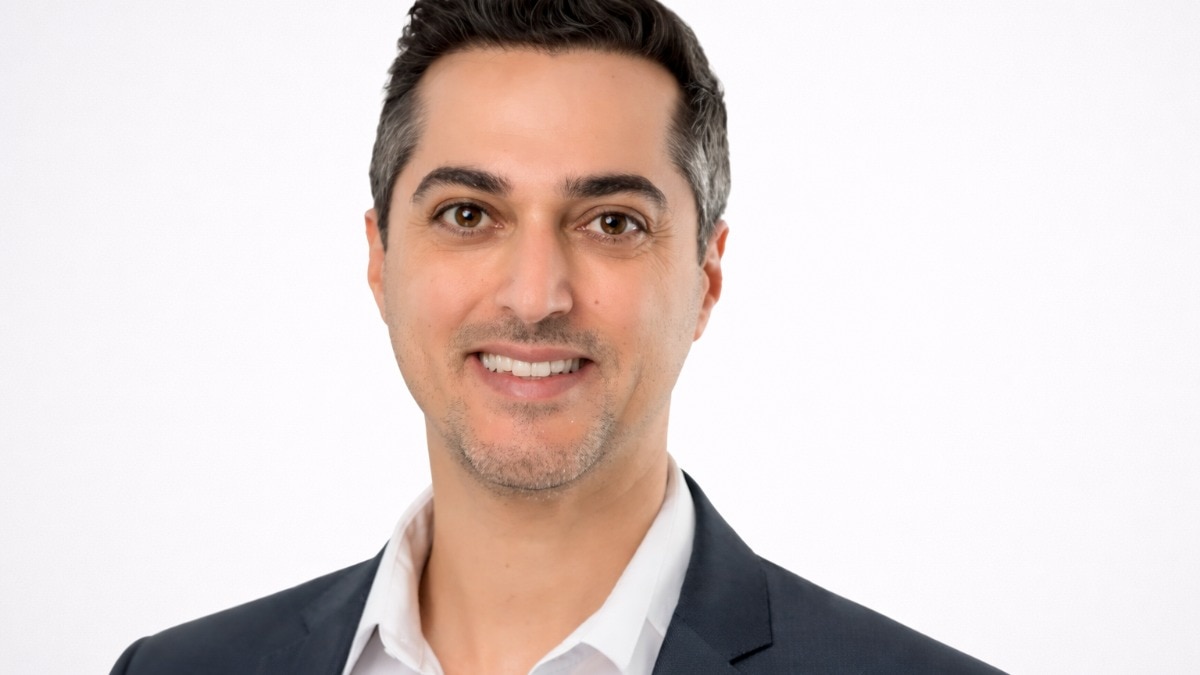
    Alon Chen joined Google in 2006 at the age of 23 with no formal marketing background and no industry connections. Within five years, he had become a Chief Marketing Officer responsible for markets including Israel and Greece, helping build a $2-billion product line across more than 30 countries while earning a high six-figure salary and a seven-figure equity package.

    Looking back, Chen says the climb felt straightforward once he stopped treating company rules as fixed barriers.

    In an interview with Fortune, Chen said the key was questioning the status quo and acting on what he believed was the right course of action.

    “Climbing up was fairly natural and easy, simply because I just disregarded all the status quo and the rules and realized what’s the right thing to do, and went all the way with it,” he said.


    Asked for a promotion before the rules allowed it

    At Google, employees are typically expected to wait at least two years before seeking a promotion. Chen chose not to follow that timeline.

    Less than a year into his role, he approached his manager directly and made his case.

    “I just told my manager, listen, I know this is a year thing. Look what I’ve been able to achieve. It’s way more than anyone else. We’re going to put me up for promotion now,” he said.

    Chen believes many employees limit their growth by accepting company systems without questioning them.

    “We have all these rules, we have all these benchmarks, we have all these processes,” he said. “That’s what’s going to happen for most of you.”


    Launched a project even without approval

    Chen also recalled a moment when he moved ahead with a major initiative despite not receiving approval from senior leadership.

    While working on expanding the Google Partners programme internationally, his proposal was initially rejected by internal teams. Instead of shelving the idea, he decided to launch it in other markets anyway.


    The gamble worked.

    After the initiative proved successful internationally, senior teams approached him with a new request: expand the programme into North America as well.

    Chen says corporate environments can sometimes discourage initiative.

    “Corporate America can put you in these frames that discourage you,” he said, adding that the most successful people are often those willing to take calculated risks inside organisations.


    Entrepreneurship started in his teenage years

    Chen’s unconventional approach began long before his time at Google.

    Growing up near Tel Aviv, his family faced financial difficulties after his father was injured in a motorbike accident. That experience pushed him to start working early.

    At the age of 12, he began coding, although upgrading his computer became difficult because his family could not afford new hardware.

    By 15, he started negotiating with importers for computer parts and assembling machines himself. Soon he began selling computers to small businesses while still in high school.

    “It was my first entrepreneurial adventure,” he said, adding that the venture eventually grew into a sizable business serving thousands of small and medium-sized businesses.


    Leaving Google for his own startup

    Despite holding a senior role and earning a lucrative compensation package, Chen eventually decided to leave Google to build his own company.

    He went on to found Tastewise, an artificial intelligence platform that helps food companies analyse consumer trends and develop new products.

    The platform is now used by major food companies including PepsiCo, Nestlé, Mars, Incorporated, Kraft Heinz, Campbell Soup Company and Givaudan. The company has raised more than $71 million in funding.

    The idea for the business came from a surprisingly simple source — a family WhatsApp group where Chen’s mother would ask everyone what they wanted to eat before cooking.

    Although he says he now earns less as a startup founder compared to his corporate salary, Chen says he has no regrets about leaving.

    For him, the decision was about building something of his own rather than following a traditional career path.

    Read More