
In Germany, Good Friday, or ‘Karfreitag’ is a designated silent holiday. Here’s a loot at what’s allowed and what’s not, and what you can still get up to on the public holiday.
If a four day weekend has made you want to sing and dance, you might run into an unexpected party pooper: the German legal code.
In Germany, Good Friday (Karfreitag) is not just a regular religious holiday; it is a designated silent holiday (stiller Feiertag), which means it comes with certain restrictions. The rules stipulate that public entertainment events, bars and restaurants, musical performances, and even excessive laughter are officially banned.
While the idea of “forbidden laughter” sounds more like something from the Grimms’ Fairy Tales, the restrictions are real and worth reading up on before heading into the holiday.
What’s forbidden?
The most famous restriction on Good Friday is the dancing ban (Tanzverbot).
Across all sixteen German states, public dancing events are prohibited for at least part of the day.
The logic here is that the holiday is a day of mourning which commemorates the crucifixion of Jesus; out of respect for the solemnity of the occasion, all “mirthful” public events are restricted.
This does not just apply to nightlife, however, it also covers sporting events, festivals and even some trade fairs.
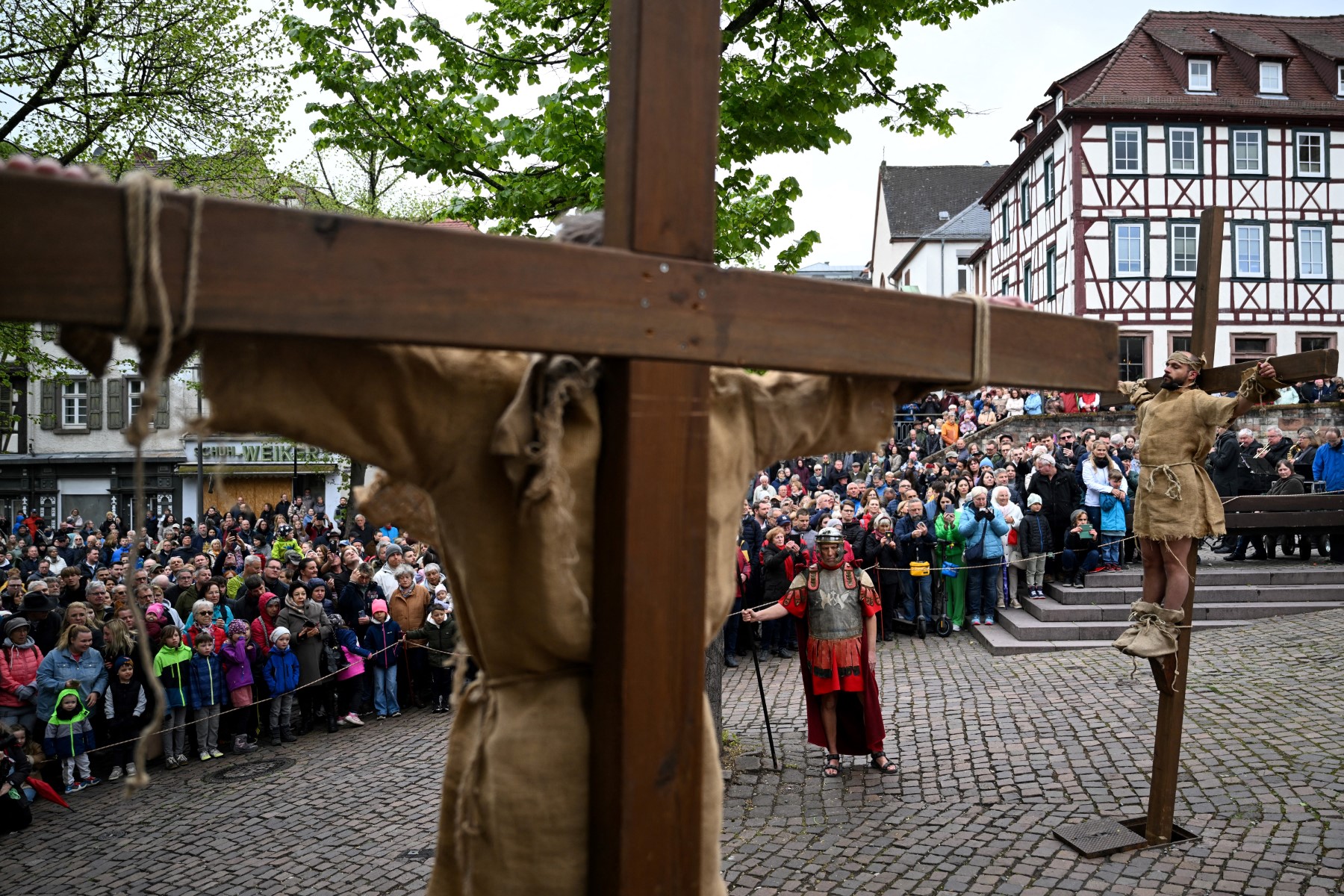
Spectators watch as actors perform a re-enactment of the crucifixion of Jesus Christ on Good Friday in Bensheim, western Germany. (Photo by Kirill KUDRYAVTSEV / AFP)
Germany’s federalist system means that how strictly these restrictions are applied varies significantly by region.
In conservative Bavaria, the ban is nearly absolute, lasting from 2 am Friday until 2 am Saturday. In contrast, Berlin is more relaxed, with the ban officially only lasting from 4 am to 9 pm on Friday.
Violating the ban is no laughing matter. The fine for disregarding silent holiday rules is classed as an administrative offence which carries hefty fines, depending on the state. In Baden-Württemberg, for example, this could be up to €1,500, while pubs in Bavaria can be subject to fines of up to €10,000.
In 2015, Göttingen nightclub was fined €1,700 for hosting a dance event on the night that bridged Maundy Thursday and Good Friday, with around 100 participants.
These fines would typically be borne by event organisers rather than by individuals playing music or dancing at home.
Is laughter really ‘verboten’ on Good Friday?
Realistically, no. You would not be handcuffed for cracking a joke at the dinner table or laughing with friends in the park.
The law targets public disturbance rather than private expression. However, the law does prohibit events in rooms with live music or jukeboxes and any public activity that contradicts the day’s intended solemnitude. If your laughter is part of a loud, organised public performance, you could very well find the authorities stepping in.
This enforced silence even extends to the silver screen.
The FSK, Germany’s voluntary film classification board, maintains a list of over 700 movies that are theoretically banned from public screening on silent holidays because they are deemed too violent, satirical or un-Christian. Classics like Monty Python’s “The Life of Brian” and even certain action movies are on this index.
A group known as the ‘Düsseldorf Enlightenment Service’, which advocates for the separation of church and state, has fought for years for the right to screen “The Life of Brian” on Good Friday. The group suggests that since the majority of Düsseldorf’s urban population does not belong to a Christian church, the performance ban is “neither timely nor acceptable”.
Businesses closed
Realistically, the biggest impact for most residents is the closure of most businesses, including supermarkets and retail stores as well as medical clinics and more pharmacies, during the public holidays.
Bakeries often have special permission to open for a few hours in the morning so people can buy fresh rolls for breakfast, but many choose to stay closed entirely on Good Friday.
But despite the “silent” designation, life in Germany does not completely grind to a halt. If you need a coffee or a meal, most restaurants, cafés and bistros remain open, as do “quiet” spaces such as museums, galleries and tourist attractions like zoos.
Public transport also continues to run, though often on a reduced holiday schedule.
READ ALSO: What’s open and closed over Easter weekend in Germany
So, no dancing at all?
Though severely restricted, public dances are not quite totally shut down on Good Friday.
Scepticism of the rules is growing, and groups such as the country’s internet activist group, the Pirate Party (Piratenpartei), organise regular defiance dances in front of public or religious buildings.
A 2017 government poll showed that a slight majority of Germans viewed the dance ban favourably, but the support came primarily from the older population. Many young people in urban centres are blissfully unaware of the ban, and still go out partying as normal over the Easter weekend.
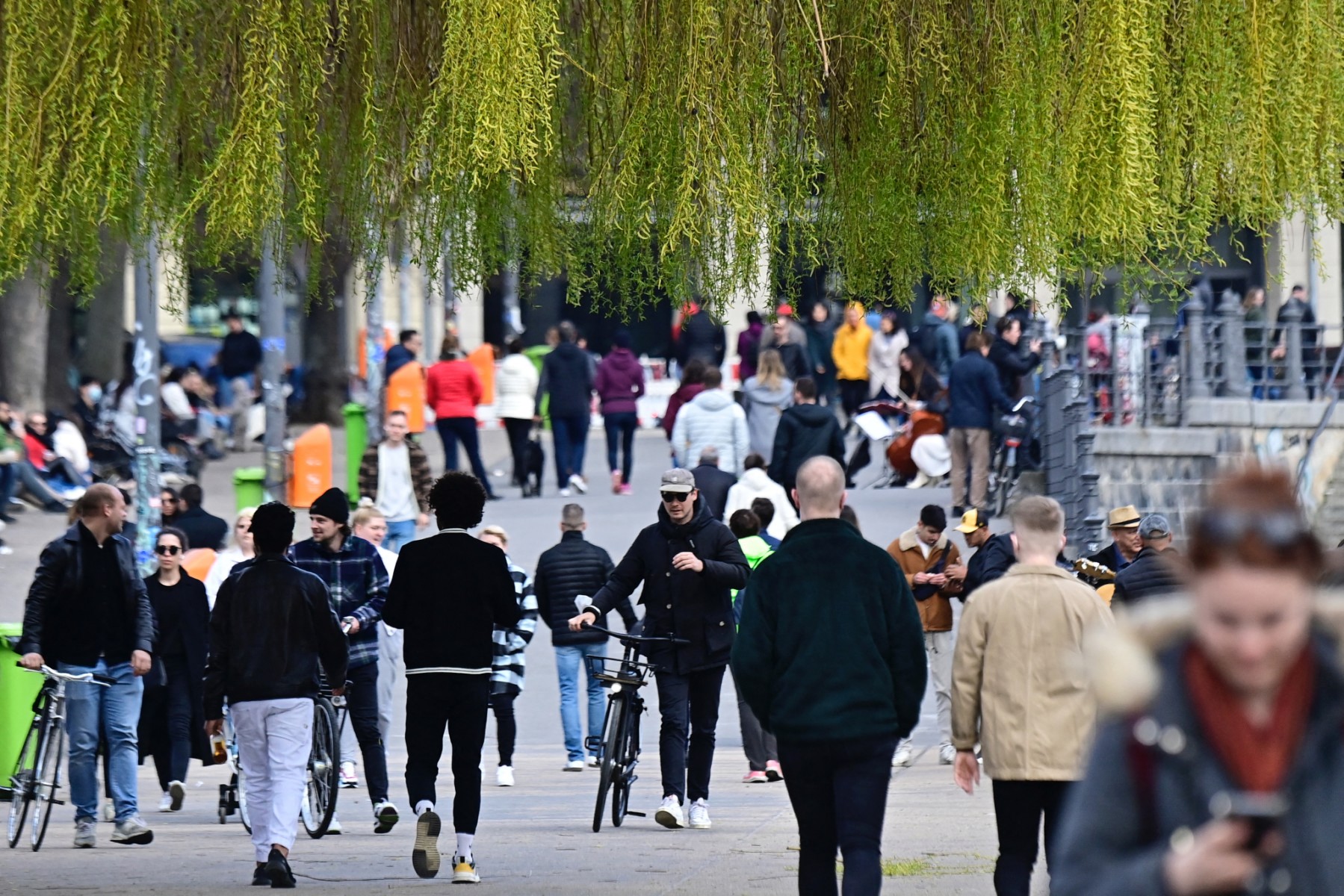
People enjoy an afternoon along the River Spree promenade in the centre of Berlin on Good Friday. (Photo by Tobias Schwarz / AFP)
What’s on for Friday?
To the shock of no one, there’s one city where, regardless of the law, event organisers see the four-day weekend as a chance to host 96 hour dance parties: and it’s the capital of Germany.
According to posts on Resident Advisor, a number of parties will kick off in Berlin on Thursday night: There’s a night of breakbeat happening at OHM, and FADE Berlin’s third iteration at YSY.
Other special Easter events are scheduled at Berlin’s well known clubs, including KitKat, About Blank, RSO, OXI, and Humboldthain, for example.
In Munich, there’s a Maundy Thursday boogie at Sauna club, and Friday night sees club nights at Rote Sonne and Import Export.
Perhaps due to the tougher restrictions, there are currently no parties posted on Resident Advisor for Friday in the major cities in North Rhine-Westphalia, including Cologne and Düsseldorf—cities which have previously slapped fines on residents for breaking the ban. But in each city, a handful of parties are planned for Saturday.
READ ALSO: Ten unmissable events happening in Germany in April 2026
