Economy Minister appointed deputy Spanish PM, Nato says Spain is meeting defence targets, Spanish motorways face busiest Easter in two decades and more news on Friday March 27th.
Spain says to boost energy partnership with Algeria
Algeria and Spain will boost their “strategic” energy partnership at a time when Algiers has been Spain’s leading gas supplier for three years, the Spanish foreign minister said on Thursday.
Beginning a two-day visit and with no end in sight to the Iran war, Jose Manuel Albares called Algeria a “stable, reliable and steady gas supplier” after meeting President Abdelmadjid Tebboune.
Spain and Algeria are connected by the MedGaz pipeline, which is operating at full capacity but whose capacity could be increased by a billion cubic metres a year, US expert Geoff Porter has told AFP.
Albares said that during Thursday’s talks, “it became clear that Algeria is a strategic friend and partner for Spain”.
Algerian Foreign Minister Ahmed Attaf’s office hailed relations between both countries, “particularly in the energy sector”.
Albares’ trip comes a day after Italian Prime Minister Giorgia Meloni visited and said Rome and Algiers would work towards “increasing deliveries of Algerian gas”.
Italian energy major ENI and Algeria’s Sonatrach would cooperate on projects including shale gas extraction and offshore exploration, she said at a joint press conference with Tebboune.
Spain’s foreign minister on Thursday also welcomed a “spectacular increase in Spanish exports” to Algeria over the past two years, including a threefold rise in 2025 year-on-year.
The Algerian presidency said Tebboune told Albares of his decision to reactivate a 2002 friendship treaty with Spain.
The treaty had been suspended since 2022 when Madrid voiced its support for a plan for Moroccan sovereignty over the disputed territory of Western Sahara, where Algeria backs the Polisario independence movement.
Advertisement
Spanish PM appoints economy minister as deputy
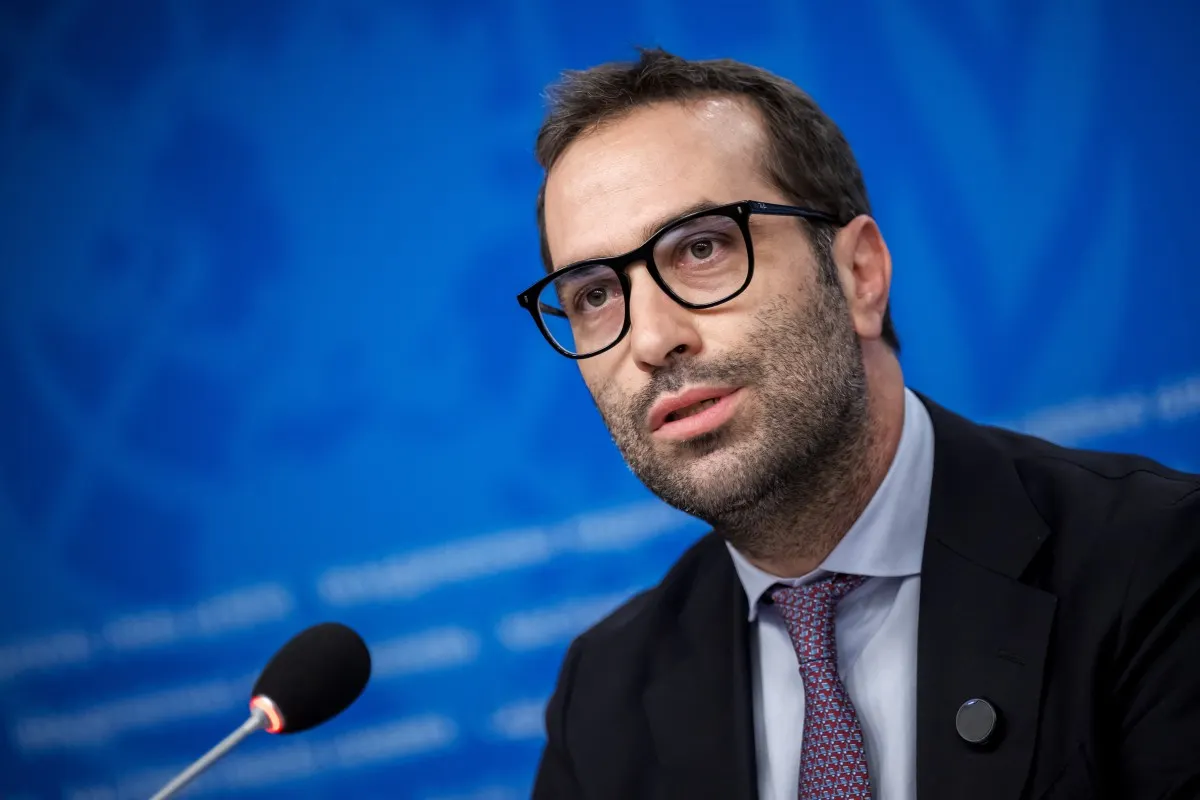
Spanish Prime Minister Pedro Sánchez on Thursday appointed Economy Minister Carlos Cuerpo as deputy prime minister, replacing María Jesús Montero, who is stepping down to run in a regional election.
A career economist with experience in European institutions, Cuerpo, 45, is one of the highest-rated ministers in Sánchez’s cabinet in opinion surveys.
Under his watch, the Spanish economy posted growth of 2.8 percent last year, one of the fastest rates in the European Union.
Montero, 60, who served as first deputy prime minister since late 2023 and as finance minister since 2018, will lead the ruling Socialist Party ticket in a May 17th election in Andalusia, Spain’s most populous region.
READ MORE: Who will win Andalusia’s elections and why does it matter for Spain?
Sánchez praised her as “a fundamental pillar of this government” and called her the best politician he has ever known.
The conservative Popular Party has governed Andalusia since 2019, when it ousted the Socialists from power in what had been their historical stronghold.
Sánchez, in office since 2018, appointed Arcadi España, 51, the current secretary of state for territorial policy, to replace Montero as finance minister.
Nato says Spain is meeting defence targets
All Nato member states have reached defence spending levels equal to or greater than 2 percent of GDP, the threshold set by the Atlantic Alliance before US President Donald Trump intensified pressure on its partners to increase spending to 5 percent.
Spain, reluctant to accept this new target, is officially listed above the previous level for the first time, although it remains near the bottom of the list along with Albania, Canada, and Belgium.
“Spain is doing what it has to do,” said Nato head Mark Rutte, while insisting that the Sánchez administration will need to invest more in the future.
Advertisement
Spanish motorways face busiest Easter in two decades
Spain’s DGT traffic authority is launching its special Easter operation from 3pm this Friday until midnight on Monday April 6th.
During this period, it expects 17.1 million long journeys (each of at least 50 kilometres), which is the highest forecast for this holiday period since 2002.
This may be partly down to a loss of confidence in the country’s rail network after two deadly accidents and numerous other incidents earlier this year, and the perceived instability of air travel amid rising jet fuel prices and war in the Middle East.
Faced with this increase in cars on the road, the DGT has warned drivers about the importance of planning their trips in advance and choosing the safest route to avoid unforeseen events.
With additional reporting by AFP.