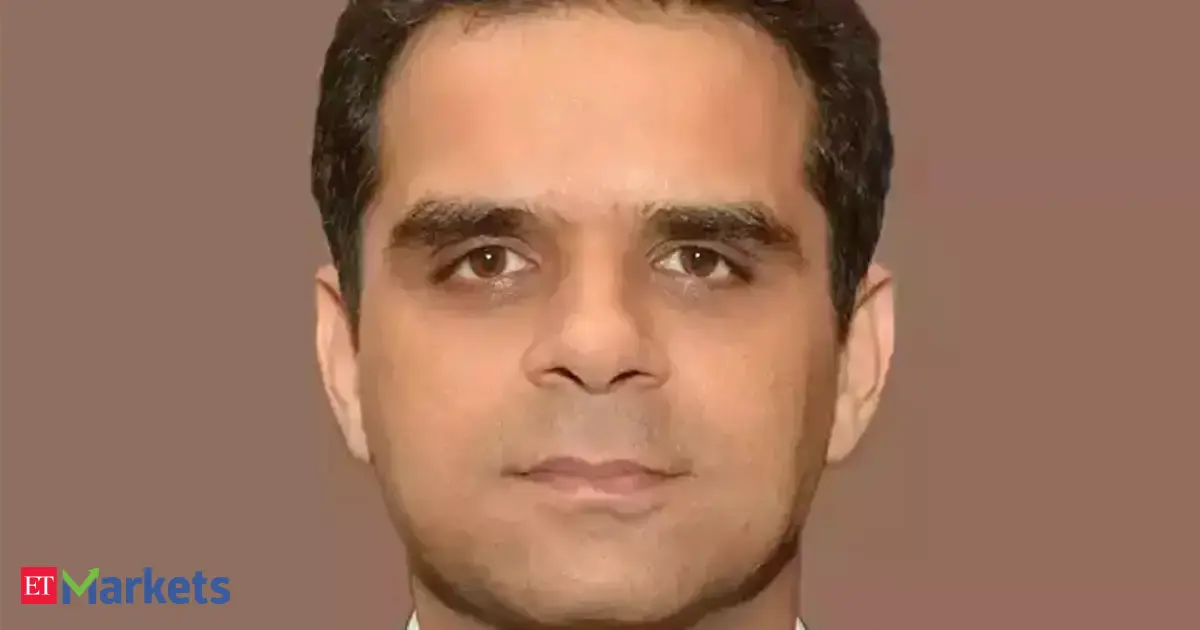
Speaking to ET Now, market expert Amit Khurana from Dolat Capital offered a measured take—highlighting opportunity, but not without caution.
Sun Pharma’s Big Bet: Strategic Fit, Debt a Watchpoint
Sun Pharma’s all-cash acquisition, priced at $14 per share, has drawn attention for both its scale and strategic intent. Khurana acknowledged the inherent difficulty in judging whether the price is “right,” noting that execution will ultimately determine success.
“Well, yes, I mean that is always the tough one to answer because ultimately the integration issues, the whole synergies and the positioning over a period of time will determine whether this was a fair price or not.”
He pointed out that the acquisition strengthens Sun Pharma’s portfolio, particularly in biosimilars, while also opening room for operational improvements.

“But on the face of it, it does look like a pretty reasonably well justified acquisition on what it adds to the portfolio for Sun Pharma, especially on the biosimilars front and also on the other side Organon did not have that much of R&D and therefore Sun’s capability will add to their ability to ramp up the products. Equity valuation seems pretty reasonable.”
However, the deal’s nearly $10 billion debt component remains a key concern. “Slight concern if one were to highlight is more on the debt side of it and how will that essentially get addressed, that will be one sort of joker in the pack that the management will have to navigate very-very carefully and the markets will probably take a cue on that.”
Still, Khurana maintained that the move is directionally sound.
“But overall, pretty good structurally and strategically a very good acquisition for an Indian entity and Sun has been on the lookout for such buyouts to scale up the business over a long term. So directionally, yes, the right move. The debt is the only sort of caveat. Otherwise, we are in good shape overall.”
Is the Debt Manageable?
Despite the size of the borrowing, Khurana does not see it as alarming—provided execution stays on track.
“Based on what the management is guiding seems manageable.”
He emphasized that integration speed and product scalability will be critical in determining how comfortably the company handles its obligations.
“Now Sun’s capability to scale it up further over the next few years will be the large determinant of how the cash flows work out and then, of course, you have the overall market environment which if it does not deteriorate then obviously there will be a lot of support on that front. So, I would say largely manageable. It is not as if it is a situation of a SOS, but it will have to be navigated very carefully.”
Paytm Payments Bank: Limited Damage to the Core Story
On the regulatory front, the cancellation of Reserve Bank of India license for Paytm Payments Bank raised concerns. However, Khurana downplayed its long-term impact on Paytm’s listed entity.
“Well, small impact here or there, but I do not think it really makes a change in our view on the stock per se.”
He highlighted that Paytm’s core business fundamentals remain intact.
“In our view, the overall core business profitability seems to be pretty much on track and the scalability is really playing out and, of course, over the last few quarters we have seen a significant cost control measures that have been playing out on Paytm and that will continue to be the driver in our view.”
While sentiment may take a short-term hit, the broader outlook remains unchanged.
“There is maybe a small damper, but I do not think it changes the longer-term story in any manner.”
Banking Sector: Stable, With Upside Potential
Turning to the banking space, Khurana noted a broadly stable earnings season with no major surprises.
“No significant deviation that as far as we have seen in the earnings season till date. Most of the vectors are pointing out towards a demand for credit.”
However, global uncertainties—particularly geopolitical tensions—are prompting caution.
“There is a sort of a, shall I say, guarded view, a cautious view on as to how the impact of the US-Iran conflict will play out on corporate balance sheets.”
Even so, he remains constructive on the sector.
“Overall numbers look pretty healthy. The valuations have corrected very reasonably across the board and therefore that gives a lot of comfort… I think banking at large will continue to be in a good shape and therefore our view is slightly more constructive than what was the case six months back.”
Among large-cap lenders, ICICI Bank stands out as a preferred pick.
NBFCs vs Banks: A Shift in Preference
Khurana struck a more cautious tone on NBFCs, citing stretched valuations in segments like gold and auto financing.
“So, I would probably put it more in the neutral zone right now on overall NBFC space.”
Instead, he favors banks due to better risk-reward dynamics.
“In fact, I would probably prefer banks from here on versus the NBFC space given the valuations being far more attractive and the risk return profile being far more attractive.”
Where Is the Opportunity Now?
Looking beyond the sectors discussed, Khurana remains focused on India’s consumption story.
“We are playing to the… and essentially wanted to play out on the consumption theme in India largely and discretionary consumption which remains one of our favourite themes.”
He also highlighted selective, bottom-up opportunities rather than broad sector bets. Among them:
He also pointed to stronger interest in domestic internet themes and defence-related plays.
The Bottom Line
From a blockbuster pharma deal to regulatory shocks and sectoral shifts, Khurana’s outlook reflects cautious optimism. While risks—from debt to geopolitics—remain, the underlying tone is clear: India’s structural growth story, particularly in consumption and banking, continues to hold firm.