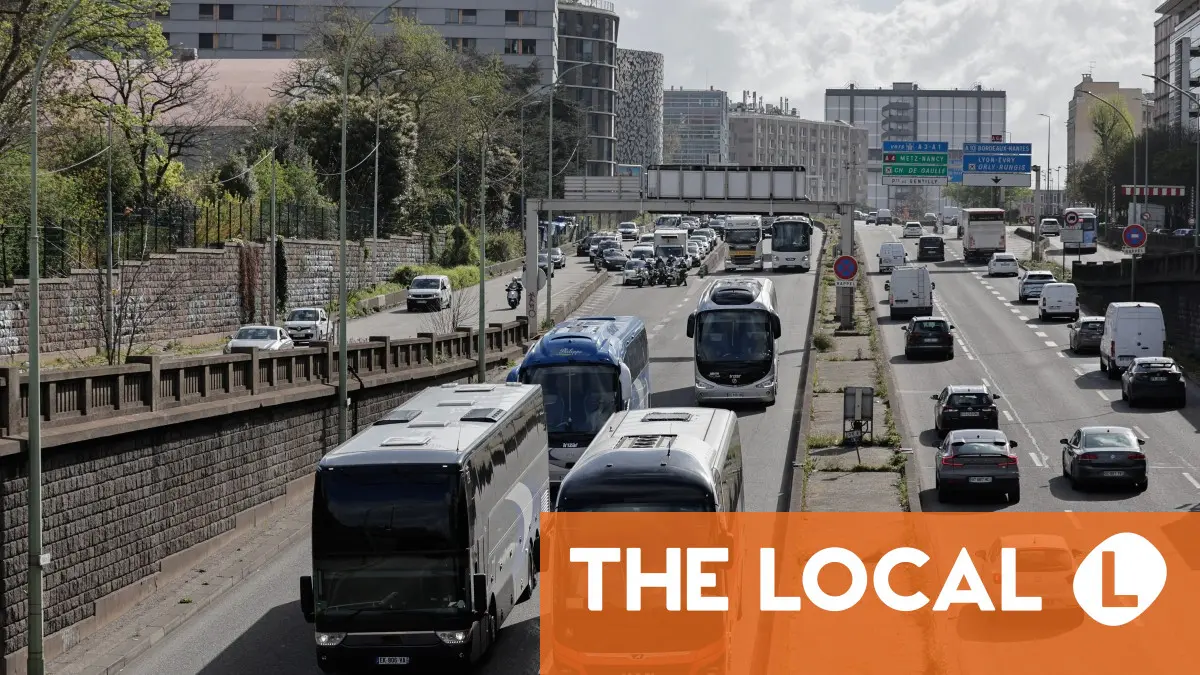
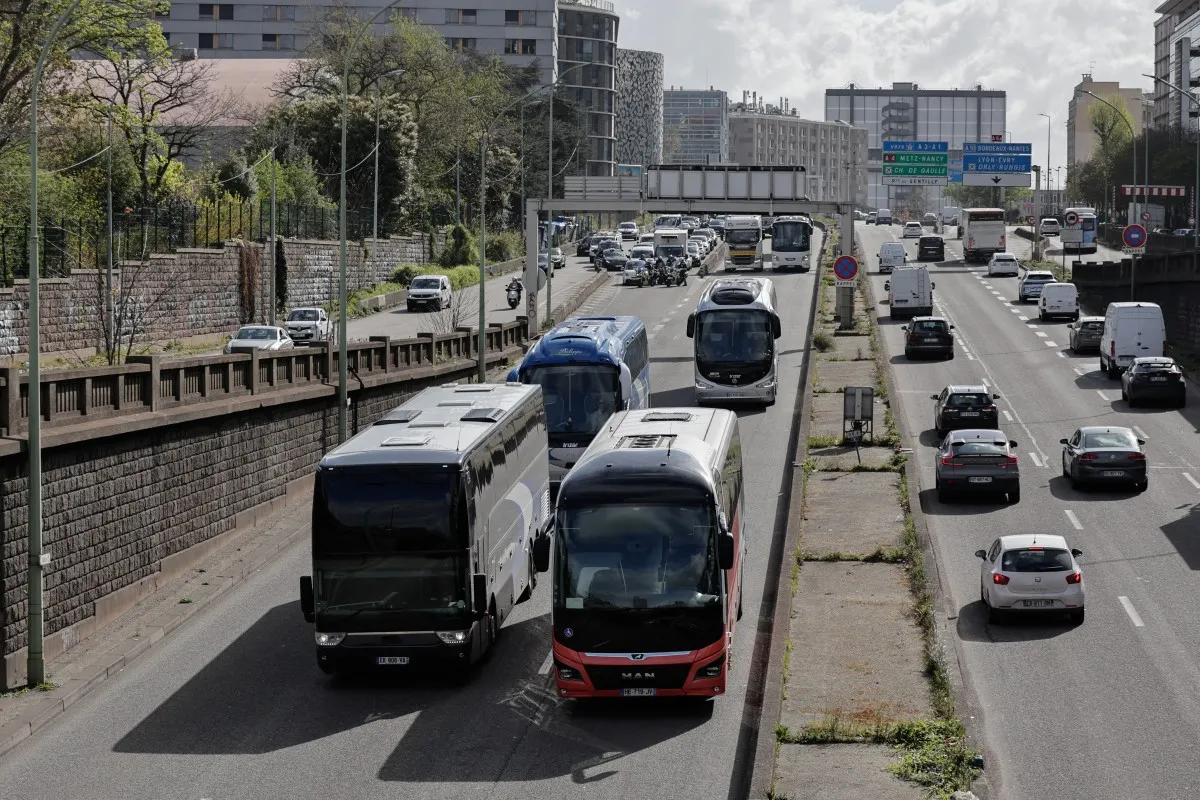
A marathon, parks, footpaths and cycle lanes – Paris’s famously traffic-snarled périphérique could look very different in the future if the new mayor has his way.
Newly-elected Paris mayor Emmanuel Grégoire says that he wants to “undertake the complete redevelopment of the ring road by 2050” to transform it into an “urban boulevard”.
In this, he is following the long-term project of his predecessor Anne Hidalgo. While he was merely a candidate for the top job at City Hall, Emmanuel Grégoire campaigned to continue her long-term policy plans for the road that circles and constricts Paris in more ways than one.
Why the Paris périphérique is more than just a ringroad
A couple of weeks after his election, he revealed his grand marathon plan – to completely close the road for one day of the year to allow a fun run on its tarmac (technically not a marathon, since it is only 34km long).
His campaign pledges included a “gradual reduction in lanes” on the road that marks the physical limit of his mayoral authority; adding “cycling and pedestrian infrastructure, notably through the creation of footbridges”, and creating more green spaces, eventually making the ring road accessible to cyclists.
The gates of Paris would become “true squares of Greater Paris,” linked by a “large green, cultural, and sporting belt.”
Among the flagship projects: the transformation of the Parc des Princes and the Porte de Saint-Cloud into “open, green, and vibrant neighbourhood[s],” with the ring road going under cover at those points.
Maintaining the 50km/h speed limit is, for him, a non-negotiable public health measure, designed to reduce noise and pollution for the nearly 550,000 residents living above the boulevard.
A further drop to 30km/h along certain stretches remains a prospect — though no decision has yet been made.
Grégoire can point to a March study by the Atelier parisien d’urbanisme (Apur) on the effects of the reduced speed limit on the ring road, five months after its implementation.
Noise, traffic jams, pollution, and accidents were all down, according to the report, which found that congestion decreased by 16 percent, with a slight decrease in vehicle traffic; accident levels dropped 17 percent over the five months compared to the same period a year previously.
Air pollution levels, particularly nitrogen dioxide and PM10 emissions fell noticeably.
Noise levels dropped, particularly at night. Around Porte de Vincennes, an average decrease of -2.6dB(A) was measured over the five months compared to the previous 12 months.
The new mayor’s greater ambition is to transform the périph into a shared thoroughfare for public transport, cars, pedestrians, and cyclists, all within a greener setting.
In broad terms, this transformation would see some traffic lanes removed and creating pedestrian crossings. It would also include the development of spaces for cyclists and pedestrians .
The exact timeline remains unclear for now, but 2032 keeps being mentioned as the year of major transformations — starting with the Porte de Gentilly, which is expected to serve as a €10 million-€15 million test project.
He may also face a political fight, since the périphérique – marking as it does the border between the city of Paris and its suburbs – is a shared political responsibility.
Hidalgo had to battle regional and local authorities in order to implement her plan of dropping the speed limit from 70km/h to 50km/h – but she won in the end.