PACE in Strasbourg has been reviewing Switzerland’s handling of the Magnitsky case
SWI swissinfo.ch
Switzerland’s controversial handling of the Magnitsky Affair, a vast Russian money-laundering scheme, is back in focus. The Parliamentary Assembly of the Council of Europe is preparing a resolution critical of Switzerland’s response, while the Swiss Federal Court has ruled a central part of the case unconstitutional.

On April 22, the Parliamentary Assembly of the Council of Europe (PACE) in Strasbourg is expected to vote on a resolutionExternal link critical of Switzerland’s handling of the Magnitsky affair, a vast cross-border money-laundering operation involving many high Russian officials.External link The fraud involved $230 million (CHF183 million) stolen from the Russian Treasury as illegal tax refund. It was uncovered by Sergei MagnitskyExternal link, a lawyer representing his client Hermitage Capital Management, then the biggest portfolio investor in Russia. Magnitsky was found dead while in Russian custody after testifying in the case. His death led to a series of international investigations and sanctions on Russian citizens.
The techniques to embezzle funds used in the Magnitsky case were described in depth by journalists at Novaya Gazeta, a Russian media outlet, and at the OCCRP, an international consortium of journalists.
Russian police officers confiscated documents and the corporate seals of the Russian subsidiaries of the Hermitage Fund, a British investment company, and then used them to re-register ownership under another name. Subsequently, a series of other dummy shell companies, controlled by the same individuals, presented fictitious financial claims against the stolen “subsidiaries” of Hermitage Fund. Playing the role of both plaintiff and defendant, they convinced Russian arbitration courts to issue rulings that resulted in massive losses on paper, completely nullifying the original income. Then, armed with documents “proving” that the company had not made any profit, the perpetrators filed an official claim for a reimbursement for $230 million, which had previously been paid to the Russian Treasury in the form of income tax. The money obtained in this way was then transferred out of the country through a web of offshore accounts.
The draft resolutionExternal link, seen by Swissinfo, was unanimously approved by PACE’s Committee on Legal Affairs and Human Rights on January 27, 2026. It criticises the Swiss authorities’ conclusions of the case.
PACE is one of the two statutory bodies of the Council of Europe. It is the organisation’s parliamentary arm tasked with promoting human rights, democracy and the rule of law. Switzerland is represented in PACE and takes part in its work. While PACE resolutions are non-binding, they carry political weight and can shape international debate.
The resolution by PACE raises broader questions: is Switzerland’s justice system in line with international norms? And why does a case closed by Swiss prosecutors more than four years ago still trigger controversy abroad?
At stake is more than the fate of frozen funds. The dispute goes to the heart of how legal standards are applied in complex cross-border money-laundering cases and how Switzerland’s approach compares with that of other jurisdictions.
How it all started
In 2011, Hermitage Capital filed a criminal complaint in Switzerland. The Swiss case became one of the first international investigations initiated by Hermitage into the laundering of proceeds from that fraud. It was followed by multiple investigations including in the United States, France, Spain, the Netherlands, Luxembourg and the Baltic countries.

Denis Katsyv, son of a senior Moscow-region official.
DM
Swiss authorities froze about CHF18 million ($22.6 million) held in bank accounts controlled by three Russian citizens that had benefited from the fraud: Vladlen Stepanov, then husband of the Russian tax official Olga Stepanova, who authorised the illegal tax refund; Denis Katsyv, son of a senior Moscow-region official; and Dmitry Klyuev, a Russian banker previously convicted in Russia.

Dmitry Klyuev, a Russian banker previously convicted in Russia.
OCCRP
In July 2021 Switzerland’s Office of the Attorney General (OAG) formally closed its decade-long money-laundering investigationExternal link, stating that it had “established a link between some of the assets under seizure in Switzerland and the predicate offence committed in Russia” but had “not revealed any evidence that would justify bringing charges against anyone in Switzerland”.
It ultimately confiscated CHF4 million on the grounds that the money was linked to the fraud, while releasing the remaining CHF14 million back to the accountholders.
Hermitage Capital challenged the decision in the Swiss courts. In January 2025 the Federal Court dismissed its final appealExternal link, exhausting the company’s remaining domestic remedies in Switzerland.
The decision to return around 75% of the frozen funds to the Russian account holders drew international criticism from human rights organisations, international lawyers and lawmakers.

In July 2023, the US Helsinki Commission called for sanctions against former Attorney General Michael Lauber over Switzerland’s handling of dirty Russian money in the Magnitsky affair.
Anthony Anex / Keystone
In July 2023, the US Helsinki Commission, a congressional body that promotes human rights and security, “examined Switzerland’s poor track recordExternal link of rooting out dirty Russian money” and called for sanctionsExternal link against three Swiss officials in connection with the affair, including former Attorney General Michael Lauber and a former federal prosecutor.
Questions were also raised about the conduct of officials involved and about links between Russian interests and the OAG. Vinzenz Schnell, a Swiss investigator involved in high-profile Russia-related probes, was later convicted by a Swiss court for “accepting an undue advantage”External link from a Russian side while he was working on Russia-linked investigations, including the Magnitsky case.
The OAG rejected all the accusations and demands for sanctions.
Officially, the investigation was closed. Yet the case continued to generate controversy abroadExternal link. Politicians in the UK and the US have criticised this decision.
Counting the money
At the heart of the controversy to return the majority of frozen funds was the method used by the Swiss prosecutors to calculate how much of the funds should be confiscated.
Using what they called a “proportional calculation method”, the OAG concluded that only CHF4 million of the funds that were frozen could be permanently confiscated. The remaining, prosecutors said, could not be definitively traced to the Russian Treasury and were therefore released.
That interpretation and the release of the bulk of the money later became the central point of legal and political dispute.
The approach was based on the idea that the original proceeds had allegedly been diluted through successive layers of financial transactions. At each stage of “layering”, prosecutors estimated what share of the funds could still be traced to the predicate offence and reduced the confiscation amount accordingly.

Switzerland is represented in PACE and takes part in its work.
Keystone / Anthony Anex
While Swiss prosecutors defended their method, legal observers both in Switzerland and abroad noted that such a calculation is rarely used in major international money-laundering cases. In those cases, courts more often focus on the overall illicit origin of funds, rather than attempting to mathematically segment their transformation through complex financial chains.
Mark Pieth, a former member of the G7’s Financial Action Task Force and former head of economic and organised crime at the Swiss Federal Office of Justice, has publicly questioned the broader implications of this interpretation. “If what the prosecutors are saying [the method] is correct, then we [Switzerland] would be the paradise for money laundering. Maybe we are the paradise for money laundering,” he told Swissinfo in an earlier interview. “If there are indicators that this money stems from an illegal source, then it has to be blocked,” he added.
Who counts as a victim
The dispute was not only about how much money could be confiscated. It was also about who counted as a victim. The OAG’s decision also differed from other jurisdictions by removing Hermitage Capital from the proceedings as an “injured party”, thereby depriving it of the right to challenge the outcome.
Prosecutors argued that the sole victim of the fraud was the Russian Treasury, an assessment aligned with the position of Russian authorities. The US Department of Justice treated the case as part of a broader transnational fraud and money-laundering scheme, recognising Hermitage as a victim. External linkFrench authorities adopted a similar approach.
>>Read our investigation, cited in the PACE resolution and selected for the preliminary shortlist of the European Press Prize
More
More
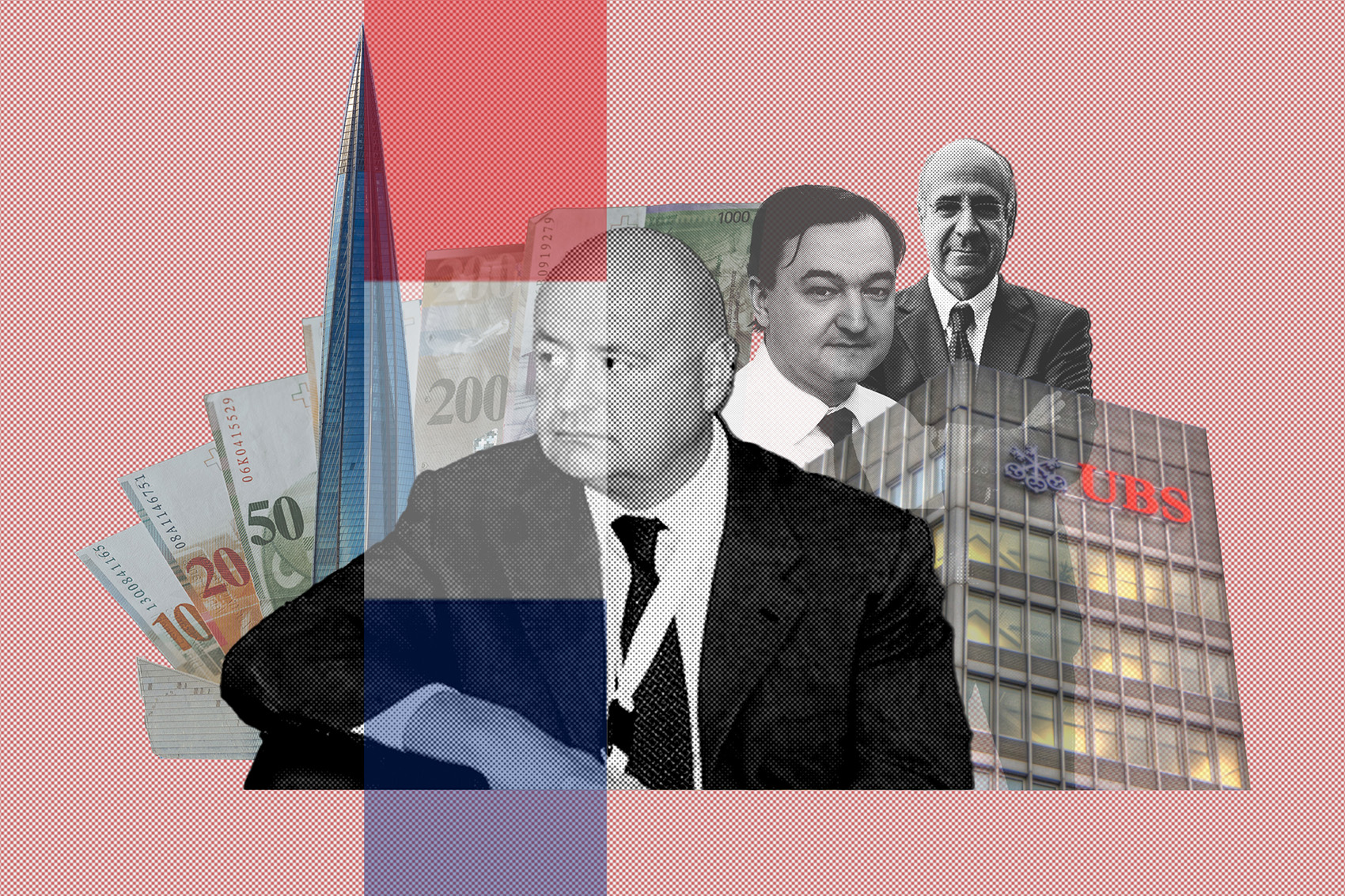
Magnitsky case: How Switzerland failed to investigate Russian millions
International scrutiny and the role of PACE
The controversy over Switzerland’s handling of the case did not remain confined to the courtroom. It soon became the subject of international parliamentary scrutiny in Strasbourg at the PACE.
PACE’s engagement in the Magnitsky affair dates back to January 2013 when the Assembly began examining the tax fraud and Magnitsky’s death, including how and where the proceeds were laundered.

In 2016, the Swiss politician Andreas Gross, who wrote a report on Magnitsky’s death for the Council of Europe in 2013-2014, was summoned for questioning by the Swiss prosecutor’s office.
KEYSTONE/Peter Klaunzer
The Committee on Legal Affairs and Human Rights appointed its rapporteur at the time, Swiss parliamentarian Andreas Gross, and authorised fact-finding visitsExternal link to Moscow, London, Nicosia in Cyprus and Bern.
Gross first travelled to Moscow in early 2013 to hear the official position of the Russian authorities and then held discussions with the Swiss Attorney General and his deputy. He also met officials in Cyprus, where part of the proceeds had reportedly been channelled through offshore structures.
The mission resulted in a reportExternal link and resolutionExternal link calling on the competent Russian authorities to fully investigate the circumstances and background surrounding Magnitsky’s death and to cooperate with authorities in several European countries, including Switzerland, on the ongoing money-laundering investigations linked to the fraud.

Estonian parliamentarian Eerik-Niiles Kross tabled a motion for a resolution, aimed at triggering a new inquiry into Switzerland’s decision to release most of the frozen funds.
Henrik Montgomery / AFP
A decade later, PACE returned to Switzerland’s role in the case. In April 2024, Estonian parliamentarian Eerik-Niiles Kross tabled a motion for a resolution, External linkaimed at triggering a new inquiry into Switzerland’s decision to release most of the frozen funds. In October 2024, PACE appointed Ukrainian parliamentarian and lawyer Lesya Vasylenko as special rapporteurExternal link to prepare a report and draft resolution on the issue.
“Proceeds of the crime denounced by Sergei Magnitsky found in Switzerland must not be returned to the presumed perpetrators,” Kross said to Swissinfo, when asked what Switzerland could have done to better fight money laundering.
PACE rapporteurs routinely conduct fact-finding missions in member states as part of the Assembly’s oversight work, for example in HungaryExternal link, GeorgiaExternal link, AzerbaijanExternal link, RomaniaExternal link or TurkeyExternal link. In that sense, a mission focused on Switzerland is not unusual.
A cold welcome
In March 2025, Vasylenko travelled to Switzerland on a PACE fact-finding mission. During her one-day visit in Bern, she was scheduled to meet Swiss parliamentarians and officials from the foreign ministry.
She told Swissinfo that her official visit to Bern had not been without “tension”. During discussions with some parliamentarians, she encountered what she described as “strong” and, at times, “inappropriate” reactions from members of the Swiss delegation at PACE. Swiss media coverage at the time reflected a defensive reaction from some members of the Swiss delegation, with criticism directed at the draft report and at Vasylenko personally, even though the final report hadn’t been published yet.
The foreign ministry also commentedExternal link on the visit: “Switzerland has a robust system of safeguards against illegal funds.”
A new turn of events
In December 2025, the Swiss Federal Court issued a decision rejecting the proportional methodExternal link that had underpinned the OAG’s calculations in the Magnitsky case, finding it incompatible with Swiss law – a rulingExternal link that called into question the rationale used to release most of the frozen assets.
The ruling arose from an appeal brought by Katsyv, one of the Russian citizen whose assets were confiscated, and his affiliated companies after the Federal Criminal Court upheld the OAG’s 2021 closure order in February 2023External link.
Katsyv’s companies were central to the Swiss case because their Swiss accounts had been frozen as suspected channels for laundering proceeds of the fraud. The Swiss Federal Court ordered a new calculation of the compensatory claim against it using one of two alternative methods: the “intentional corrective” method or the “residual” method, also referred to as “sedimentation”.
>>Read our new investigation into Denis Katsyv, who withdrew funds he held at Swiss bank UBS and transferred most of these to banks in Israel and Armenia. The report shows a recent Swiss Federal Court ruling could have led to the confiscation of some of those funds.
More

More
Millions of dollars linked to Magnitsky fraud case leave Switzerland
Under the intentional corrective method, the focus is on whether the account holder intended to launder criminal proceeds. If that intent is established, the full amount in the account may be subject to confiscation.
The sedimentation method is more restrictive and targets the funds directly linked to illicit transactions. The Federal Criminal Court now has to reassess the size of the state’s compensatory claim according to the decision of the Federal Court.
This decision is important as it will shape future rulings on confiscating funds linked to international fraud.

Damien Cottier, member of the Swiss House of Representatives and of PACE.
Anthony Anex / Keystone
“The calculation method had never before been definitively addressed by the country’s highest court,” said Damien Cottier, member of the Swiss House of Representatives and of PACE, adding the ruling establishes a new jurisprudential framework binding on lower authorities and courts. The PACE draft resolution, approved by the Committee on Legal Affairs and Human Rights, and the report “welcomed the Federal Court decision”.
Behind the scenes in Strasbourg
In January 2026, Vasylenko presented her report and an initial draft resolution to PACE’s Committee on Legal Affairs and Human Rights. Sources in Strasbourg told Swissinfo that the text was met with criticism from some members of the Swiss delegation, who argued that it misrepresented Switzerland’s judicial approach to the case.
In the following days, efforts by different parliamentarians led to a revised version of the draft that was noticeably softer in its assessment of Switzerland.
Cottier told Swissinfo that comparisons with foreign investigations were often misleading. “National judicial systems differ considerably. In the United States, the case was resolved through an out-of-court settlement, without a conviction, which is not possible in Switzerland,” he said. This version was in turn criticised by some European parliamentarians during the Committee’s hearings for not fully representing Switzerland’s responsibility in returning funds linked to an international fraud.

PACE appointed Ukrainian parliamentarian and lawyer Lesya Vasylenko as special rapporteur to prepare a report and draft resolution on the issue.
Paul Ellis / AFP
The final draft resolution integrates some of the amendments proposed by one of the members of the Committee. The adopted text now highlights that authorities in the US and France concluded the fraud and subsequent laundering were carried out by a criminal organisation involving Russian government officials – a conclusion that contrasts with the Swiss prosecutors’ assessment that they could not establish the involvement of a criminal organisation.
That distinction matters under Swiss law. If money launderingExternal link is linked to a criminal organisationExternal link, different rules apply: instead of prosecutors having to prove that the assets are criminal, suspects must demonstrate that their funds have a legitimate origin. This also means assets linked to a criminal organisation can be fully confiscated, rather than partially released, as happened in the Swiss case.
The parliamentarians also stated in the resolution that the Swiss investigation had been overshadowed by serious allegations that officials involved had accepted undue favours from senior Russian figures. It includes recommendations for the Swiss judicial system including expanding confiscation without a criminal conviction and changing national legislation External linkaccordingly.
Vasylenko told Swissinfo that the strength of the Assembly lies in its ability to bring different positions together and agree on language that reflects shared values while remaining acceptable to national authorities. “Sometimes that means toning down certain formulations,” she said. “At the end of the day, what matters is the principle and that the words in the report lead to action.”
What’s next?
The final resolution is expected to be approved in April 2026 during the plenary of PACE.External link Switzerland has no legal obligation to follow the recommendations.
The PACE report places the Swiss judicial process under international scrutiny.
According to Vasylenko, the resolution can help trigger a review of national legislation and judicial approaches in major anti-corruption cases. It may also encourage courts and investigative authorities, not only in Switzerland but in other countries, to reassess the principles they apply when handling cases of this scale. “Any resolution can be interesting for people within the country itself, because they may use it to try to push for change,” Vasylenko said. Such resolutions can also reinforce domestic political arguments.

Liliane Maury Pasquier, a former president of PACE
Anthony Anex / Keystone
“It can serve as support for their own demands domestically,” explained Liliane Maury Pasquier, a former president of PACE and longtime Swiss delegate to the body.
Key questions around the case remain unresolved: what happens to the 75% of the funds that were released if the compensatory claim is recalculated under the Federal Court’s new framework? And does the decision also apply to funds belonging to Stepanov, the other Russian citizen whose funds from the fraud are in Swiss bank accounts?
Swiss bank UBS, which had multiple corporate and personal accounts belonging to both Katsyv and Stepanov, refused to comment.
The OAG said the case was ongoing and refused to comment.
Edited by Virginie Mangin/ts
More

More