
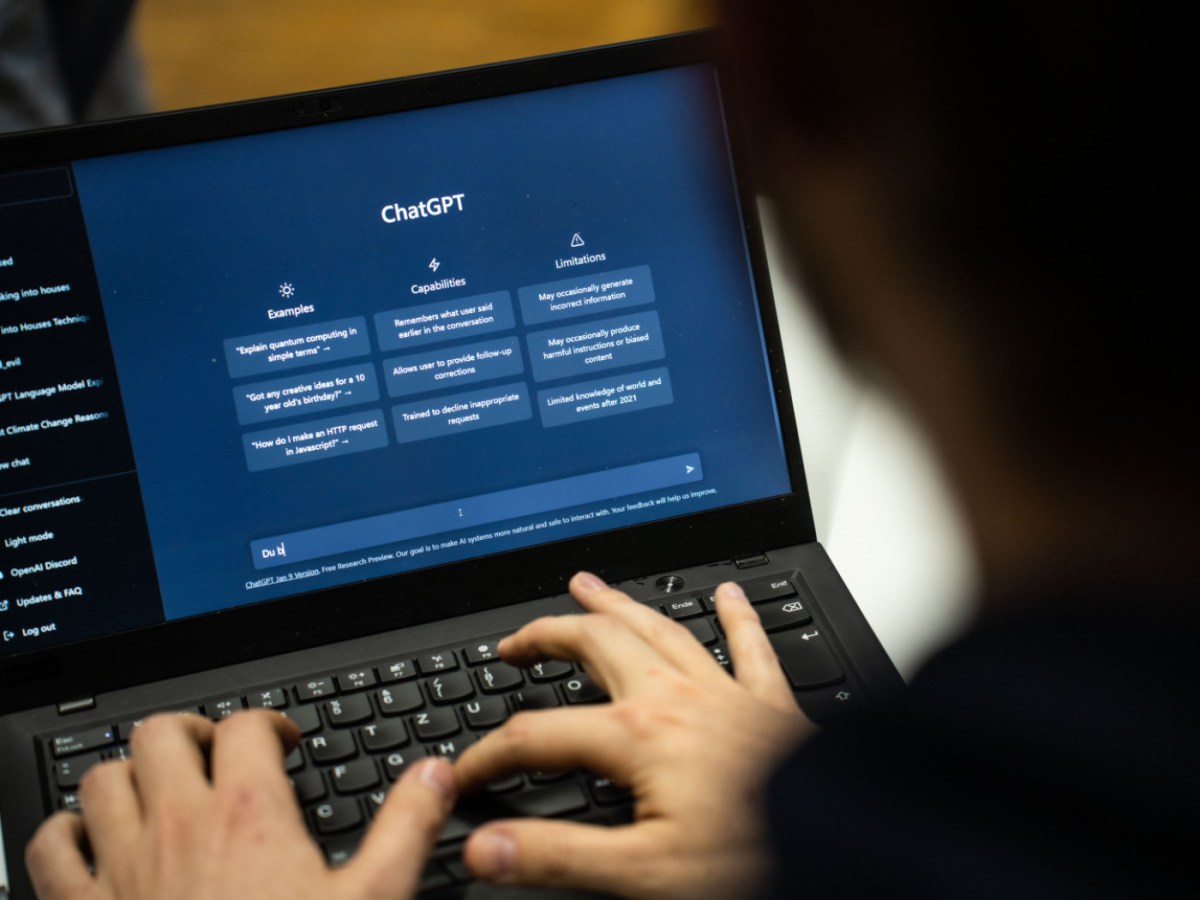

Young people, graduates, high-income earners and French-speaking Swiss are particularly keen on AI use, the survey shows.
Keystone-SDA
More than three-quarters of the adult population in Switzerland (76%) use artificial intelligence tools in their daily lives. This figure is up significantly compared to last year (62.4%), reveals a survey published on Thursday by comparison web portal Comparis.
+Get the most important news from Switzerland in your inbox
According to the survey, young people, graduates, high-income earners and French-speaking Swiss are particularly keen on artificial intelligence (AI). In the 18-35 age group, the usage rate is 90.1%, compared with just 52.1% among the over-55s.
There are also marked differences depending on the level of education: 82.5% of people with a high level of education use these tools, compared with 69.4% of those with a lower level of education. Differences between high- and low-income groups are just as marked. The survey also shows that 81.6% of people in French-speaking Switzerland use AI tools, compared with 74.1% in the German-speaking regions of the country.
Internet research in demand
AI is most commonly used to carry out Internet searches (41.6%) as a replacement for a conventional search engine. Artificial intelligence is also widely used in day-to-day work, for example, in writing texts (31.4%) and in online commerce (26.9%).
More

More
‘I don’t remember what it was like without AI’: Swiss youth are getting hooked on chatbots
Correspondence with a chatbot is growing in popularity, with 61.9% of respondents saying it was an interesting option.
However, respondents were sceptical of the transmission of personal data, particularly information about health problems. Of those surveyed, 55.5% said they would never confide psychological problems to a chatbot, while 52.5% consider that there is a limit to the collection of personal data by a chatbot acting as a health coach.
The representative survey was carried out by the Innofact market research institute on behalf of Comparis in March 2026. A total of 1,035 people from all regions of Switzerland took part.
Translated from French with AI/gw
We select the most relevant news for an international audience and use automatic translation tools to translate them into English. A journalist then reviews the translation for clarity and accuracy before publication.
Providing you with automatically translated news gives us the time to write more in-depth articles. The news stories we select have been written and carefully fact-checked by an external editorial team from news agencies such as Bloomberg or Keystone.
If you have any questions about how we work, write to us at english@swissinfo.ch.
