

When it launched a full-scale invasion of Ukraine in 2022, Russia expected the fall of Kyiv within days.
In waging a bombing campaign of Iran in late February, the United States and Israel anticipated the rapid collapse of the Islamic republic.
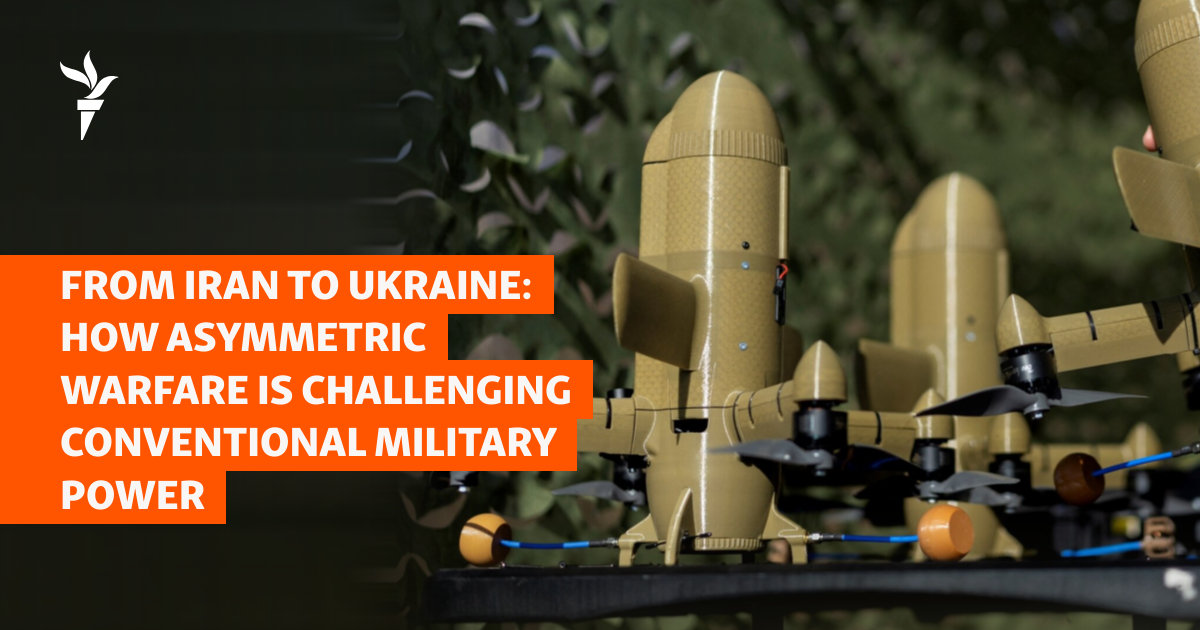
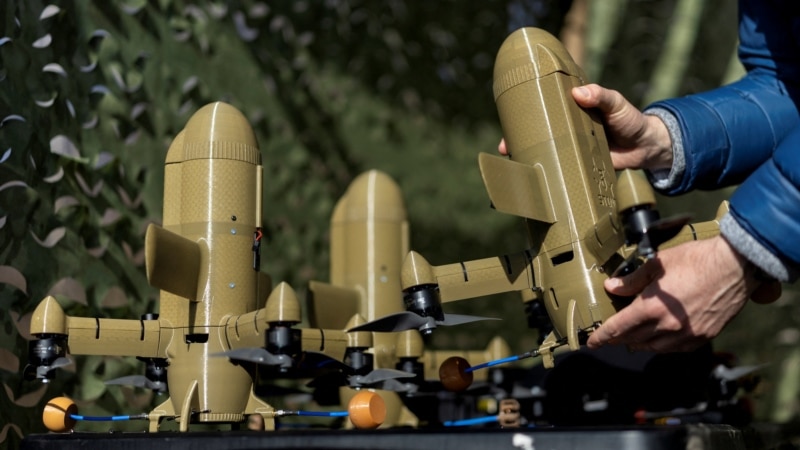
But in both cases, overwhelming military power failed to defeat the smaller and weaker side in the conflict. Instead, Ukraine and Iran reshaped the battlefield with cheap, domestically produced drones.
The conflicts in Ukraine and the Middle East have given rise to asymmetric drone warfare, experts say. Compensating for shortages of missiles and the lack of a modern air force, militarily weaker actors are increasingly using drones to even the playing field.
“Drone warfare is new in the sense that it doesn’t truly replace conventional military means but rather modifies their uses,” said Clement Molin, an analyst at the France-based think tank Atum Mundi.
“If drones are used so extensively by Ukraine and Russia, it is primarily due to a lack of air superiority capabilities or missiles. We see this in the Middle East, where states have been able to achieve almost total air superiority over Iran,” he added.
Molin said aircraft, tanks, logistics, and infantry are still crucial in modern warfare. But he said the role of drones in military strategy is “progressively strengthening.”
“Drones will conduct autonomous missions guided by AI. UGV [unmanned ground vehicle] drones will be able to replace logistics or conduct assaults. And naval drones will enable surface and underwater warfare, and even, as is already the case, serve as ‘drone carriers.'”
‘Low-Cost Attrition’
The United States and Israel launched a bombing campaign of Iran on February 28, striking military and nuclear sites, hitting the country’s industrial base, and assassinating dozens of Iranian political and military officials.
Lacking a modern air force and air defenses, Iran responded by firing thousands of ballistic missiles and kamikaze Shahed drones at Israel, US military and diplomatic facilities in Persian Gulf, and key energy infrastructure in Saudi Arabia, the United Arab Emirates (UAE), Qatar, Bahrain, and Kuwait — key US allies.
By threatening and attacking international shipping, Iran also brought maritime traffic to a virtual standstill in the Strait of Hormuz, a key artery for global oil and gas supplies, giving it significant leverage over its neighbors in the Persian Gulf and the global economy.
Costing as little as $7,000 each, Iran’s drones imposed significant economic and operational costs on the Persian Gulf states, despite high interception rates. Iran fired an estimated 4,000 Shahed-136 and Arash-2 drones until a cease-fire went into effect on April 8.
Iran’s drone attacks “paralyzed shipping, damaged air and missile defense radars, slashed gas exports, and forced expensive alert postures,” said Farzin Nadimi, an Iran defense expert at the Washington Institute.
“Iran’s one-way attack drones demonstrated in the 2026 conflict that even heavily degraded forces can maintain offensive capability and probably even shift the balance through persistent, low-cost attrition,” he added.
Ukraine’s inexpensive, domestically produced drones have played a major role in its war against Russia.
Drones have not only been key to Kyiv fighting Russian forces to a near stalemate. Away from the front line, Ukrainian drones have struck Russia’s naval fleets in the Black and Baltic seas, hit Russian airfields and military sites, and disrupted Russia’s war economy by striking major oil refineries.
Lagging in its drone capabilities at first, Russia acquired thousands of units and technology from Iran, and then developed its own homegrown production.
For both Russia and Ukraine, the entire war has been transformed by drones, experts said: kamikaze Shahed drones, heavy-lift supply drones, first-person-view drones, drones flown by fiber-optic cable.
‘Irregular Groups’
Nonstate actors, including militant groups in the Middle East, are also increasingly using drones against regular armies. They include Lebanese militant group Hezbollah and Yemen’s Houthi rebels.
Hezbollah is both a militant group and political party that controls much of southern Lebanon. It is considered a terrorist organization by the United States, although the European Union has only blacklisted its armed wing.
Hezbollah has used fiber-optic drones — first pioneered by Russian soldiers and now ubiquitous in Ukraine — during the current war with Israel.
In the past month, Hezbollah militants have killed three IDF soldiers and one Israeli civilian using kamikaze drones controlled through kilometers of fiber-optic cables, highlighting the vulnerability of even the world’s most advanced militaries to the cheap drone innovation.
Unlike radio-controlled drones, which are vulnerable to electronic jamming and require a clear line of sight to a transmitter, fiber-optic drones can be navigated to virtually anywhere there is space to fly.
Meanwhile, the Houthis have waged maritime drone and missile campaigns that have disrupted global shipping in the Red Sea.
“Groups such as Hezbollah and the Houthis already have effectively shown that they can use asymmetric strategies, based on cheap drones and missiles, to impose costs on rival militaries,” said Steven Feldstein of the Washington-based Carnegie Endowment for International Peace.
“The Houthis are a classic example of an irregular group that over time have developed a sophisticated drone and missile program that has created significant havoc in the region,” he added.
Experts say both groups have used Iranian designs and know-how, commercial components mainly sourced from China, and battlefield lessons from the war in Ukraine.
