
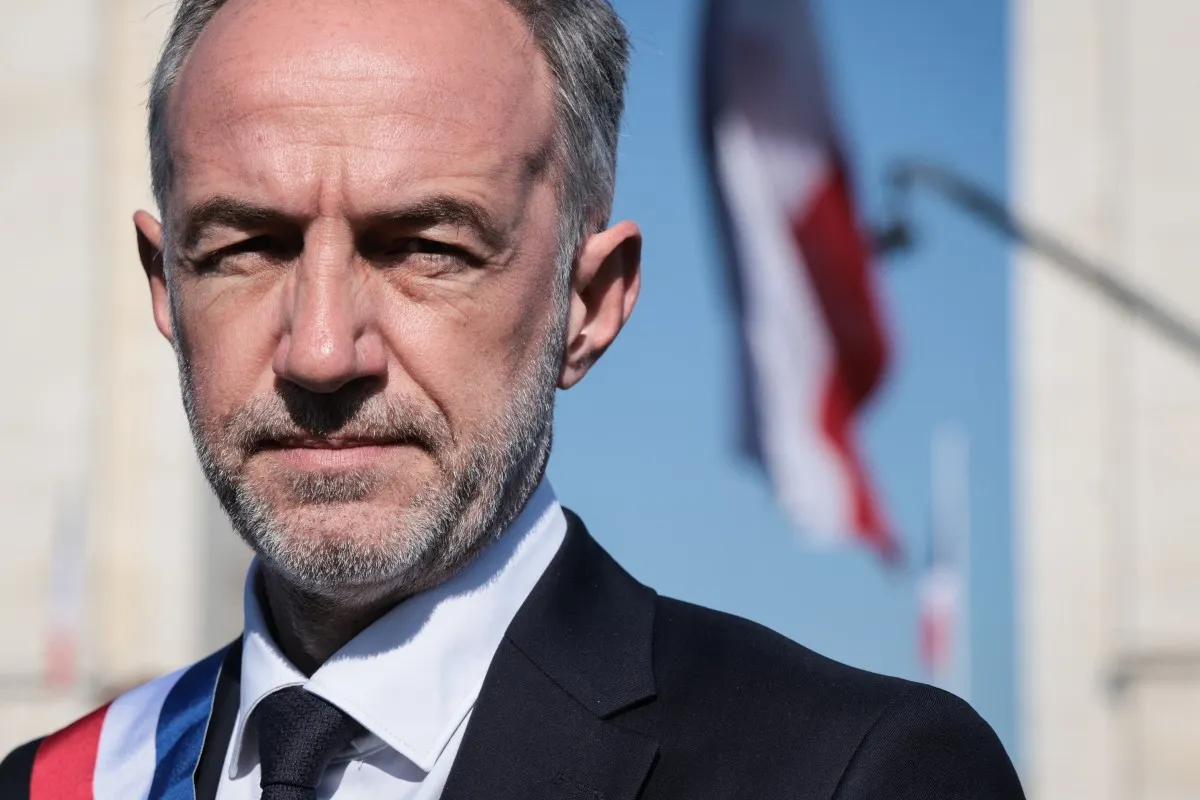
Newly elected Paris mayor Emmanuel Grégoire has unveiled his plans to increase pedestrian areas and improve safety, as well as beautify up to 1,000 ‘blackspots’ in the city.
Paris mayor Emmanuel Grégoire has pledged to address “1,000 problem areas” as he unveiled his plans for improving public spaces in the city, promising a “right to beauty” in all neighbourhoods.
“I am aware of the dissatisfaction of many Parisians regarding the quality of public spaces,” Grégoire said in an interview with Le Figaro.
He also declared that pedestrians are the “absolute priority” of his mandate – outlining plans to pedestrianising more public spaces and create a police unit to deal with violence by motorists.
Pedestrian zones
Grégoire’s predecessor Anne Hidalgo has already pedestrianised large parts of the city, but Grégoire pledged to continue her work by creating an extra 80 pedestrian areas, and to guarantee, “wherever possible, at least one shaded sidewalk on every street.”
Meanwhile, the pedestrianisation of the Seine riverbanks will be, “accelerated to create a continuous 25-kilometre promenade.”
Asserting a “demand for cleanliness and comfort”, the mayor said the city would pay “increased attention to pavements, construction sites, terraces”.
He also said that pedestrian safety was a priority. Although many pedestrians have complained about dangerous behaviour from the increasing number of cyclists in the city, data shows that the main risk to pedestrians still comes from vehicles.
Grégoire said that he intended to create a police unit to deal with vehicle-related violence, both towards pedestrians and cyclists.
The move comes in the wake of the death of cyclist Paul Varry, who died after being run over by a car following an altercation with the driver.
Latest data from Paris shows that 53 percent of all journeys within the city are made on foot, followed by 30 percent by public transport and 11 percent by bike. Car journeys amount to just 4.3 percent.
Blackspots
The mayor intends to present his plans at Paris Council meeting next week, and will also be looking at what he said were ‘1,000 black spots’ in the capital, where the quality of public spaces is in decline.
These include, he said, areas in and around train stations, and places where tourist traffic is high such as such Champ-de-Mars, or the Château-Rouge and Barbès areas.
And he announced a plan for a ‘right to beauty’ in all neighbourhoods with, “increased attention to facades, paving, historical furniture, bridges, particularly the Pont des Arts,” but also to what he called ‘everyday heritage’ that makes up “the identity of Paris”.
He insisted, however, that he was not an ‘anti-car’ mayor. Running alongside his plans for regreening and pedestrianising parts of the capital, he said he wanted to increase the number of dedicated parking spaces “for all those for whom the car is a work tool and who need it on a daily basis”.
