
A new report has revealed that several beaches along France’s northern and north-western coastline may pose health risks for swimmers this summer, while much of the Mediterranean and Atlantic coasts continue to offer good water quality.
The environmental association Eau et Rivières de Bretagne (ERB) has published the third edition of its annual study named La Belle Plage, which analyses bathing water quality at beaches across France.
The study is based on water quality tests carried out during the summer months by France’s regional health authorities, the Agences Régionales de Santé (ARS). Depending on the size and popularity of a beach, between four and 14 water samples are collected and analysed each season.
The most polluted bathing areas have high concentrations of E. coli and intestinal enterococci – both of which are indicators of sewage pollution.
Swimming in contaminated water can expose bathers to illnesses including gastroenteritis, respiratory infections, conjunctivitis and ear infections. Health authorities warn that children, elderly people and those with weakened immune systems are particularly vulnerable to these infections.
However even though the study is based on ARS data, the state health body refutes the rankings of the beaches by the organisation La Belle Plage, because it doesn’t use the methodology defined at EU level. ARS says it should be considered as an official ranking.
Nevertheless it may be helpful for readers heading to the beach this summer.
Northern coast most affected
According to the 2026 rankings, beaches in northern France, particularly along the coasts of Hauts-de-France, Normandy and Brittany, received significantly more orange and red ratings than beaches further south.
The report suggests that stronger tidal movements, heavy maritime traffic, industrial activity and ageing wastewater infrastructure all contribute to poorer water quality in these regions.
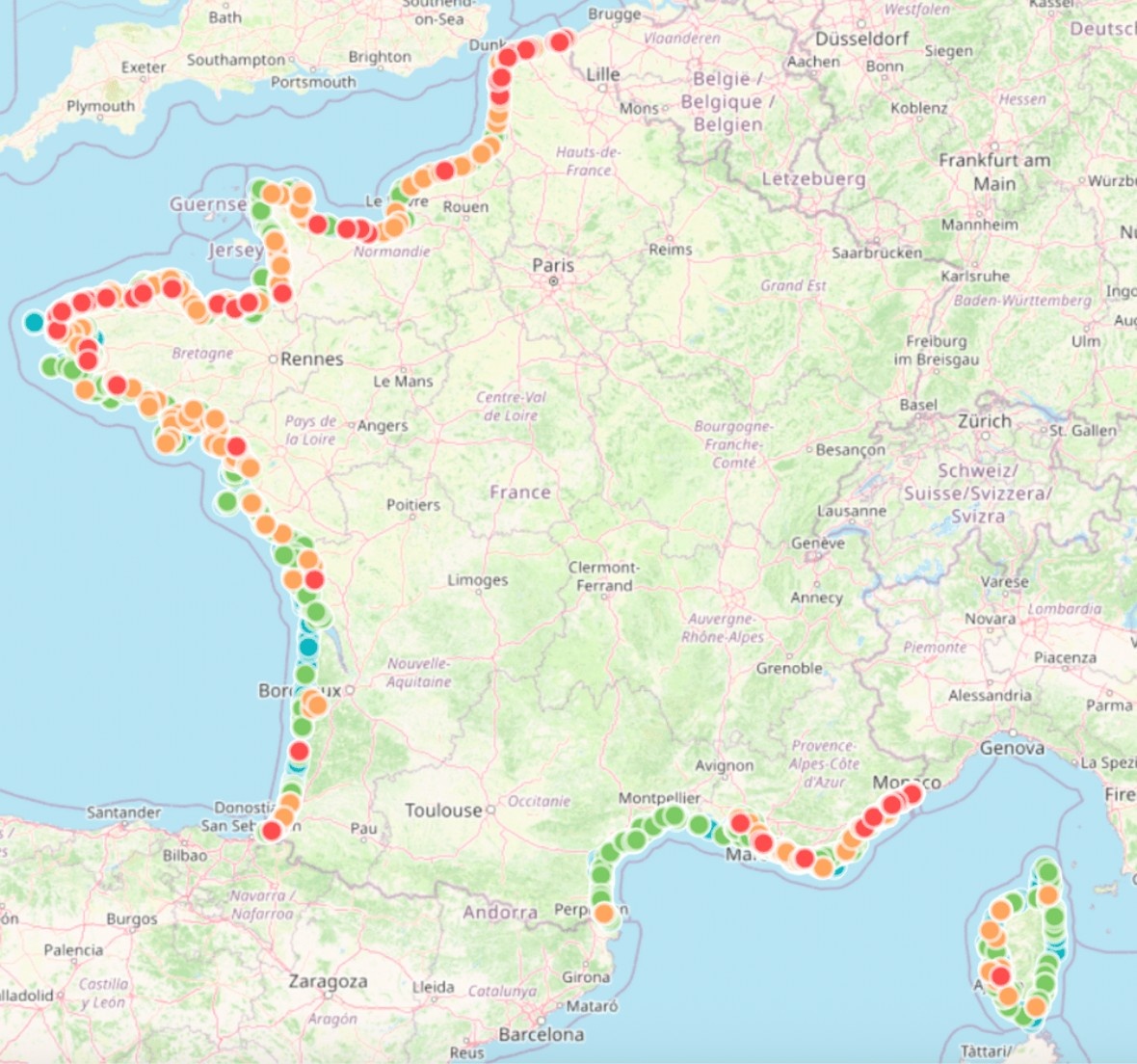 La Belle Plage updates its ranking of French beaches every year to indicate whether swimming is recommended (blue), low-risk (green), not recommended (orange) or should be avoided (red). (Source: La Belle Plage – Eau et Rivières de Bretagne 2026)
The beaches around Dunkirk, north of France, are among the most concerning. According to the rankings, the first seven beaches after the Belgian border are either “not recommended” for swimming or classified as beaches “to be avoided”.
Brittany’s mixed picture
In Brittany, the results are more nuanced. Of the 578 beaches analysed, around 80 percent were seen to present little or no health risk to swimmers. Seventy beaches achieved “excellent” status, with every sample recorded by the ARS over the past four years classified as having good water quality.
However, 111 Breton beaches were flagged as problematic, 90 were listed as “not recommended”, while 21 were categorised as “to be avoided”.
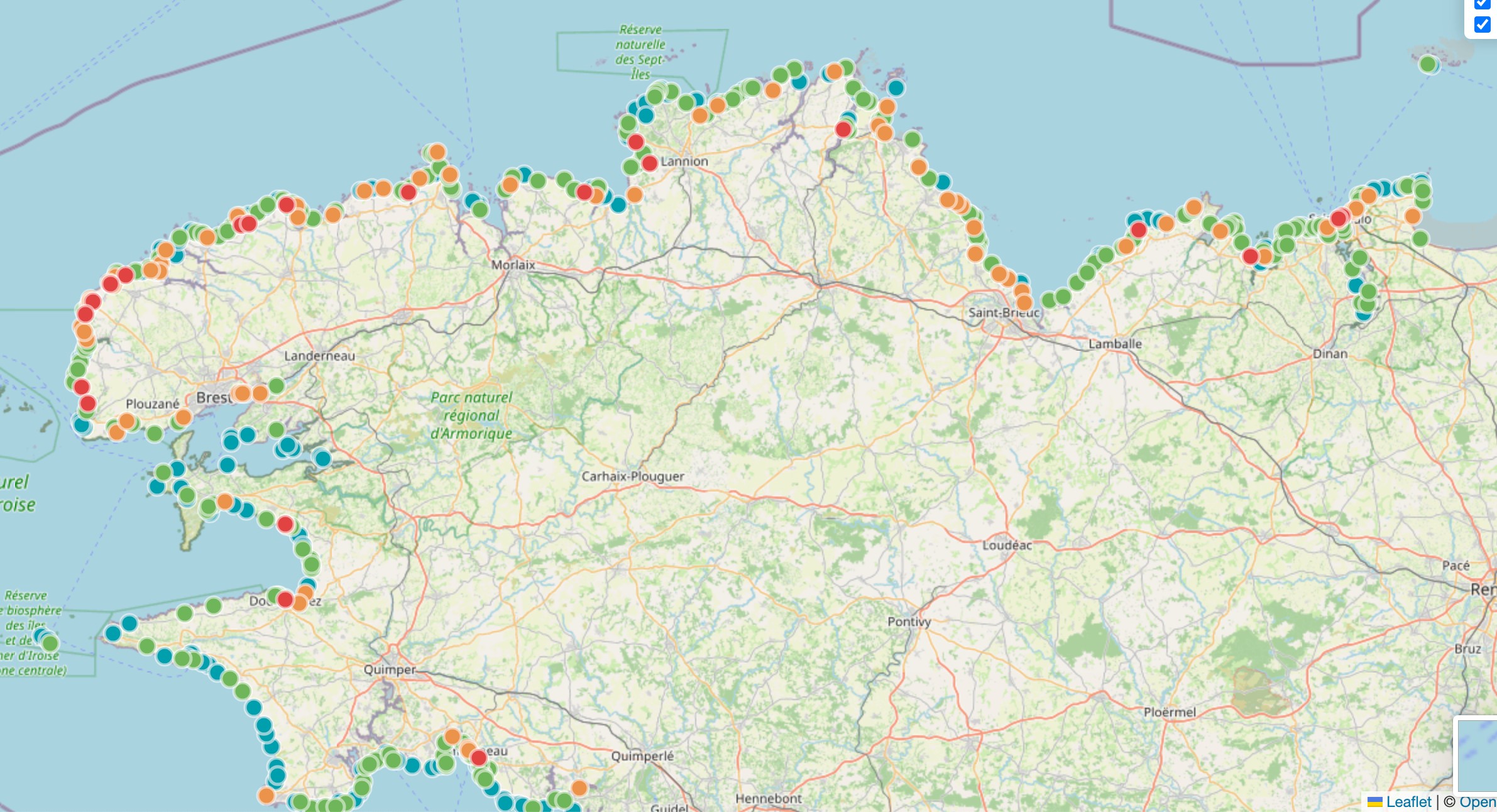
The north coast of Brittany has some beaches that are best avoided. Image: La Belle Plage
The report points to leaking or outdated sewage systems as one of the main causes of coastal pollution in Brittany. Heavy rainfall can overwhelm local wastewater networks, allowing untreated sewage to flow into rivers and eventually the sea.
Another major source of pollution is agricultural runoff. Northern Brittany, where intensive livestock farming is widespread, has a notably higher concentration of poorly rated beaches.
Better conditions further south
Water quality improves considerably further south along the Atlantic coast. Beaches in Charente-Maritime and Gironde are generally considered safe for swimming.
Mediterranean beaches also perform well overall, with most receiving green or blue ratings.
However, beaches located close to major urban areas, including Marseille, Toulon, Fréjus, Antibes, Nice, Monaco and Menton, show lower water quality levels, largely because of dense coastal development and wastewater discharge.
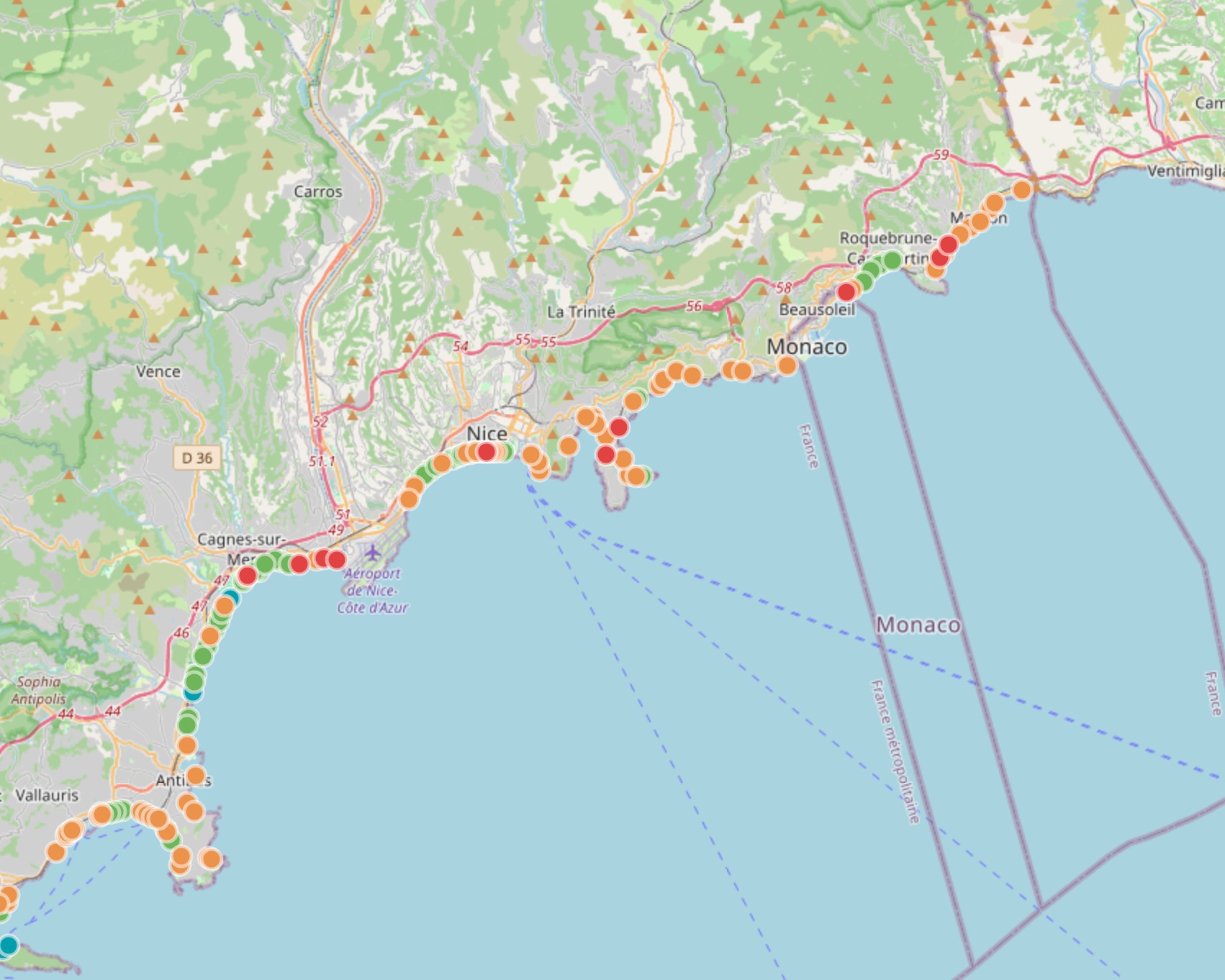
The beaches on the French Riviera are far from pristine. Image: La Belle Plage
Corsica’s beaches are generally rated highly, although some areas around Ajaccio and Bastia received lower scores.
To check whether an individual beach is safe for swimming or best avoided visit the La Belle Plage website and use the interactive map.