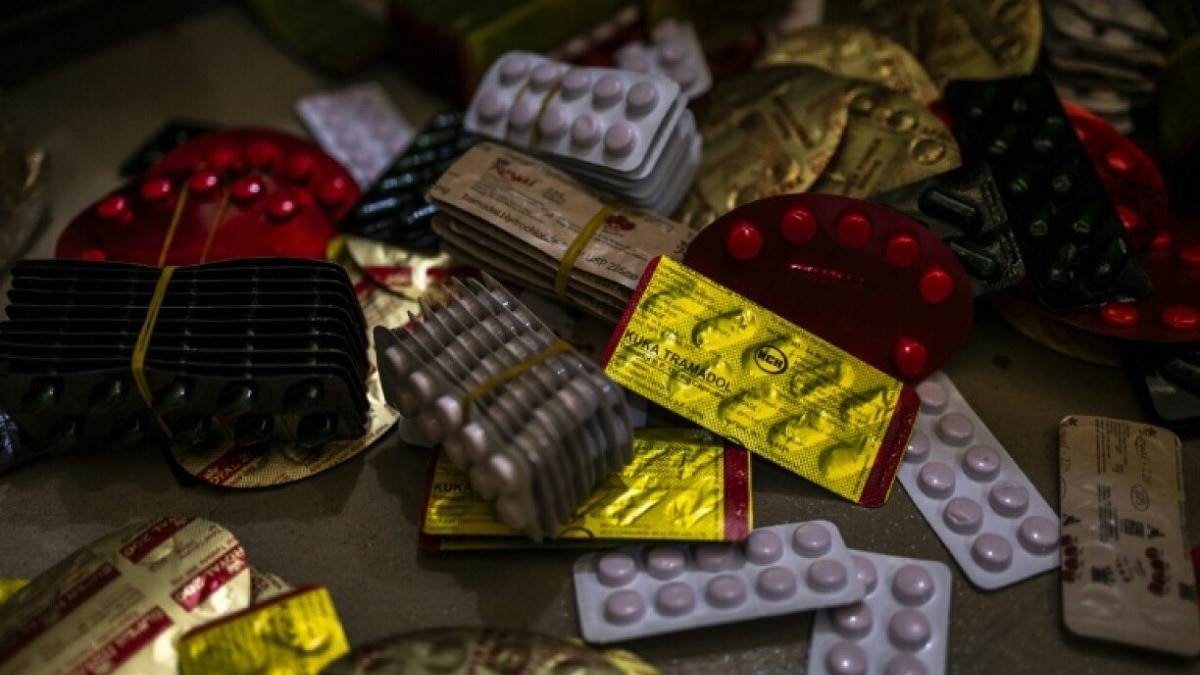
Millions of high-strength opioid tablets manufactured in India are continuing to flood West Africa despite promises of a regulatory crackdown, fuelling an escalating addiction crisis and contributing to the spread of the deadly street narcotic known as “kush”, according to an AFP investigation.
The synthetic opioid at the centre of the controversy is tapentadol — a powerful painkiller that comes in blister packs like ordinary medicine and is reportedly sold openly at roadside kiosks and informal pharmacies across countries including Sierra Leone, Nigeria and Ghana.
What makes the findings particularly alarming is that many of the tablets being exported are of strengths not approved by regulators anywhere in the world.
High-strength opioids flowing into West Africa
AFP’s investigation found that millions of dollars’ worth of 225mg and 250mg tapentadol tablets are being shipped from India to West Africa every month. According to the report, nearly three-quarters of the exports after India’s February 2025 crackdown involved these unusually high-strength pills.
Experts told AFP that such doses have no recognised therapeutic approval internationally. Andrew Somogyi, professor of pharmacology at the University of Adelaide, questioned why any country would approve such strengths “except to bypass regulatory and commercial restrictions”.
India officially classified tapentadol as a controlled narcotic in 2018. However, unlike tramadol — another opioid widely abused in West Africa — tapentadol has reportedly become easier to export because it faces fewer international controls.
Jaydip Patel of Gujarat Pharmaceuticals told AFP that many manufacturers shifted from tramadol exports to tapentadol because the latter “is not classified as a narcotic” in the same way in export channels.
From painkiller to ‘zombie drug’
The crisis has taken a darker turn with reports that tapentadol is now being mixed into kush, a highly addictive synthetic street drug blamed for widespread social collapse in parts of West Africa.
Kush has become notorious for turning users into near-catatonic figures, giving rise to its description as a “zombie drug”. Authorities in both Sierra Leone and Liberia have declared national emergencies over the crisis.
Ansu Konneh, director of mental health at Sierra Leone’s Ministry of Social Welfare, told AFP that the emergence of tapentadol-laced kush was “very alarming”.
According to him, bodies are being collected daily from “streets, markets and slums”, with more than 400 corpses reportedly recovered in just three months in the capital, Freetown.
Public health researcher Ronald Abu Bangura told AFP that traffickers grind the opioid tablets and mix them into kush, worsening its potency and addictive effects.
Tracking Indian pharmaceutical firms
AFP said it traced several seized opioid consignments back to Indian manufacturers by matching licence numbers found on confiscated tablet packs with export databases and government records.
Among the firms named in the investigation were Gujarat Pharmaceuticals, Merit Organics, McW Healthcare, PRG Pharma and Syncom Formulations.
The investigation found that:
- Tablets seized in Sierra Leone and Guinea carried licence numbers linked to Gujarat-based manufacturers.
- Senegalese authorities intercepted 250mg tapentadol tablets connected to McW Healthcare.
- Syncom Formulations was identified by AFP as one of the largest exporters of tapentadol to West Africa, with shipments allegedly worth nearly $15 million after the crackdown.
- Several consignments were reportedly labelled “Harmless Medicines for Human Consumption”.
One of the companies mentioned, PRG Pharma, was also linked through shareholding connections to Maiden Pharmaceuticals, the Indian firm whose cough syrup was blamed by Gambian authorities for the deaths of 69 children in 2023.
AFP further reported that Nigerian authorities described some of the imports as “illegal” because the importer lacked pharmaceutical permits.
A labour drug turned addiction crisis
Researchers say most users initially consume tapentadol not for recreation but to cope with punishing physical labour.
Motorbike taxi riders, miners and market porters across West Africa reportedly use the pills to work longer hours under extreme economic pressure.
“It energises my body to ride day and night,” Freetown motorbike taxi rider Abubakar Sesay told AFP. “Without it, I can’t survive.”
But health experts warn that dependence develops rapidly, especially with high-strength formulations. The Global Initiative Against Transnational Organized Crime recently reported that tapentadol has now “replaced or supplemented” tramadol in several West African markets.
Laboratory testing in Sierra Leone found that pills sold as tramadol were in fact tapentadol.
India’s regulatory questions
India announced a “zero-tolerance” approach to illegal opioid exports earlier this year after international scrutiny over pharmaceutical shipments to Africa intensified.
The Central Drugs Standard Control Organisation (CDSCO) later banned exports of tapentadol combinations containing carisoprodol and pledged tighter controls.
Yet AFP reported that exports of pure tapentadol tablets continue at large scale. The CDSCO told AFP it had “no record” of issuing export clearances for several consignments involving 225mg and 250mg tablets, but the regulator did not respond to follow-up questions.
The Indian Drug Manufacturers’ Association defended the pharmaceutical industry, arguing that manufacturers complying with export procedures cannot be held responsible for diversion or misuse further down the supply chain.