From administrative help to legal advice and even getting a haircut – more and more services are launching mobile versions, usually in a bus, to help those in isolated or rural areas.
As France continues to deal with the closure of public services in small towns, several mobile buses have become quite useful for many residents.
France Services buses
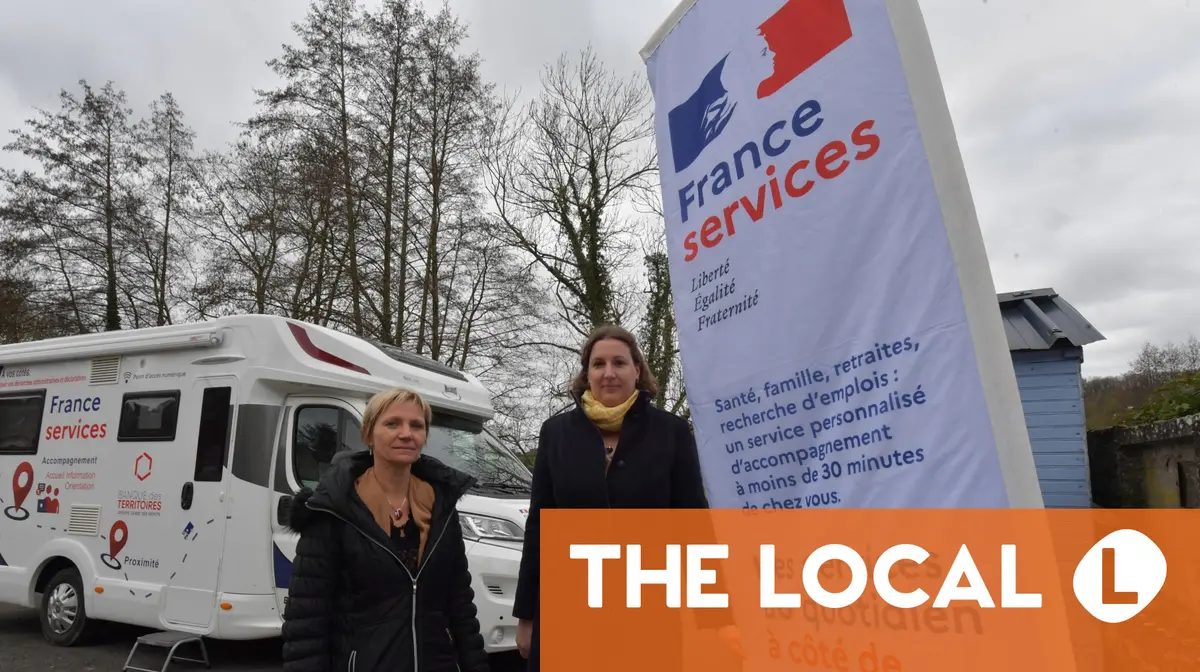
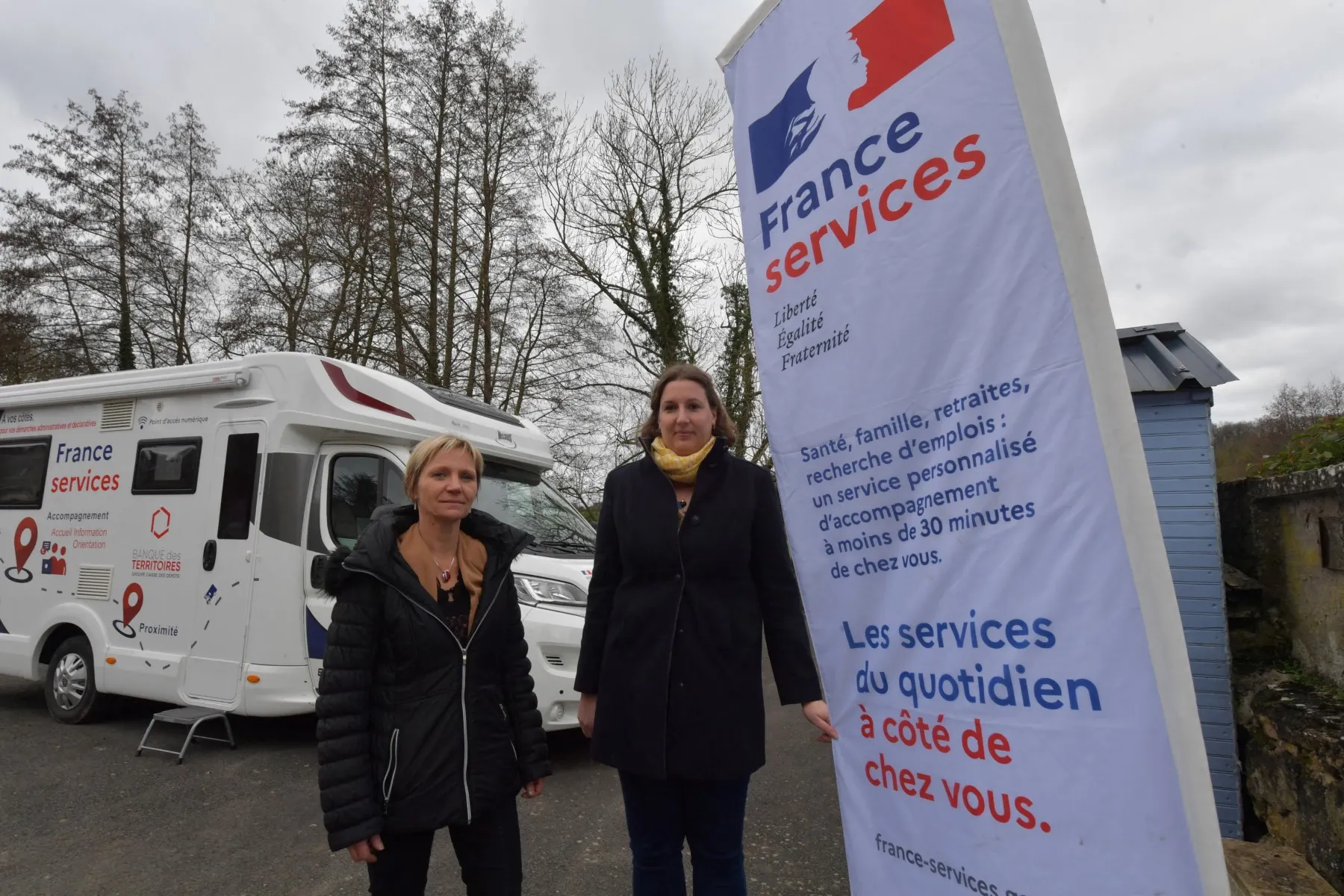
One of the most visible initiatives is the national “France Services” network. Originally designed as fixed public service centres, the programme has expanded its services through buses and vans that travel village to village.
READ ALSO: What is ‘France Services’ and how can it help foreigners in France?✎
More than 150 mobile France Services buses now operate across France, helping citizens access healthcare information, tax services, pensions, employment support, and legal assistance.
These buses are especially important in regions where government offices, banks, and post offices have disappeared over the past two decades.
And one of the major challenges facing rural France is digital exclusion – France Services staff members can help residents create online accounts, complete forms and access healthcare portals, especially useful for those who either don’t have internet access or aren’t comfortable with online tasks.
Legal advice
In many rural areas, residents may live more than an hour from the nearest courthouse or lawyer’s office and often struggle to get legal advice, so there are several services that offer legal advice by bus.
For example, in partnership with the City of Paris and the charity Droits d’Urgence, the Paris Bar Association launched the “Barreau de Paris Solidarité” bus.The bus is stationed five days a week at one of the gates of Paris, even during school holidays and more than 400 lawyers volunteer each year for this scheme, which helps nearly 6,000 users annually, the majority of whom seek advice on employment law, immigration law, family law and housing law.
There are several similar schemes across different parts of France.
The Local spoke to Marie, a 23-year-old student who studied Law and Political Science at the Institut Catholique de Lille in Northern France. There, she volunteered to work in a mobile legal clinic (FLD legal access bus) designed to reach areas where access to legal services is limited.
“The bus travels directly to public spaces such as village squares, markets, and churches. A team made up of one lawyer and two to three law students goes on board”, said Marie.
The service is free and aims to help with everyday legal problems such as financial difficulties, divorce, neighbour disputes, and similar issues. “The idea is to provide a first level of legal guidance, then redirect people to the appropriate professionals when their cases are more complex”, she explained.
Inside the bus, the space is designed to encourage conversation. The front looks like a normal bus, while the back is arranged with seats and a round table to create a more open and welcoming discussion area. The bus typically stays in one location for about three hours before moving on to another town.
The government platform Point-Justice provides a search tool where you can enter your location to find the nearest legal advice service near you.
Hairdresser on wheels
It has even become difficult to get a haircut in some parts of rural France – many villages no longer have local salons, especially in isolated areas where some businesses struggle to survive.
In response to this problem, a growing number of entrepreneurs have launched mobile hairdressing buses and “hair trucks”: fully equipped salons on wheels that travel from village to village.
Since December 2025, with her caravan hitched to her car, Marine Boumnijel has been crossing the roads of Trégor (Finistère, Brittany). She sets up her mobile hairdressing salon in small market towns and travels to meet clients in small villages.
Her motivation came from a simple observation: between commuting, children, errands, extracurricular activities, and salons closing just as the workday ends, finding time for yourself can feel like a real challenge.
“I was receiving so many requests about this that I felt it would be a shame not to think about these people,” said the 30-year-old hairdresser to French regional media Ouest-France.
And Boumnijel is just one example – many different hairdressers on wheels can be found throughout the country.
Health
Among the initiatives designed to improve access to healthcare is the mobile medical clinic, Médicobus, introduced under the government’s France ruralités plan in June 2023.
Beyond improving access to healthcare in rural communities, the initiative also aims to encourage medical professionals to settle there for the long term. These mobile clinics offer an essential service in areas where establishing a permanent health centre is not feasible or where existing coordinated care solutions are insufficient.
Current Médicobus locations include Lot-et-Garonne (southwestern France), Yonne (north-central France), Orne (northwest France) and Finistère (western France).
READ ALSO: In Pictures: Pool on wheels brings swim lessons to rural France
Bakeries
As you may know, the French do love their fresh baguette.
In rural areas, “bakeries on wheels” are actually quite common in France. They are called boulangeries ambulantes (mobile bakeries) or boulangeries itinérantes (itinerant bakeries).
They usually offer baguettes and traditional loaves, croissants, pains au chocolat, seasonal pastries and sometimes sandwiches or snacks. Customers usually know exactly what day and time the van arrives, often as part of the village routine.