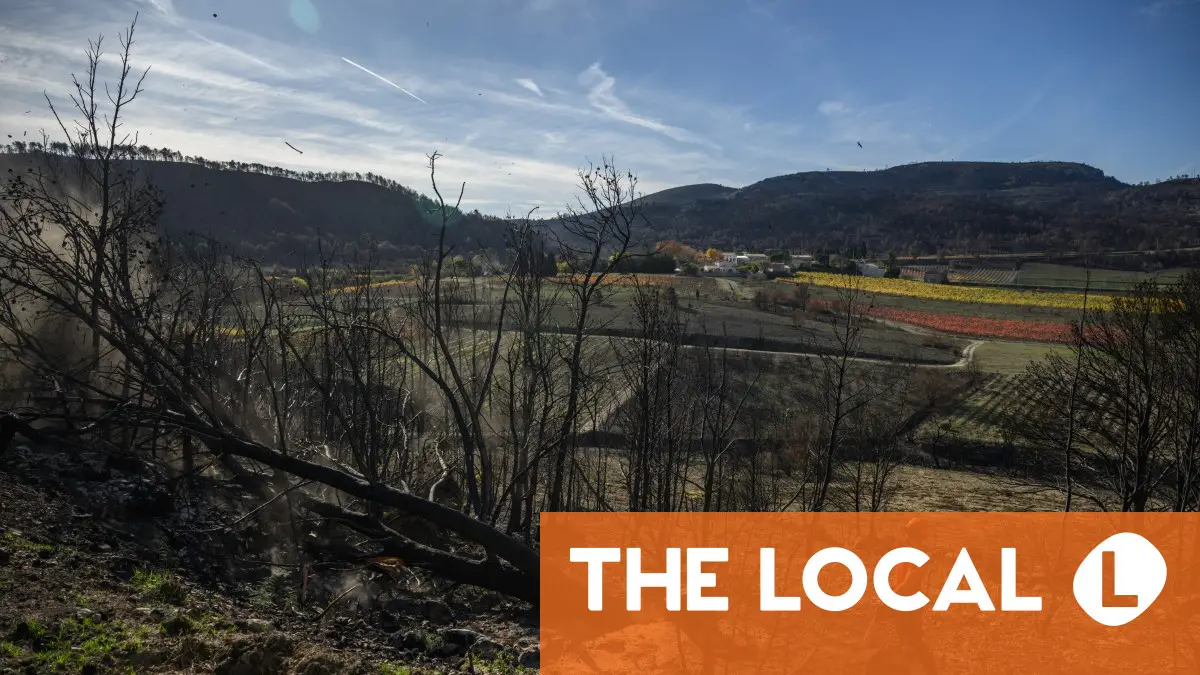

Laws require many homeowners in the south of France to do compulsory works each year to help prevent the spread of wildfires – but as fires become more common, the laws have been expanded to cover properties in northern France, including Brittany.
Officially launched by the government on January 5th 2026, the national campaign on the legal obligations regarding undergrowth-clearing, as well as the essential actions to be taken, are now in force.
These rules had previously been in effect for many parts of southern France, but now five extra départements in the north and centre of the country are affected; Côtes-d’Armor, Finistère, Sarthe, Maine-et-Loire, Eure-et-Loir and Indre.
In 2025, nearly 190 buildings were severely damaged or destroyed as a result of forest or bush fires. This represents the worst toll in recent decades.
Analysis carried out after the fires show that 90 percent of the houses destroyed in the forest fires were located on land that had not been cleared of bushes or was poorly maintained.
What you should do
The best period to clear bushes on your property, known in French as débroussailler, is in the winter. It’s better to do it when the trees are not too full.
The French government advises doing so in nine steps:
- Trim back bushy vegetation
- Cut back branches touching homes or even trees themselves (if they are too close, it is necessary to ensure they do not touch one another)
- Prune the remaining trees
- Remove undergrowth beneath trees
- Cut back vegetation near buildings
- Limit the width and length of hedges and keep them away from buildings
- Clear the gutters and remove leaves as well as pine needles
- Keep woodpiles and any other fuel storage away from buildings
- Dispose of plant waste at a waste disposal centre (déchetterie)
Maintenance of areas that have already been cleared involves keeping ground vegetation to a minimum by cutting grass and scrub, and tidying up after maintenance work. This includes removing plant debris and clearing away any potential fuel sources from around the property. These tasks can be carried out in the spring.
READ ALSO: How to protect your French property from wildfires
The law
The above tasks are advised for homeowners everywhere, however in some parts of the country they are legal requirements.
This mostly affects people living close to wooded areas, but you can check your postcode in the online tool here to find out if you are covered by the law.
If homeowners are not at their property during the relevant period – for example second-home owners – it is their responsibility to ensure that someone else carries out the works.
Speaking to French media France Info, Corinne Henry, head of the Forestry Office at the Forest Fire Defence Agency at the Var préfecture, said; “If the legal obligations regarding brush clearing are properly met, people are safe in their homes.
“We saw this during the Gonfaron fires. Where the brush had been cleared, nine out of ten houses suffered no damage.”
READ MORE: Wildfire prevention: The legal obligations for French property owners
New départements subject to brush-clearing requirements
As a result of climate change, forest and bush fires are spreading to new areas. This means that 48 departments and nearly 7,400 local authorities are now subject to brush-clearing requirements, versus 43 in 2025. You can find the map here.
These are: Alpes-de-Haute-Provence, Hautes-Alpes, Alpes-Maritimes, Ardèche, Ariège, Aude, Aveyron, Bouches-du-Rhône, Charente, Charente-Maritime, Cher, Côtes-d’Armor, Dordogne, Drôme, Eure, Eure-et-Loir, Finistère, Gard, Haute-Garonne, Gers, Gironde, Hérault, Ille-et-Vilaine, Indre, Indre-et-Loire, Isère, Landes, Loir-et-Cher, Loire, Loiret, Lot, Lot-et-Garonne, Lozère, Maine-et-Loire, Morbihan, Pyrénées-Atlantiques, Hautes-Pyrénées, Pyrénées-Orientales, Sarthe, Savoie, Deux-Sèvres, Tarn, Tarn-et-Garonne, Var, Vaucluse, Vienne, Corse-du-Sud, Haute-Corse.
The new départements are; Côtes-d’Armor, Finistère, Sarthe, Maine-et-Loire, Eure-et-Loir and Indre.