
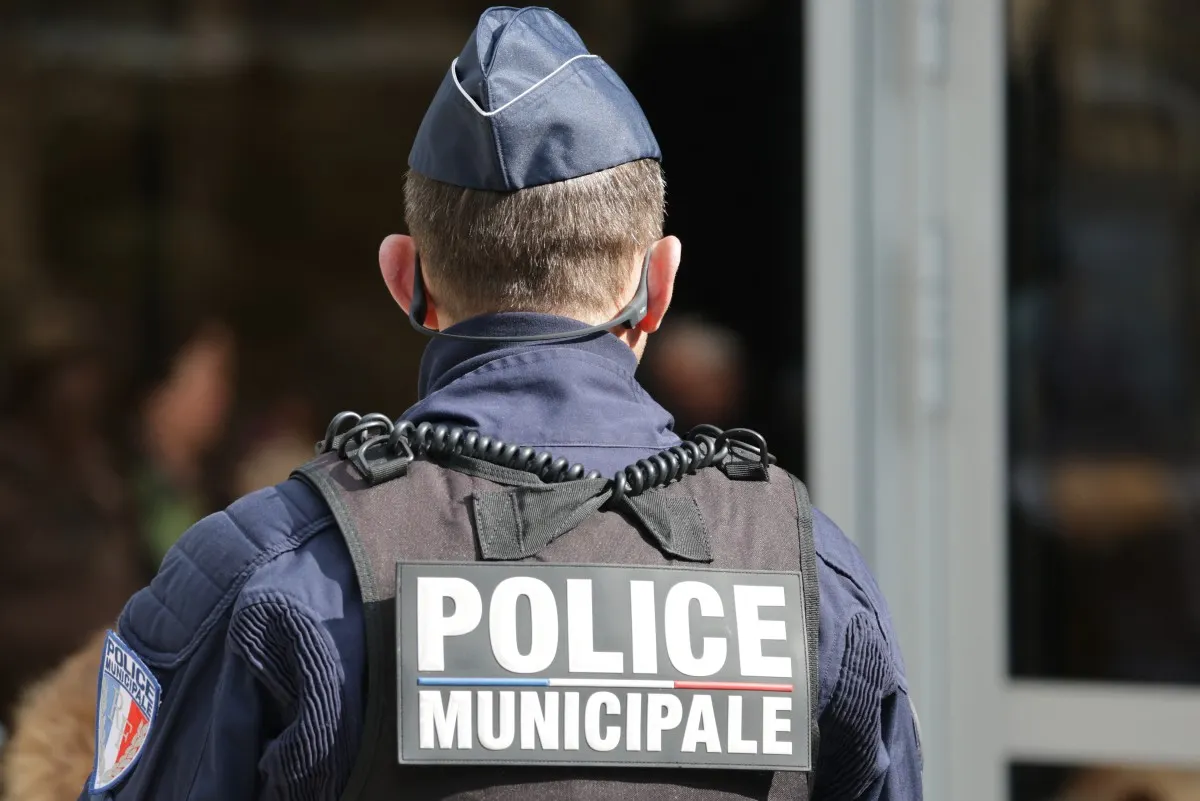
France’s municipal police officers could be given extra powers, including the right to issue €200 fines for 18 offences including speeding, flytipping and unlicensed street sales.
The proposed new law – approved by a large majority in parliament – overhauls the role, oversight, and training of the 28,000 municipal police officers and 600 rural police officers, who perform a similar role in rural areas.
The ‘police municipale‘ have limited powers compared to gendarmes – their main role is dealing with anti-social behaviour or low-level nuisance crime.
READ ALSO Gendarmes to ‘policiers’ — who does what in the French police force?
Interior Minister Laurent Nuñez praised a bill before lawmakers on Monday that will make the municipal police, responsible for “public order,” “a complementary force supporting internal security forces,” allowing the latter to “focus on sovereign missions.”
The flagship measure of this bill is the creation of a municipal police system with “expanded judicial authority,” including the right to issue fines for a range of offences.
Municipal police remain under the control of local authorities, who will decide whether they want their offices to be given these extra powers.
Those that choose to expand the powers of municipal police would see officers permitted to issue fixed fines for certain minor offences. For example, they will be able to issue a €200 fine for drug use. Other offences include motoring offences such as speeding, driving without a licence or insurance and street vending illegal substances, with the fight against drug-dealing as a primary objective.
In total, 18 offences are listed in the text sent by the Senate, compared to nine in the government’s initial version.
The bill still needs to go through the final legislative stages before it can be signed into law.
The 18 offences that officers could issue fines of up to €200 on are;
- Illegal street sales (eg of cigarettes or drugs)
- Theft to the value of €300 or less
- Flyposting
- Obstructing the highway
- Driving without a valid licence
- Driving without insurance
- Speeding
- Squatting in a home or public building
- Entering as a trespasser with the intent of squatting
- Sexual harassment or assault
- The sale of alcohol to under 18s
- Consumption of illegal drugs
- Carrying category D weapons (eg knives, pepper spray or tasers)
- Invading the pitch during a sports event
- Bringing alcohol into a sports ground where it is prohibited (mostly football grounds)
- Selling alcohol without the appropriate licence
- Unauthorised entry to a school
- Flytipping
For more serious offences, municipal police officers have the right to detain a person, but they must then deliver them to an officer of the police nationale or gendarmerie.
Municipal police officers are allowed to carry weapons, but it is down to the mayor and the local authorities to decide whether they do. Following the 2015 Paris terror attacks, the number of armed municipal officers skyrocketed. Today, more than half of French policiers municipaux bear arms.
